

AI Consultant | AI Integration & Agentic Automation Engineer. Software, Apple Apps, AI search visibility & content systems. [email protected]
earth
Joined June 2017
- Tweets28.3K
- Following1.4K
- Followers2.1K
- Likes40.9K






Pinned Tweet
Let me Reintroduce myself, I’m the Founder & CEO of Luminous Digital Visions, LLC and Brainzcode Information & Technology, LTD, two dynamic companies bridging global innovation and entrepreneurship.
At Luminous Digital Visions (USA-based), we turn visionary ideas into enterprise-grade digital products: AI-driven applications, web platforms, mobile apps, and cloud infrastructure that deliver measurable business impact.
At Brainzcode (Nigeria-based), we build high-performing web and mobile applications, AI solutions, and digital products for clients across Africa and beyond, helping organizations scale through technology.
With a full-stack engineering mindset and a global outlook, I lead both companies to drive transformative solutions, build strong partnerships, deliver quality results, and nurture talent across continents. Let’s connect and bring bold ideas to life together.

sam retweeted
STARLINK keeps advertising their services to me, but it's impossible to subscribe to their services since they handed over their subscription to third parties owned by Nigerians.
The inefficiency is truly dumbfounding.
I bought the Starlink kit from @dabz_global and I sincerely regret that decision, it's a total waste of money.
Just share the full video and stop explaining.
Meanwhile, are you guys in a cult, what's with the orange background?

I have learned many things in the few years I have worked with The Prophet Usen MJ, but one lesson stands above the rest as the most life-changing:
No man born of a woman, nor any man empowered by any spirit, can ultimately bring down a man who is genuinely called by God. Attempts may be made. Opposition may arise. But if God has truly called the man, he will prevail.
I had seen this principle throughout Scripture and history, but about two years ago, the Lord allowed me to witness it firsthand. He brought me close enough to experience this truth personally rather than merely believe it from a distance.
That experience became an enduring assurance to me of God’s faithfulness to those He has genuinely called. And also to me.
For this cause, I know NOTHING CAN BRING ME DOWN
P.S. This is not an official response from The SWAT Nations Church or from The Prophet Usen MJ. It is simply my personal testimony of what I have witnessed and the convictions God has established in my heart through the life and ministry of His prophet.
FULL LESSONS ON MY YOUTUBE.
youtu.be/9EFVL2pZyxA
Notice how they all have the same background in their pfp.
If you do not see that this was sarcasm, it shows how hasty you are o😂😂😂😂
This was sarcasm, a response to a false teaching flying around that period on CT concerning how there is “gradient” in Holiness and one person can be holier than the other.
I made the picture and posted it first as sarcasm.
xitter.cf/olaoluwadanie11/status…


sam retweeted
I think the moat now is distribution.
AI is making software faster and cheaper to build. More products are competing for the same customer.
Railway caught my attention because its guides, deployment templates, and agent tools give people useful paths into the product.
That takes time to build: an audience that trusts you, content that solves problems, and a place inside the tools customers already use.
The product still has to deliver. But getting discovered, trusted, and chosen is becoming the advantage that compounds.
How much effort are you putting into distribution compared with product development?

Moats! Does anyone have one anymore?
Yes. Yes, they do.
But only a small subset of what people call moats create real long-term value and defensibility.
Not actually a moat:
1. Distribution: This does matter more than ever. Building products has gotten easier, but getting them to customers has not. Distribution, however, does not create durable defensibility. It helps create the raw ingredients for one, but it is not itself a moat.
2. Execution: Yes, speed is critical for startups. But a company that has to sprint forever is not a good business. Ultimately, it will misstep, slow down, and competition will catch up. Speed gives a company more shots on goal as it tries to build a great product and a great business, but it must eventually find something more durable.
3. Brand: The idea is that when everyone is building the same thing, the most resonant brand will win. But for startups, brand works more like customer acquisition spend: Put money in, get growth out. It’s not something that will effectively keep others from competing long-term. Brand can become a true moat over time (as with Coke or Nike or Apple), but it just takes too long to really matter for most startups.
What you're looking for is compounding advantages: a self-reinforcing flywheel that gets stronger and stronger over time, ultimately making a company very hard to compete with long-term.
There are only four compounding advantages that really matter. Every major tech company has at least one:
1. Switching costs: The more deeply embedded a product is in the way a customer works, the harder it is for that customer to switch. This increases retention and revenue per customer, which can be reinvested into the product.
2. Network effects: The more users a product has, the better it gets for everyone. This increases engagement and attracts more users.
3. Scale economies: The more volume a company has, the larger and more efficient its operations can be. This lowers unit costs, funding lower prices or a better product at the same price, further driving up volume.
4. Data effects: The more usage a product has, the more data it generates. This data can be used to improve the product and increase usage.
If you can’t see the potential for any in the startup you’re considering joining, that’s a red flag.
In today’s incredible post, @danhockenmaier shares a simple framework you can run in about an hour after getting an offer:
1. Identify a startup’s compounding advantage
2. Gauge how strong it could get
3. Measure whether it’s working
Inside: dozens of real company examples, the specific metrics to track, and benchmarks for what good and great look like.
Read it here: lennysnewsletter.com/p/how-t…

I think the moat now is distribution.
AI is making software faster and cheaper to build. More products are competing for the same customer.
Railway caught my attention because its guides, deployment templates, and agent tools give people useful paths into the product.
That takes time to build: an audience that trusts you, content that solves problems, and a place inside the tools customers already use.
The product still has to deliver. But getting discovered, trusted, and chosen is becoming the advantage that compounds.
How much effort are you putting into distribution compared with product development?
Moats! Does anyone have one anymore?
Yes. Yes, they do.
But only a small subset of what people call moats create real long-term value and defensibility.
Not actually a moat:
1. Distribution: This does matter more than ever. Building products has gotten easier, but getting them to customers has not. Distribution, however, does not create durable defensibility. It helps create the raw ingredients for one, but it is not itself a moat.
2. Execution: Yes, speed is critical for startups. But a company that has to sprint forever is not a good business. Ultimately, it will misstep, slow down, and competition will catch up. Speed gives a company more shots on goal as it tries to build a great product and a great business, but it must eventually find something more durable.
3. Brand: The idea is that when everyone is building the same thing, the most resonant brand will win. But for startups, brand works more like customer acquisition spend: Put money in, get growth out. It’s not something that will effectively keep others from competing long-term. Brand can become a true moat over time (as with Coke or Nike or Apple), but it just takes too long to really matter for most startups.
What you're looking for is compounding advantages: a self-reinforcing flywheel that gets stronger and stronger over time, ultimately making a company very hard to compete with long-term.
There are only four compounding advantages that really matter. Every major tech company has at least one:
1. Switching costs: The more deeply embedded a product is in the way a customer works, the harder it is for that customer to switch. This increases retention and revenue per customer, which can be reinvested into the product.
2. Network effects: The more users a product has, the better it gets for everyone. This increases engagement and attracts more users.
3. Scale economies: The more volume a company has, the larger and more efficient its operations can be. This lowers unit costs, funding lower prices or a better product at the same price, further driving up volume.
4. Data effects: The more usage a product has, the more data it generates. This data can be used to improve the product and increase usage.
If you can’t see the potential for any in the startup you’re considering joining, that’s a red flag.
In today’s incredible post, @danhockenmaier shares a simple framework you can run in about an hour after getting an offer:
1. Identify a startup’s compounding advantage
2. Gauge how strong it could get
3. Measure whether it’s working
Inside: dozens of real company examples, the specific metrics to track, and benchmarks for what good and great look like.
Read it here: lennysnewsletter.com/p/how-t…

The difference in the quality of conversations between Nigeria and other countries.
The Giveaway Economy.

When I tell young people that the person that is most likely to give you the best advice about life, relationships, and career is their father, they think I'm speaking because I'm a man.

As a social experiment, I called both my mom and my dad separately today.
My mom:
1. Complained about my dad
2. Complained about her weight gain and other health issues
3. Waxed lyrical about my brother and his soon-to-be wife, they're having a wedding later this month
My dad:
1. Talked about my American road trips with me and asked me what states I've visited and which my favorites were
2. Asked me about the differences in culture, weather, food, and people between America and Europe (he has been to neither)
3. Asked me about my life in Spain, where I live and what I do on a daily basis
Basically my mom used me as a sounding board for all her yapping.
My dad was legitimately interested in my life, my experiences, and my views on things.
Female nature literally applies even to my own mother.
What a shame.

sam retweeted
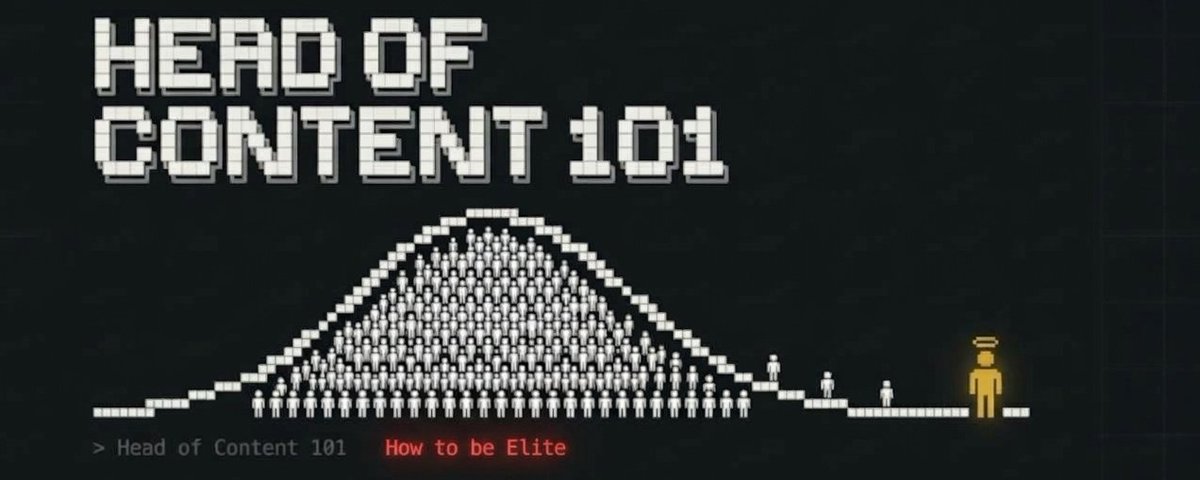
This is why I'm currently building a solution that will make it very easy for technical founders like me to push out content that grabs attention,
I've been testing it on LinkedIn, and it's working so far; I haven't launched yet.


This is why I'm currently building a solution that will make it very easy for technical founders like me to push out content that grabs attention,
I've been testing it on LinkedIn, and it's working so far; I haven't launched yet.