

Head of Religious Studies & Philosophy. Enthusiastic about T&L and interested in all things #philosophy and #TeamRE. Tweeting in personal capacity (she/her)
South West, England
Joined February 2021
- Tweets564
- Following332
- Followers633
- Likes954






@UoC_Outreach @uochester can you help me find the recording of the 2023 webinar with @BenFulford1 as the link on this page (chester.ac.uk) isn't working and the @TRSChester account appears to have been deleted?

It actually appears as though all links for the 2023 webinar series do not work. I know plenty of @TeamRE_UK find these videos invaluable - please point us in the right direction!
An excellent way to start the day. Particularly loved @MaryMyatt idea that high quality texts should be the ‘beating heart’ of a lesson #BryanstonEducationSummit


Feel lucky to have witnessed @DavidDidau live Y10 English lesson at @bryedusummit which focused on attention, meaning and consolidation. My top takeaway: AFL is ongoing & it’s vitally important we take the information we have gleaned about pupil progress into subsequent lessons.
Really enjoyed this afternoon’s session with @SinghAmarbeerG - top takeaway: “While practice can make perfect, not all practice is the same”
This year we have made a conscious effort to set prep tasks which ensure pupils complete useful revision/retrieval activities.
Looking forward to returning for our second year #BryanstonEducationSummit
There are two weeks to go until the Bryanston Education Summit 2024 and we looking back on what a great event we had last year and are even more excited for what is to come this year!
Don't miss out and book your ticket at bryanston.co.uk/educationsum…
Another excellent @TRSChester webinar with @ProfPMiddleton - great foundation for our next topic (Person of Jesus) & super interesting given our current study of Christian Moral Principles. Nicely unravelled several misconceptions pupils have from studying the incarnation at GCSE
Yay! Finally the inking updates we requested ⚡️
You’re unable to view this Post because this account owner limits who can view their Posts. Learn more
Looking forward to another year hosting viewing sessions for my Y12 pupils #Alevel #ReligiousStudies #Philosophy
This Post is from an account that no longer exists. Learn more
Mrs Molyneux retweeted

This is a brilliant listen.
Highly recommend for @TeamRE_UK. For those of us who teach OCR A-level, very suitable for the religious pluralism and society topic.
This Post is from an account that no longer exists. Learn more
Mrs Molyneux retweeted

🔴 GIVEAWAY 🔴
Win your school access until June to the inspirational talks of the 2024 Teaching & Learning Summit!
To enter, simply:
👉Follow @Inner_Drive
🔁RT this post
We’ll be drawing one winner at 4.30pm GMT on 25/03/2024 – good luck! #TandLSummit

Teachers of @AQA GCSE RS - please complete this survey and have your say: forms.office.com/e/hPQ9LXt8c…
It would be great if @TeamRE_UK could make a change and improve the inappropriate 12-mark essay questions!!

Just finished Session 6 of the Huh Curriculum Leaders course with @MaryMyatt and @johntomsett 👍🏼 shoutout to @L_Walker_ showcasing how @dylanwiliam ‘need to know’ and ‘neat to know’ can be applied to the RE curriculum! 😊
Ready to welcome Y8 pupils for our academic experience day! We shall be tackling some of the ‘big questions’ in philosophy 🤔


@Microsoft365 I’m looking for a way to create a quiz on Forms from a bank of questions on Excel. @microsoftcoplot says it’s possible but I cannot see the upload button it’s referring to. I cannot believe there isn’t a way to connect the two! #teachertwitter #microsoftforeducation
Somewhat concerning that @MSFTCopilot can give completely inaccurate information and pass it off with authority!
Morning spent immersed in Y9 curriculum planning. Caught up on Session 3 of the #HuhLeaders course with @MaryMyatt and @johntomsett. Now down the Myatt and Co. rabbit hole - listening to an excellent discussion on diversity with @JoanneH_RE and Tom Morgan 😊👍🏼
Fantastic thread! I couldn’t make it - looking forward to hearing from my colleagues who attended after half term 😊

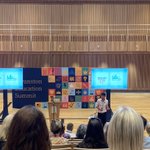
Attended a superb Teaching and Learning Summit today organised by @Eton_CIRL and @Inner_Drive #TandLSummit Heaps of inspiration delivered! A thread…


Thank you for sharing - so helpful, particularly given my current project: designing a new Y9 curriculum.
Key takeaway: plan for pupils forgetting and when pupils will re-encounter material.

So what are the implications of over 100 years of research on forgetting for educators?
Principles to know:
▶️ Our capacity to store stuff in memory is relatively limitless but our capacity to retrieve it is not. In other words, just because you know something, it doesn't mean you can remember it. This process happens in classrooms every day without us realising it - so much effort (planning/teaching/student work) is wasted because of ineffective instructional design.
▶️ Our brains are quite efficient at some things but also really inefficient at other things which is why learning how to do quadratic equations is so hard for teenagers.
It's also why for the vast majority of people, trying to discover stuff on your own is such a bad way to learn anything.
▶️ We're very good at learning stuff we want to learn but incredibly bad at learning stuff we don't want to learn. (and most kids don't want to learn quadratic equations.)
Storage strength and retrieval strength are crucial concepts to long term learning - without regular retrieval practice/questioning/generative activities we will not be able to recall learned material - it's as if our brain throws stuff in a warehouse without cataloguing/indexing any of it. Retrieval practice is the way to make that catalogue/index.
▶️ This process of long term learning is largely dependent on the context in which students try to remember stuff and the good news is that teachers can do something about that (curriculum + instruction).
▶️ You don't learn something when you encounter it, you learn it when you forget it-remember it-forget it -remember-link it to something else you know and so on... Think of learning as something which happens over 6-12 months not in a single lesson.
What to do:
▶️ Because of these limitations of how learning happens, the first thing to consider is curriculum. But curriculum doesn't just mean what you're teaching (content), it also means how you teach it (instruction).
▶️ Don't just ask students questions that have 'answers' - those answers really need to be connected to stuff they already know and this needs careful planning. For example, knowing the year of the storming of the Bastille is likely to be of very little use unless it's linked to deeper understanding of how this event relates to the broader trajectory of the French Revolution.
▶️ When planning curriculum and building in retrieval practice, consider when they will forget the material and where they will remember it. As in, actually plan for them forgetting it. If you're teaching them something in September and then giving them a quiz on it in May and thinking that's retrieval practice then you're doing it wrong. Think really carefully about where they will re-encounter what you've taught them.
▶️ Do you want students to remember what you're teaching them now or in a year? If it's the latter then you have to use desirable difficulties otherwise they will probably only remember it by chance not design.
(See Bjork on this and also Fiorella/Mayer on generative learning.)
▶️ Lastly, If you're leading teaching and learning in a school, stop asking teachers to 'show student learning' in a lesson. This is a waste of time and in most cases, gets in the way of actual learning.