

Institutional grade insights and real time signals for funds, family offices and market professionals by @glassnode and @willywoo
Zug, Switzerland
Joined May 2025
- Tweets393
- Following12
- Followers14.1K
- Likes162




Bitcoin’s downside volatility has returned as price grinds below the highs.
Yet BTC is absorbing selling pressure without structural damage, so far.
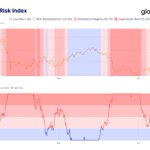
The breakout has cooled. A sustained Risk Index rise would be the clearest signal that the structure is beginning to wobble.

$BTC holders repeatedly entered the stress zone that defined prior bear-market bottoms, allowing supply to change hands as weaker hands capitulated.
The breakout sharply reduced holder losses. A sustainable bottom now requires most supply to remain outside the Stress Zone.

The $80K–$82.5K pivot is behaving as expected.
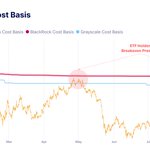
Like April–May, BTC is challenging breakeven selling as price retests ETF cost bases.
Acceptance above would confirm demand can absorb this supply, strengthening the case for a regime shift, not another bear market rally.


Bitcoin’s vertical Expansion has reached Top.
This does not confirm the rally is over. It signals that the advance has matured and the consolidation is entering a more decisive phase.
The framework remains firmly Risk On, with Risk at zero and Momentum at maximum strength.
Holding $75K–$77.5K keeps the reset constructive and preserves the path toward $82.5K–$83K.
A bearish warning would require Market Trend to rotate into negative territory, especially alongside rising Risk, weakening Flow and acceptance below $75K–$75.5K.


Why is $80K–$82.5K the key pivot?
It concentrates Grayscale, BlackRock and aggregate ETF cost bases, making it a source of selling pressure, as seen in April–May.
Acceptance above it would confirm that demand can absorb this supply and sustain the expansion.

How sustainable can Bitcoin’s expansion be?
bitcoin:native did not progress gradually through Recovery. It exploded through it.
After remaining anchored in an environment leaning toward Breakdown, Bitcoin moved rapidly, without pause, into Expansion.
But the breakout only proved strength. The consolidation will prove sustainability.
Bitcoin must now hold the reclaimed structure, keep Risk anchored near zero, and absorb profit-taking without falling back into a Bearish Transition.
The Market Trend indicator identifies when a structural change takes place.

If the Cycle Bottom is in, BTC has broken a historic pattern: bottoming without losing or even testing Realized Price.
In 2018–2019, price spent months below it, and the reclaim marked bottom formation.
This time, holder cost basis held throughout. Is this time different?

The Risk Index lower high repeated April’s sequence.
BTC broke out before Risk fully stabilized, as bear capitulation and forced buying propelled price higher.
With Risk now at zero, the next phase should be steadier, less explosive expansion, as long as Low Risk holds.

BTC’s transition remains obstructed.
Momentum is still inside the Transition Zone, while price remains below the compressed short-term cost bases, a source of selling pressure.
Reclaiming the 30D Cost Basis with positive Momentum is the first step toward a Bullish Transition

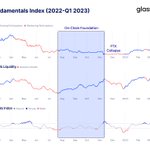
During the 2022 bear market, Participation strengthened while BTC consolidated, building an on-chain foundation
FTX collapse interrupted that process, but the foundation survived and supported the 2023 recovery
Cycle bottoms begin internally before they become visible in price

Bitcoin has found the middle ground and is building the foundation.
Network Growth has risen steadily since mid-July alongside Bitcoin’s consolidation.
Participation is rebuilding without either a Breakdown or Breakout forcing it.
Participation Expansion during consolidation strengthens the mid-term outlook, preparing the foundation for a potential cycle bottom.

The first cracks have widened.
Bitcoin’s Risk Index has moved from Low Risk, through Destabilization, and into the Distribution Regime.
Selling pressure is no longer being fully absorbed.
This is where warning becomes structural damage.

This summer has delivered the answer:
On-chain activity declines during bear markets
After extended drawdowns and capitulation events, the contraction becomes overstretched
Declining liquidity then begins to stabilize, helping BTC consolidate as selling pressure is absorbed


Only in April did BTC successfully anchor the market.
Failed stabilization attempts pushed the market further off course.
Now ETH remains at the wheel.
But that alone cannot secure stability.
For the market to stabilize structurally, leadership must re-anchor to BTC.

Selling pressure is fading, but conviction has not returned yet.
The aggressive pressure that drove the bear market is gradually being absorbed.
However, holders are still realizing more losses than profits.
This is an early stabilization phase, not yet a confirmed recovery.

Bitcoin Vector retweeted

As price rallies toward $66k, LTH realized loss volume is spiking!
Cycle-top buyers are using the relief rally as an exit opportunity, locking in losses at a smaller margin than the sub-60k lows allowed. Selling into strength rather than waiting for recovery is a pattern consistent with exhausted conviction among underwater long-term holders.
📉 glassno.de/btc-lth-realized-…

Bitcoin is down 27% YTD.
ETF conviction has taken a hit too:
US Spot ETFs have recorded net outflows of 87.5K BTC in 2026.
But most of the last selling wave has now been absorbed, and we're seeing the first green shot of institutional demand.

The storm has passed:
The most overwhelming ETF distribution wave of this bear market has ended.
As Bitcoin Risk continues easing from Capitulation Risk, Spot ETF flows have turned slightly positive again.
But there is one important caveat:
ETF accumulation is positive, but not yet strong.
Institutional conviction is not returning with full force.
Has the storm passed? Or is Bitcoin simply in the eye of the storm?

Risk Inflection Points mark the moment when structural selling pressure eases
That's when the probability of another breakdown starts to decline. It doesn't guarantee a new uptrend
But every recovery starts the same way: selling pressure is absorbed first, price responds later

The final stage of a bitcoin:native bear market is Cost Basis compression.
In 2018-19, Bitcoin first lost Realized Price.
Only later did Short-Term Holder Cost Basis compress below it, marking the final phase of bear-market exhaustion.
2026 hasn't reached that stage yet.

bitcoin:native holders are now in the same stress zone that defined prior bear-market bottoms.
Cycle bottoms are built when stress persists long enough to exhaust the holders sitting on losses.
That is when supply changes hands.

This is the most intense stress phase bitcoin:native has seen so far during this bear market.
Even more intense than February’s capitulation.
Look at the tension between holders in profit and holders in loss.
Supply in Loss has now overtaken Supply in Profit again, with more than 50% of holders underwater.
That is sustained holder stress. And in bear markets, this is exactly the type of environment where bottoms are built.
The key now is duration:
How long can Bitcoin remain under this level of stress before sellers run out of pressure?

Not every summer registers declining on-chain activity.
Seasonality alone is not the signal.
The question is whether Bitcoin enters the summer with Liquidity deteriorating or recovering.
A bear or bull market environment is the decisive factor.

How is Bitcoin looking in terms of capitulation?
Still stressed.
After the most intense phase of tension in the Supply in Profit/Loss bands, BTC has not fully escaped the stress regime yet.
But there is an important change:
