

Founder of Brave&Co Building at the intersection of Media & Business. Long-form YouTube • Video Production • Operations • Short-form Content • Copywriting •
Belgium
Joined January 2025
- Tweets131
- Following44
- Followers9
- Likes547



If you sell expertise, your thinking is part of the product.
Hire editors. Use copywriters. Build systems around distribution.
But be careful outsourcing the actual point of view, because that’s often the part people were paying attention to in the first place.
Your service is also a marketing channel.
Every deadline you meet, problem you solve and interaction a client has with your team contributes to what they say about you when another potential customer asks for a recommendation.
Most YouTube Studio metrics are signals, not grades.
High CTR ≠ great packaging.
High retention ≠ great video.
1/10 ≠ banger.
A/B winner ≠ better thumbnail.
Context matters more than the number.
Sometimes a metric is just a metric.
You can overanalyze the sh*t out of every YouTube video.
Find every retention drop. Figure out what happened. Remove it from the next video. Repeat.
Sounds logical.
But realistically, does anyone actually build great content that way? 👇👇

Sponsored segments are the easiest example. The retention graph makes it painfully obvious that people don’t want to watch them.
They cost you viewers almost every single time.
Creators still do them 👇👇


This video about consumer psychology that I scripted for Fraser Cottrell is crushing right now.
I studied economics, business and marketing for years.
Now I get to use some of that knowledge writing YouTube videos for people who’ve built businesses.
Pretty cool combination.

If all the value were inside the ad creative, you could open Meta Ad Library, copy the best ad from a major brand and expect similar results.
Well you can’t, because that ad carries years of brand perception that you can’t copy with the asset.
People rarely evaluate every software option from scratch.
They see Slack everywhere, Motion across creative teams or Claude inside AI workflows.
Widespread adoption becomes social proof, and social proof reduces uncertainty for the next buyer.
A higher price doesn’t automatically make something better.
But when quality is difficult to evaluate beforehand, price itself becomes information.
That helps explain why premium pricing can sometimes strengthen perceived quality rather than hurt demand.
Most economic models assume rational buyers and perfect information.
Real markets rarely work that way. When buyers can’t objectively judge quality, they rely on signals like price, reputation and what people they trust already use.
Most social platforms help you get "discovered."
YouTube helps you get "found" by people already looking for answers.
That’s a very different kind of attention.
Businesses should think of YouTube as a search engine they haven’t started ranking on yet.

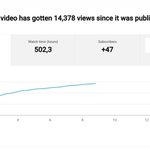
If you’ve been in the YouTube biz long enough, this graph probably tells you exactly what happened.
And if your first thought was, “Well, you changed the thumbnail or title”
Nope, never did.
This is the first video we made for Fraser Cottrell when we started working together.

And many founders forget that the people who keep watching your videos are the exact people you wanted to reach in B2B anyway.
Don’t care if the retention is 30% or 60%, as long as the right people are still watching and deciding to work with you!
Let everyone else drop off.