

views expressed here are my own
Ballarat, Victoria
Joined November 2014
- Tweets12.6K
- Following585
- Followers1.5K
- Likes27.6K




David Cornish retweeted

More people should know this.

To the extent that aggregate stability reflects soil structure, this is good news: stability is not highly related to soil C, but rather to tillage intensity.
Improve soil structure by reducing tillage; no C increase needed.
From @soil_institute
soilhealthinstitute.org/dr-k…

David Cornish retweeted

What does the next generation of agriculture need to lead well?
In this episode of Boots Off Log On!, David Cornish from Marcus Oldham College @marcusoldham1 shares why people skills, communication and accountability are becoming just as important as technical knowledge in farm business leadership.
We also explore how current leaders can give the next generation the space to step up, learn and take responsibility.
🎧 Listen now
agmstr.com/3TRoLDG
David Cornish retweeted
Two large European surveys found croplands have higher microbial diversity than forests, similar to grasslands. If diversity alone drove soil function, cropland soil would outperform forest soil. It doesn't. So diversity was never the cause.

David Cornish retweeted
Soil tests to measure it.
Cover crop mixtures to enhance it.
Products to spray it on.
Chasing soil microbial diversity rests on an assumption that turns out to be wrong: cropland soil isn't diversity-depleted.
My latest Perspectives piece: csanr.wsu.edu/microbial-dive…

David Cornish retweeted
This is such hogwash.
If soils were depleted of nutrients, yields would be falling. They aren't. I am not sure where this commonly-held idea comes from but my guess is that it's from regenerative ag's pop ecology notion that soils should be able to supply all the nutrients crops need without fertilizer inputs.
No wonder the public thinks badly of ag; they are fed these lies from sources that should be trustworthy but aren't.

David Cornish retweeted
"Cover crop composition, NOT diversity, was the strongest driver of changes to, and legacy effects on, soil microbial communities, agroecosystem multifunctionality and wheat yield."
This is consistent across studies.
Open access. besjournals.onlinelibrary.wi…

David Cornish retweeted

Thank you for posting this!
Norman Borlaug should be a household name!👇🏽

In the 1960s, top global experts declared:
"Famine is inevitable. Hundreds of millions of people in Asia will starve to death."
The world gave up.
One man from Iowa said: "No they won't."
Norman Borlaug.
He didn't sit in an air-conditioned laboratory.
He spent 20 years on his knees in the scorching Mexican dirt, cross-breeding thousands of wheat strains by hand.
Academics mocked him. Bureaucrats tried to cut his funding.
He didn't care.
He engineered a miracle disease-resistant semi-dwarf wheat that tripled harvest yields.
He personally shipped the seeds to India and Pakistan during wartime, planting them in the dirt alongside local farmers.
The famine never happened.
Norman Borlaug is credited with saving over ONE BILLION human lives.
He never fired a weapon.
He carried wheat and American grit.
The greatest humanitarian in human history. 🇺🇸🌾👑

David Cornish retweeted
Montgomery with new book; the geomorphologist takes on farm policy.
Regenerative ag, "properly understood," is guided by "minimizing or avoiding both physical and chemical disturbance." Sounds like he wants organic no-till but then calls it conservation ag, which uses herbicides, and brings in "ancient wisdom."
And then he claims that glyphosate degrades soil health, and loses me.
civileats.com/2026/09/09/op-…

David Cornish retweeted
From a recent paper: "There is now overwhelming evidence for the destructive effects of the industrial model of agriculture on Earth’s life-support systems."
What we all need to recognize is that ALL models of crop production that will actually feed us have these destructive effects - it's how crops are grown.
The worst thing about agriculture is its use of land. Whether conventional, no-till, organic, or agroecological-regenerative, the biodiversity lost from initially clearing land for crops far outweighs any differences in farming systems.
And what is a measure of land use efficiency? Yield. High yield=high land use efficiency for cropping.
David Cornish retweeted
Since 2016, California’s Healthy Soils Program has spent $162 million to improve soil health and sequester carbon.
7 field trials of the program's impacts: "short-term impacts on soil health were limited."
Are we in the Trough of Disillusionment?
californiaagriculture.org/ar…

David Cornish retweeted

This amazing…
If only productivity of the whole economy grew as fast as agriculture!
Mining is surprisingly poor…
But the productivity of the public service is a national disgrace …
They need to do better so we’re all better off….


David Cornish retweeted
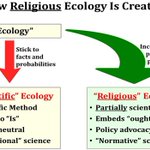
"Everything is connected" is true is the most trivial sense, but not in ways that matter. It's a romanticized nature-slogan that doesn't identify mechanisms or magnitudes of effects. Which connections matter for your field? Pop ecology won't tell you. csanr.wsu.edu/pop-ecology/


David Cornish retweeted
Given the authors finally quote researchers that point out that studies have not shown a consistent link between pesticides and ALS…
This is disinformation….
Workplace pesticide exposure linked to motor neurone disease risk - ABC News abc.net.au/news/2026-08-06/p…


David Cornish retweeted

Eight people sealed themselves in a glass dome to prove humanity could feed itself on plants, and spent two years starving in front of the world's press.
Biosphere 2 cost a hundred and fifty million dollars. Three acres of Arizona desert under sealed glass, eight crew, door shut on 26 September 1991, nothing in or out for two years. The farm inside was worked intensively and by any agronomic measure it was superb, out-producing the most efficient smallholder farming on earth by a wide margin.
It produced 83 per cent of what they needed.
Which left Roy Walford, the crew doctor, in a sealed box with seven hungry colleagues and his own life's work. Walford was a UCLA pathologist who had spent thirty years arguing that severe calorie restriction extends lifespan. He had doubled it in mice. And here was reality handing him his own hypothesis with the door welded shut.
So he called it a health programme.
The menu became vegetables, half a glass of goat's milk a day, and meat or fish about once a week. The men lost close to a fifth of their body weight, the women about a tenth. And the markers Walford cared about behaved impeccably: blood pressure, glucose, cholesterol and triglycerides all down at least twenty per cent, into ranges any doctor would frame. He published it in PNAS in 1992.
The bloodwork was magnificent. The people were falling apart.
Jane Poynter wrote the book afterwards. Fatigue, depression, mental fog, and a preoccupation with food that ate the entire interior life of the crew. They stole from each other. They split into two factions that stopped speaking. The ecological research the building had been constructed for was largely abandoned by people who no longer had the headroom for anything past the next meal. The ants and cockroaches, by contrast, were thriving.
The air was leaving too. Oxygen started at 20.9 per cent and kept dropping and nobody knew where it was going. Columbia eventually worked it out: the concrete was quietly eating it. So oxygen had to be pumped in from outside, which is an interesting result for a sealed world.
Walford's verdict on the mutiny is the whole thing in one sentence. He said afterwards that any other physician aboard would have panicked and declared they were starving, but that he knew they were on a programme of health enhancement.
He knew. Seven other people, visibly wasting, were simply mistaken.
He came out in 1993, developed ALS, blamed the conditions inside, and died in 2004 aged 79 after years on 1,600 calories a day in pursuit of a longer life. The mice got double. He did not make it to average for an American professor.
Every argument you have heard this decade was already in that building. Grow it locally. Take the animals out. Eat less. Watch the numbers improve.
Eight of the most motivated humans alive, handed three acres of the best-managed farmland on the planet and no meat, could not feed themselves.
The press reported the fighting as a personality clash.

David Cornish retweeted

The meat-causes-cancer story is weak, there's not even a proven mechanism. But haem iron!?, - they'll say.
"our study does not support a strong role of heme iron intake in colorectal cancer (CRC) risk [&] protective association of calcium intake [does not] depend on heme iron"

David Cornish retweeted

Activists promoting a new alliance with the litigation industry to attack industry and effect policy change without regulations.
It's called #StrategicLitigation
Relentless lawfare, climate nuisance suits, adversarial regulation...anything goes if they win
thefirebreak.org/p/the-immor…

Australia's biggest grazing studies (Cicerone, EverGraze & Lifetime Ewe Management) reached a similar conclusion: profit is driven by stocking rate, pasture quality and management—not grazing ideology. Good managers outperform grazing systems.