

General World Models. We're hiring: https://xitter.cf/t.co/RgSGZylruH
Joined June 2023
- Tweets493
- Following0
- Followers11.8K
- Likes1.8K






bagel.com retweeted

This fully autonomous demo shows a Bagel Labs foundation model controlling a robot to make coffee.
We previously released WorldDiT, our lightweight architecture for robot foundation models. At the time of release, it was on the Pareto frontier for model size and performance. We have since been refining this architecture to handle longer
horizon, more useful tasks fully autonomously.
Making coffee means getting a whole sequence of actions right. Each step depends on the result of the last, so small mistakes can build up as the task continues. Getting this to work with a small model is especially challenging. This demo is an example of what the model can do today.
If you are deploying robots or have existing hardware you want to make autonomous, we would like to partner with you. bagel.com/partner
bagel.com retweeted
Toronto Robotics night was back for ROSCon. And it was a blast!


ROSCon is in Toronto this week. Tonight, we’re hosting Toronto Robotics Night for people here for the conference and the local robotics community.
Come by after the sessions for drinks and appetizers. We start at 6:30, a 5 minute walk from the ROSCon venue.
RSVP to join: luma.com/501ufk17

bagel.com retweeted

we're hosting a ROSCon special edition of Bagel's Toronto Robotics Night this week!
we're gathering people who are globally shaping physical AI in one room to wrap up the conference together
for researchers, founders, robotics engineers, and builders
RSVP here: luma.com/501ufk17
bagel.com retweeted
The first toronto robotics night was a grand success!


Some of the most interesting work in robotics now sits between world models and real machines.
We’re bringing the people working on both together this Thursday at the first ever Toronto Robotics Night.
Come by if you're in town : luma.com/83qrbegr


bagel.com retweeted
Hardware is a big constraint in robotics, that's why we don't think the answer will be increasingly larger VLM models as action backbones.
We tried to solve that issue with WorldDiT, which is at the pareto frontier for size-performance. Now I want to see how far we can scale it without losing this tradeoff.
Here's a simulation demo.

bagel.com retweeted

The new WorldDiT robotics model is really cool:
It's very small (< 1B parameters), yet it can perform prediction and control in a single model.
• It can predict how the world will change
• It then decides what the robot should do
Models are getting smaller and more capable. We are doing more with way less.
bagel.com retweeted
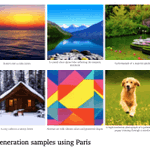
We're releasing Paris 2.0, which, to our knowledge, is the world's first decentralized trained video generation model.
We benchmarked it against a monolithic model trained on the same data and compute budget, and Paris 2.0 outperformed the monolithic by ~2x on FVD benchmark.
bagel.com retweeted

we managed to extend DDM to heterogeneous objectives! one step closer to decentralized AI XD
tldr: experts trained in complete isolation, with different objectives, no communication - and mixing them beats making them all train the same way. 20-48G memory per expert

Excited to share that Bagel Labs' paper got accepted at CVPR 2026.
A lot of the most important diffusion model research has historically stayed inside frontier labs. We're bringing more of that in the open through open science and open infrastructure.
In this work we showcase the very counterintuitive advantage of mixing different training objectives (DDPM and Flow-Matching) through an ensemble of diffusion models. This is one of the first ever works to successfully combine diffusion models trained with heterogeneous objectives.
See details here: blog.bagel.com/p/heterogeneo…

bagel.com retweeted
Excited to share that Bagel Labs' paper got accepted at CVPR 2026.
A lot of the most important diffusion model research has historically stayed inside frontier labs. We're bringing more of that in the open through open science and open infrastructure.
In this work we showcase the very counterintuitive advantage of mixing different training objectives (DDPM and Flow-Matching) through an ensemble of diffusion models. This is one of the first ever works to successfully combine diffusion models trained with heterogeneous objectives.
See details here: blog.bagel.com/p/heterogeneo…
bagel.com retweeted
Being at the frontier - by the definition of it - means creating the frontier. You don't get to be at the frontier by following someone else.
And creating the frontier often means discoveries that go against the established knowledge.
We recently made such a discovery about distributed diffusion model training. A common way to optimize diffusion model training is by ensuring the numerical stability of their generation paths. We found that that's not true for the most efficient distributed diffusion model training architecture.
We shared what works instead in our blogpost below.
blog.bagel.com/p/stability-q…

bagel.com retweeted

Can't wait for the live stream! in honor of it we just added a new question and interactive playground based on the paper

alright folks tomorrow january 22 from 10h-12h AM EST we're going to dive into decentralized diffusion models by reviewing the paris model from bagel labs
I even managed to lock in @bidhan for an interview on why how what that's a good thing to even do
tune in!

bagel.com retweeted

alright folks tomorrow january 22 from 10h-12h AM EST we're going to dive into decentralized diffusion models by reviewing the paris model from bagel labs
I even managed to lock in @bidhan for an interview on why how what that's a good thing to even do
tune in!


bagel.com retweeted
NeurIPS takeways (better late than never)
1. real AGI needs real continual learning - models that can keep learning without catastrophic forgetting.
2. model architectures need to be "stateful" for building accurate world models for games and robotics.
3. diffusion models are superior for solving both 1 & 2.
4. @bageldotcom's distributed diffusion training architecture is SOTA among both open and closed source frontier lab comparables.
5. the age of research is back, and no better place to do frontier diffusion model research than Bagel Labs. join us - jobs.bagel.com


bagel.com retweeted

Congrats on Paris to @bageldotcom and @bidhan!
Open and Decentralized diffusion model shared at @NeurIPSConf

bagel.com retweeted
I’m going to give a talk at NeurIPS on decentralized diffusion models later today, come by if you’re around!

bagel.com retweeted

Noticing this release now (h/t @yacinelearning)
This decentralizing training approach is so cool!
I will note I shared this alpha back when Luma released its paper in Jan
If you're not following me you're going to be missing alpha 😄

bagel.com retweeted
btw folks I am about to dive headfirst into the wondrous world of open-weight diffusion this weekend wish me luck
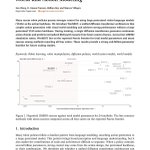
Paris does something that shouldn't work.
It's a combination of smaller expert diffusion models pre-trained from scratch, across different continents in complete isolation. Absolutely zero synchronization among each other during training.
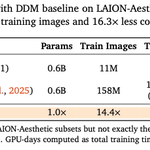
This zero communication protocol achieves comparable quality to SOTA distributed approaches using 14× less data and 16× less compute.
How? See our full technical report and model weights below.
Full Technical Report: github.com/bageldotcom/paris…
Model Weights: huggingface.co/bageldotcom/p…

