

Exponential View @exponentialview.
2.718281828459045
Joined July 2007
- Tweets4.2K
- Following2.4K
- Followers57.1K
- Likes39.7K






Azeem Azhar retweeted

Tony Xu reveals DoorDash's AI spend has plateaued as frontier models got more efficient and it fine-tuned open-weight models, after going up 20x this year
"Our spend this year went up 20x, and then it kind of plateaued a bit as I think a few things have happened."
"I think the frontier models have made their products more efficient. There's been the use and incorporation of open source, open weight models, in which we fine-tuned and trained ourselves."
"That combination has put us in a spot where it's going really, really well. We're always at DoorDash trying to find the greatest intelligence per token or per dollar spent. And so as long as that equation works out, we will continue to invest."


Azeem Azhar retweeted
We studied nearly 800 technologies over three centuries to understand what drives booms and busts – and to situate AI in that history:
investmentbrief.ai/p/borrowe…

Azeem Azhar retweeted

Are we underestimating the opportunity with AI by thinking about it in the context of tasks conceived for humans?
Some 30 years after first meeting @azeem, I get to put our Machine Economy thesis to the best-informed sceptic I know. Check it out 👇

$180B in AI customer revenue. Banks sitting on 45 years of technical debt. Autonomous agents becoming economic participants.
How prepared are we for the Machine Economy?
Our guest this week is @azeem, founder of @ExponentialView, author and technology investor who's spent three decades tracking technological shifts.
He joins @richardmuirhead to discuss:
02:29 - Is AI really in a bubble?
12:13 - The $180B AI economy
15:27 - The agentic bank run
16:58 - Will brands survive AI agents?
39:52 - AI's growing threat to banks
43:26 - Why cybersecurity budgets need to quadruple
52:42 - AI and the future of employment
Ex Machina EP6 is out now ↓

Azeem Azhar retweeted

Token spend from power users is mostly flat since Sept. But spend from the median user has grown 6x since July.
Super interesting chart from @databricks new AI index, especially given their customer base skews enterprise (vs venture backed startups like some of the other token indexes out there.

Azeem Azhar retweeted

OpenAI chief financial officer Sarah Friar says estimates putting the cybersecurity market above $300 billion far underestimate its potential, and Brockman says there's "no question" cyber will become a bigger business than coding.
It's less clear how OpenAI plans to scale it against Anthropic and Google.
Full story: thein.fo/48FsJD3

Azeem Azhar retweeted

Coefficient Giving, founded by Anthropic investor Dustin Moskowitz, spent hundreds of millions on both journalism and policy outfits that shaped the Jensen Huang story.
Here's how this works.
Dustin Moskowitz invested billions of dollars of his Anthropic stock into Good Ventures Foundation.
Good Ventures Foundation funds Coefficient Giving.
The higher the stock goes, the bigger the money pile of the nonprofit network spinning out of Coefficient Giving gets.
The Anthropic nonprofit network under Dustin Moskowitz therefore has a direct incentive to try to help Anthropic eliminate its competitors.
You can see this in action in the figure.
Why isn't Congress investigating the ways that this rogue Anthropic nonprofit network is trying to manipulate politicians and public opinion?




Azeem Azhar retweeted

🤖 Made with AI


BREAKING: Tech founders worth €100bn tell Europe to get its sh*t together
More than 40 European tech leaders demand urgent reforms during Slush conference
pathfounders.com/p/tech-foun…
Exclusive video interview: youtu.be/9vhDTdvXKyI

Azeem Azhar retweeted

Honestly it’s not that impressive.
It’s just stochastically parroting what the person who solved the Riemann hypothesis would say next.
Azeem Azhar retweeted

Just measured how much more AI usage you get from a subscription. $100 of Claude Max buys about $4,640 of Opus at API prices.
The results:
- Claude Max ($100): 46.4x on Opus 5.5, 27.3x on Fable 5.2
- Google AI Ultra ($99.99): 25.8x on Gemini 4 Neon
- X Premium ($30): 20.3x on Grok 4.7
- ChatGPT Pro ($100): 10.25x (measured in October)
- Muse Code High Usage ($15): 9.3x (October)
How this affects the Bug Hunt Benchmark: 🧵

Azeem Azhar retweeted

The decline of the AI trade is a reminder that the stock market cares about the second derivative, not the first.
Azeem Azhar retweeted
Solar-plus-storage, built on-site, could be the cheapest way to power data centers in much of the US
investmentbrief.ai/p/friday-…

Azeem Azhar retweeted

You wanted disclosure? You got it.
How the Anthropic Money Network Got Behind the Jensen Huang Pile-On
Two receipts per name: the money they took, and the words they said.
1. Kevin Roose and Casey Newton
The money: $480,000 from Tarbell for their new NPR show.
The words: Newton said Huang's resignation "feels like a proper end to the 'lol nothing matters' era." Roose said Huang "had to go."
On air, the credits thank Tarbell. On X, where 400,000 followers actually read them, it's just "with @NPR."
In October, Roose was "thrilled to be a Tarbell grantee." He said it to the funder. Not to his readers.
2. Alec Stapp, Institute for Progress (an AI policy think tank)
The money: more than $21 million from Coefficient Giving, including $10.5 million this July. His co-founder now runs Coefficient's public policy, and sits on IFP's board.
The words: four posts in two days. "Chinese spy." "Blackmail." Huang's "cover-up." And what investigators would find "once they start issuing subpoenas."
Coefficient didn't come up once.
3. Shakeel Hashim, Transformer
The money: "primarily funded by Coefficient Giving" (formerly Open Philanthropy), whose money comes from Anthropic investor Dustin Moskovitz.
The words: he demanded Huang disclose his conflicts of interest. He didn't mention his own.
His own About page promises: "In stories where we report on our funders or interview someone who works there, we will disclose the relationship."
That's a standard he apparently drops when pushing the exact regulatory agenda those funders bankroll. His rule, not mine.
4. Kelsey Piper, The Argument
The money: $1,000,000 from Open Philanthropy, June 2025.
The words: in 2019 she said Vox's Future Perfect section "probably would not take funding" straight from Open Philanthropy. This fall she wrote two big pieces on Anthropic. Neither mentions the million.
2019 Kelsey had a rule. 2025 Kelsey had a grant.
5. Sigal Samuel, Vox
The money: her earlier Anthropic pieces carried a note that her section gets money from a foundation "whose major funder was also an early investor in Anthropic."
The words: on November 14, Huang week, she wrote about Anthropic's "$1.4 trillion IPO."
The note is gone.
6. Zvi Mowshowitz
The money: a $200,000 "unconditional gift" from Jaan Tallinn, who led Anthropic's first funding round.
The words: anyone who thinks Effective Altruism and Anthropic took Huang down has "Anthropic Derangement Syndrome."
Calling it paranoia while cashing the check. There's a syndrome for that too.
7. The newsrooms
Tarbell pays $75,000 to $135,000 to place AI reporters inside newsrooms.
NBC, Fortune, CNBC, The Verge and The Guardian all ran stories this month by reporters it pays, current or former. None said so in the stories.
NBC added a note only after OpenAI complained. Fortune put a line on an author page, because that's all Tarbell's own rule requires: the one page nobody clicks.
The Dispatch put it right with the story. See? It's not hard.
Where Tarbell's money comes from: $23,100,930 from Coefficient to date. More from Jaan Tallinn's fund. And a speaker for its fellows: Jack Clark, co-founder of Anthropic.
8. The rest of the chorus
Rob Wiblin, 80,000 Hours ($7.7 million from Coefficient):
"His mistress's firm ended up with ~$5b worth… WITAF is this."
Miles Brundage, AVERI ($5 million from Coefficient):
"Everyone paying attention knew that NVIDIA captured Commerce long ago."
Peter Wildeford, co-founder and board member of IAPS (an AI policy institute; $34 million from Coefficient):
"NVIDIA as a whole has been nothing but ruthless and dishonorable."
Ryan Fedasiuk, Foundation for American Innovation (backed by Jaan Tallinn and Dustin Moskovitz, both Anthropic investors):
"An abject governance and national security failure."
Nathan Calvin, Encode ($516,000 recommended from Tallinn's fund):
Huang's conduct should "irrevocably call Jensen's judgement into question."
Jordan Schneider, ChinaTalk ($3 million from Coefficient):
"How did the CFO not know…"
Different logos. Same checkbook. Not one of them mentioned it.
t's the standard they just demanded from Jensen Huang.
One reporter forgets? Coincidence.
Megaphones, newsrooms, think tanks, one funding network, one target, one week, in the middle of Anthropic's IPO
One detail they left out: Anthropic formally launched its IPO on October 26, filing publicly with the SEC.
Just a coincidence.?
I'm just grading them on their own homework.
Rules for thee. Grants for me.
You wanted disclosure? You got it.
🤖 Made with AI

Azeem Azhar retweeted
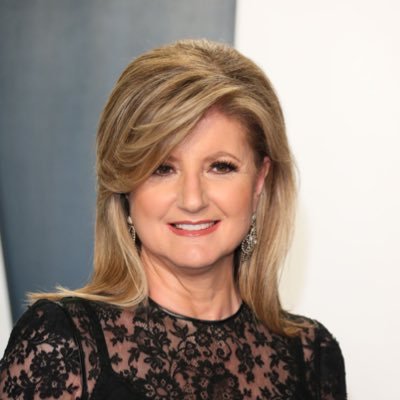
Just back in New York after @semafor's inaugural Silicon Valley & the World convening in Menlo Park with leaders from technology, finance and government from around the world. Over two fascinating days we explored everything from AI's impact on the global economy and Jensen Huang's resignation to the challenge of cognitive offloading for medical students and the casting of Robert Pattinson as the next James Bond.
AI is not just a technological revolution, it's a societal one, and that was reflected both in the formal and the informal discussions. How can we build not just the technological but the institutional and human infrastructure to be able to navigate the transformation times ahead?
In my session with @semafor deputy editor @sbanjo and economist @SteveRattner, I spoke about the need to build not just machine intelligence but human wisdom and the human capabilities that machines can't replicate. Right on cue, the @CambridgeWords announced that the 2026 Word of the Year is “human.”
And this theme of accelerating recursive self-improvement in humans, not just machines, ran through many of my 1:1 conversations: @kevinroose, author of “The AGI Chronicles” and whose new podcast, @MachineGodsPod, with @CaseyNewton, I'm already addicted to; @azeem, whose @ExponentialView newsletter on @Substack is a must-read to decipher these times; @danshapero, the new CEO of @LinkedIn, my favorite platform for important conversations; @ylecun and @lxbrun, whose new company @amilabs is building predictive world models; Marco DeGeorge, co-CEO of @aloyoga, who told me about the wellness trends at the heart of his brand; and so many others, including my dear friends, @someshdash from @IVP and @mamoonha from @kleinerperkins who are both @thrive board members; @jpatel41, president of @Cisco; and @TheoKyriakou, CEO of @AntennaGroup, a key partner both for @HuffPost and @thrive.
@Justin_B_Smith and @semaforben have been old friends for many years so it was special to see what they’ve built with @semafor at a time of such media contraction. Congratulations to them as well as to Iconiq co-founder Divesh Makan and @GinaChon, @ReedAlbergotti and the whole @semafor team. Looking forward to Semafor World Economy in April in DC.
You can watch my session here: youtube.com/watch?v=wQuLagat…
And watch the rest of the conference here: semafor.com/hub/semafor-sili…


Azeem Azhar retweeted

Goldman Sachs Lowers Broadcom Price Target
Goldman Sachs expects Broadcom’s results and guidance to modestly exceed expectations, but believes investors will focus more on its AI revenue outlook: the certainty of custom XPU shipments in fiscal 2027, the availability of land, power, and other data center infrastructure for fiscal 2028, and whether competitors such as MediaTek could affect Broadcom’s share at key customers, including Google.
Of Broadcom’s planned 10 GW of custom XPU deployments in fiscal 2027, approximately 6.3 GW is tied to emerging hyperscalers that still face uncertainty over external funding. These customers account for roughly 75% of planned deployments in fiscal 2028. Management’s ability to confirm their funding and readiness to deploy may therefore matter more to the stock than a modest earnings beat. Goldman Sachs’ AI semiconductor revenue forecasts for fiscal 2027 and 2028 are 5% and 9% above consensus, respectively. It maintains a Buy rating but lowers its 12-month price target from $540 to $460 because valuation multiples for comparable companies have declined. Key risks include slower AI infrastructure spending, share losses in custom chips, and increased competition in VMware’s markets.
