

Oceanographer | Prof @PRLAhmedabad | Editor @theAGU 's JGR Oceans
Ahmedabad, India
Joined April 2010
- Tweets746
- Following582
- Followers472
- Likes6K





Arvind Singh retweeted

Well, folks! I recorded a course on Introduction to Climate Science because I thought many students coming into Ph.D. programs in climate-related fields don’t have the basic climate background. I completed the course and then realised that there is a need for continuously reporting on new findings and interesting results and issues. So I started recording podcasts on everything I find interesting. That has resulted in 20 playlists even though my categorisation of topics is not perfect. I concluded the last podcast of the last playlist today but guess what? Each playlist has more podcasts so will start from the first one again. I enjoy these anyway and Bengaluru weather really suits me. Found great coffee shops to hang out at and it’s weird to wake up and realise that I don’t have to be anywhere other than where I want to be. #climate #elnino #monsoon #climatechange #globalwarming #adaptation #climatesolutions #mitigation #S2Spredictions #peace
youtube.com/@murtuguddeclima…

Arvind Singh retweeted

OSIICON-27 | 20–22 Jan 2027 | IITM Pune
10th National & 1st International Conference of the Ocean Society of India.
Abstract deadline: 30 Oct 2026
Register and submit abstracts: osicon27.in/
#OSIICON27 #OceanScience #IITMPune #MoES

Arvind Singh retweeted

India's women athletes are telling us such wonderful, inspiring stories at these Asian Games. With every medal they strike, they plant a dream in another family about what young women can achieve. Overjoyed


Arvind Singh retweeted

Join us for an exciting Science & Media Dialogue Bringing together scientists and media professionals to explore how ENSO, a warming ocean & changing climate interact—and what this means for extreme events, marine ecosystems & society.
#IndianOcean #ClimateScience #ScienceMedia

Arvind Singh retweeted

Meat eating is not only highly immoral but also a major source of pollution and stress on the planet.
I'm glad India didn't bend to the ridiculously unscientific pressure to serve meat


Arvind Singh retweeted

Workshop & Brainstorming Meeting | NCPOR
NCPOR organised a day-long Workshop-cum-Brainstorming Meeting on “Southern Ocean Biogeochemistry: Future Directions and Way Forward” on 7 September 2026, bringing together scientists and experts to deliberate on strategies and develop a roadmap for strengthening short- and long-term biogeochemistry research in the Indian sector of the Southern Ocean. The programme commenced with the Welcome and Opening Remarks by Dr. Thamban Meloth, Director, NCPOR, An overview of the Southern Ocean Programme and the background to the brainstorming session by given by Dr. Rahul Mohan, Scientist G, NCPOR, followed by remarks from Dr. V.V.S.S. Sarma, Scientist-G & Scientist-in-Charge, NIO, Visakhapatnam and NCPOR RAC Member, and Dr. M. Ravichandran, Former Secretary, MoES and Professor, IIT Chennai, who chaired the sessions.
The meeting further featured discussions on institutional long-term initiatives and future priorities for Southern Ocean biogeochemistry research, with presentations by invited subject experts. An interactive session, moderated by Dr. V.V.S.S. Sarma, focused on strategies and a roadmap for developing an optimal short- and long-term biogeochemistry research programme in the Indian sector of the Southern Ocean. The meeting concluded with a synthesis of key outcomes and the adoption of action plans, including identification of key scientific gaps, future research priorities, and observational requirements.
@DrJitendraSingh
@moesgoi
@Ravi_MoES
@TMeloth
@Rahul_Mohan_GOA


Arvind Singh retweeted
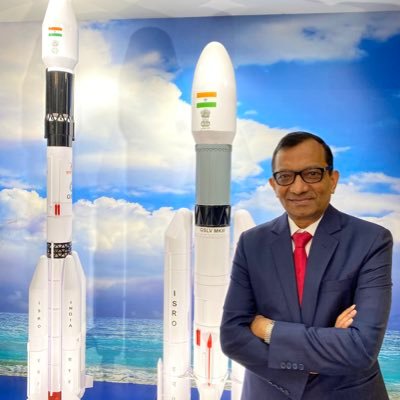
There has been some misleading narrative in the media around the future role of ISRO. Let me say it unequivocally: ISRO’ s role is by no means diminishing. It will remain the bedrock of Indian space sector.
The reforms since 2020 are about expanding India’s overall space ecosystem.
IN-SPACe will facilitate and authorise greater non-government participation, while NSIL will help commercialise mature capabilities.
The idea is to let industry increasingly manufacture and scale mature launch vehicles, satellites and other systems, while ISRO focuses on what it is uniquely placed to do: advanced R&D, scientific missions, strategic missions, new technologies, and infrastructure that is too complex for the private sector to develop on its own.
ISRO will remain at the core of India’s space programme leading frontier research and the next generation of national missions, including the Bharatiya Antariksh Station by 2035, an Indian crewed mission to the Moon by 2040, next-generation launch systems, and sustained lunar and planetary exploration.
The direction is not a smaller ISRO. It is a larger Indian space ecosystem, with ISRO pushing the technological frontier. @isro @INSPACeIND
Arvind Singh retweeted

#TeachersDay is about appreciating the strong contribution of teachers to our society. It is also a day to pay homage to Dr. S. Radhakrishnan.
Here is what happened when the National Teachers' Awards winners were invited to 7, LKM yesterday….
Arvind Singh retweeted

794 bodies recovered. Thousands still unaccounted for. Tell us, what was their crime?
I am writing this from the Himalayas from a country responsible for only around 0.1% of global greenhouse-gas emissions. Nearly 46% of our land is covered by forests. Around 94% of our installed electricity capacity comes from hydropower. We are rapidly moving away from fossil-fuel vehicles too: EVs accounted for about 74% of Nepal’s four-wheeled passenger vehicle imports in 2025/26. We protect forests. We generate electricity from our rivers. We are embracing electric mobility at a pace few countries in the world have matched. Yet today, our people are digging through mud, searching rivers and waiting beside phones for the names of their loved ones.
The Bhote Koshi flash flood has shown us what it means to live beneath a rapidly changing cryosphere. Our glaciers are retreating, our frozen mountains are becoming increasingly unstable, and the rivers that generate our clean electricity can also carry destruction into communities below. We did not build our prosperity by burning generations of coal and oil. We contributed almost nothing to creating the climate crisis at this scale. But we are being forced to survive its consequences. The people whose bodies are being pulled from rivers did not cause this crisis. The families still waiting for thousands of missing people did not cause it. The children, farmers, workers and mountain communities who lost everything did not cause it.
So from the Himalayas, we ask the industrialised world: how many Himalayan bodies will be enough? How many mothers must wait for children who never return? How many villages must disappear before “climate justice” becomes more than a speech at another conference? Do not come to us only with sympathy after the bodies have been counted. Come with responsibility. Come with climate finance, adaptation, loss-and-damage support and the courage to cut emissions at the scale this emergency demands. We want climate justice. We want the right to survive in our own mountains. We want a world where being born in the Himalayas is not a death sentence for a crisis we did not create.

Arvind Singh retweeted

🇮🇳 Government of India — Public Consultation
Exam reforms: your suggestion is invited.
The High-Powered Task Force on Reforms in Public Examinations wants to hear from students, parents, teachers, every citizen.
Send yours on WhatsApp in 2 minutes:
👉 wa.me/917827042830?text=hptf
Website: examreforms-taskforce.dopt.g…
Toll-free: 1800-180-4747
Email: [email protected]
Write in English, Hindi or any regional language.
🗓️ Last date: 13 September 2026
Forward this to your groups — every voice counts.

Arvind Singh retweeted

Heartiest congratulations to Team India for their best-ever performance at the 19th International Earth Science Olympiad (IESO-2026), held in Turin, Italy, from 20–27 August 2026.
Competing among teams from 39 countries, India won an impressive 9 medals — 4 Gold, 3 Silver and 2 Bronze — across Written & Practical, International Team Field Investigation and Earth Science Project competitions.
Congratulations to Saumik Mandal, Aaron Maiti, Riddhi Ranjan and Md. Ehtesham Rizwi for this remarkable achievement! 🇮🇳🏅
#IESO2026 #TeamIndia #EarthScienceOlympiad #YoungScientists #IndiaShines


Arvind Singh retweeted

Published today in GRL
Editorial by all @theAGU Editors-in-Chief (and led by @Barefoot_Lab) on why we choose to publish in society journals (like AGU's)
agupubs.onlinelibrary.wiley.…

Arvind Singh retweeted
Editorial about Supporting Information at @theAGU's GRL. Long story short: it's the function, not the quantity.
agupubs.onlinelibrary.wiley.…


Arvind Singh retweeted
The Cabinet’s approval of the Pradhan Mantri Surya Sarovar Yojana expands India’s clean-energy capacity through the innovative use of our reservoirs and inland water bodies. The Scheme will benefit every State and Union Territory and reduce CO₂ emissions.
pib.gov.in/PressReleasePage.…
Arvind Singh retweeted

🇮🇳GOLDEN SWEEP FOR INDIA 🏆
All 5 Indian students win GOLD at the 56 International Physics Olympiad (IPhO) 2026 in Bucaramanga, Colombia -placing India at Rank #1 in the world (jointly with China, Kazakhstan, Russia, South Korea & Taiwan) among 381 students from 87 countries 1/5

Arvind Singh retweeted

Join the Listening to Learn Webinar Series (Session-131) by the Department of Education in Science and Mathematics, NCERT, on an important and thought-provoking topic:
𝐎𝐜𝐞𝐚𝐧 𝐀𝐜𝐢𝐝𝐢𝐟𝐢𝐜𝐚𝐭𝐢𝐨𝐧 - 𝐀𝐧 “𝐄𝐯𝐢𝐥 𝐓𝐰𝐢𝐧” 𝐨𝐟 𝐂𝐥𝐢𝐦𝐚𝐭𝐞 𝐂𝐡𝐚𝐧𝐠𝐞
Speaker: Dr. Arvind Singh
(Physical Research Laboratory, Ahmedabad)
Date: Friday, June 05, 2026
Time: 10:00 AM – 11:00 AM (IST)
Telecast on PM eVidya Channels #9, #10, #11 & #12
Watch Live on YouTube: youtube.com/@NCERTOFFICIAL
Discover how rising CO₂ levels are silently changing ocean chemistry, threatening marine ecosystems, and impacting life on Earth. Learn about the science behind ocean acidification and why protecting our oceans is more important than ever.
#NCERT #ListeningToLearn #OceanAcidification #ClimateChange #PMeVidya #ScienceEducation #MarineEcosystems #Sustainability #EnvironmentalAwareness #Webinar #LearningNeverStops

Arvind Singh retweeted

Scientists from the US & Europe had to fly to India to learn how to read the planet from him. He turned the Indian Rain into a global Data Stream for climate science. To his neighbors, he was likely just a man obsessed with collecting rainwater in buckets; to the globe, he was the Admin of Earth’s Timeline.
In the 1950s, scientists knew how to date very old things (billions of yrs) & very young things (C-14 for the last 50000 yrs). But there was a Blind Spot in the timeline: the last 100 to 1000 yrs, the era that defines our current climate crisis. Dr. Devendra Lal realized that when cosmic rays smash into the atmosphere, they create Silicon-32. This isotope falls with the rain & gets trapped in the layers of the ocean & ice.
Silicon-32 is incredibly rare. Detecting it is like looking for a single specific grain of sand in a desert. To find it, we needed massive data sets which in his world, meant 1000s of liters of water. While Western scientists tried to simulate these processes in sterile labs, Lal used the Direct Energy of the Indian climate.
During the heavy Monsoons, Lal & his team at TIFR did not just stay indoors. They set up massive collection systems. They were essentially using the entire Indian subcontinent as a capture card for cosmic data. He proved that the Monsoon was a Conveyor Belt that brought cosmic isotopes from the stratosphere down into the deep-sea sediments. He turned a Natural Disaster into a Precision Tool.
Because of Lal’s work, we could suddenly read how fast ocean currents move, the circulation logic of the planet. Before Lal, the deep ocean was a black box. His Silicon-32 method acted as a Timestamp.
By measuring the decay of the Silicon-32 he found in ocean sponges & sediments, he could tell exactly how many yrs ago that water was last at the surface.
When the US launched the GEOSECS (Geochemical Ocean Sections Study) project (the most ambitious ocean mapping in history), they depended on his protocols. The global admin of the project was a man who had perfected his craft in a Bombay lab.
Lal once spent weeks collecting giant ocean sponges because they were the Hard Disks that absorbed his isotopes. To the world, these were just sea-scrubbers; to Lal, they were archived data packets of the 18th century.

Arvind Singh retweeted

❤️ this has been checked and it is confirmed by family.
Such bonds are true testament of what unconditional love is ❤️

A final goodbye! In a deeply moving moment from Rayara Doddi in Channapatna near #Bengaluru, an 85-year-old woman who regularly fed monkeys was hugged by one of them after her passing.
(📹: Fwd, to-be cross-checked)
@timesofindia