

Medical oncologist and clinical research focused in breast cancer. Hospital Santa Catarina Paulista.BCRI.
São Paulo, Brasil
Joined June 2011
- Tweets65
- Following480
- Followers148
- Likes1.4K



Aumilto Silva, MD. retweeted

Happy to be part of an amazing publication effort in @TheLancetOncol with Roberto Salgado and the team, partnering with the @TILsWorkGroup
Coming Aug 24 in @TheLancetOncol: 3 TILs papers on
• Manual, digital & AI TIL scoring in HER2+ BC
• AI-based TIL quantification in TNBC: CATALINA
• TILs & breast radiotherapy
Plus an editorial and podcast with @LoiSher
Stay tuned! @muschollings
The recent SUMMIT TNBC analysis adds another piece to an evolving concept in precision oncology: activating HER2 mutations may define a therapeutically relevant subgroup even in HER2-nonamplified disease.
Earlier studies such as MutHER and the HR-positive SUMMIT cohorts already showed that HER2-mutant, HER2-nonamplified metastatic breast cancer can respond to HER2-directed kinase inhibition, particularly with dual blockade strategies combining neratinib with trastuzumab-based approaches.
The TNBC cohort extends this rationale into a biologically aggressive setting traditionally considered difficult to target molecularly.
The signal is interesting:
• confirmed ORR around 35–40%
• longer disease control with neratinib + trastuzumab
• ctDNA dynamics tracking response and resistance evolution in real time
What makes the study particularly relevant is not simply the response rate.
ctDNA analyses demonstrated suppression of HER2-mutant clones during response, followed by molecular re-emergence at progression, alongside acquisition of potential resistance alterations involving ERBB3, KRAS, PIK3CA, MTOR, and TP53.
• Genomic drivers may matter more than conventional receptor labels alone.
• Rare molecular subsets can still support drug development strategies.
• Basket trials remain highly relevant in modern oncology.
• ctDNA is increasingly becoming a functional biomarker of therapeutic pressure and clonal evolution.
The study is small and nonrandomized, so interpretation must remain cautious.
But conceptually, it represents another step away from static pathology labels and toward dynamic molecular oncology.
@oncodaily @CD_AACR
#bcsm #TNBC #PrecisionOncology #BreastCancer #ClinicalTrials #ctDNA
aacrjournals.org/clincancerr…

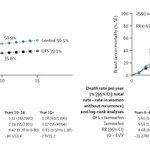
New EBCTCG individual patient-level meta-analysis in The Lancet: ovarian function suppression/ablation in premenopausal ER+ early breast cancer reduced long-term recurrence and breast cancer mortality across 15,075 women from 23 randomized trials.
Overall, OFS reduced invasive breast cancer recurrence by 18%: RR 0.82, 95% CI 0.77–0.87; p<0.00001. Breast cancer mortality was also reduced: RR 0.86, 95% CI 0.80–0.93; p=0.0009.
The benefit was most clinically relevant in women confirmed to remain premenopausal after chemotherapy, or who did not receive chemotherapy.
In premenopausal ER+ early breast cancer, ovarian function is a therapeutic target. OFS reduces recurrence and breast cancer mortality, especially when ovarian activity persists after chemotherapy. In modern practice, the question is less does OFS work?and more who has enough absolute risk to justify OFS, for how long, and with which endocrine backbone or escalation strategy?
@TheLancetOncol @OncoAlert
thelancet.com/action/showPdf…

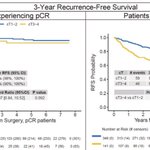
PHERGain-2 explores a clinically relevant question in HER2+ early breast cancer: can selected patients be treated with a chemotherapy-free, response-adapted strategy using neoadjuvant trastuzumab–pertuzumab, followed by adjuvant HP or T-DM1 according to pCR?
Study population: HER2 IHC 3+, node-negative, treatment-naive early breast cancer, tumors 5–30 mm by MRI.
Design: single-arm phase II.
All patients received 8 cycles of neoadjuvant HP; HR+ tumors also received endocrine therapy.
Post-surgery treatment was adapted by pathology:
• pCR → adjuvant HP
• residual invasive disease / micrometastatic nodal disease → T-DM1
• ypN1–3 → optional chemotherapy + T-DM1
Key results:
• 396 patients started treatment
• 391 underwent surgery
• pCR: 59.6%
• pCR HR−: 63.0%
• pCR HR+: 58.3%
• grade ≥3 treatment-related AEs: 5.6%
• serious AEs: 6.1%
PHERGain-2 is an important step toward response-adapted, chemotherapy-free strategies in selected HER2+ EBC. The key question now is whether excellent pCR and QoL/toxicity results translate into durable recurrence-free outcomes.
@OncoAlert @Annals_Oncology
#ESMOBreast26
annalsofoncology.org/action/…

Aumilto Silva, MD. retweeted

Integrating sTILs Into PREDICT Improves Prognostic Discrimination in Early-Stage TNBC - Aumilto Silva
@aumilto @CarmenCriscit @curijoey @vitti10 @mpgoetz
@matteolambe @StefanMichiels
oncodaily.com/voices/aumilto…
#OncoDaily #Oncology #Cancer #Health #Medicine #BreastCancer #MedX #MedTwitter #TNBC

In a large pooled analysis (n=3,698), integrating stromal tumor-infiltrating lymphocytes (sTILs) into the PREDICT model significantly improved prognostic discrimination in early-stage TNBC. Each 10% increase in sTILs was associated with a ~15% reduction in breast cancer mortality risk.
The updated model (PREDICT_sTILs) demonstrated robust calibration (O/E ~1.0) and discrimination (AUC ~0.74 at 5 and 10 years), with consistent performance across geographic regions.
Clinically, incorporation of sTILs enhances risk stratification, identifying additional low-risk patients who may safely forgo chemotherapy, while refining selection of those most likely to benefit.
These findings reinforce the role of immune biomarkers in prognostication and support more individualized, biology-driven treatment de-escalation strategies in TNBC.
@OncoAlert @Annals_Oncology
annalsofoncology.org/article…

Long-term analysis of the phase II GeparNuevo trial in early TNBC showed that adding durvalumab to neoadjuvant chemotherapy was associated with sustained survival benefit after a median follow-up of 86.4 months.
Compared with placebo, durvalumab improved iDFS (HR 0.56), DDFS (HR 0.41), and OS (HR 0.33), with 7-year OS rates of 91.6% vs 74.7%. Notably, this benefit was observed without adjuvant continuation of checkpoint inhibition.
The findings are methodologically important because the original trial did not show a statistically significant overall pCR increase, suggesting that pCR may not fully capture the long-term benefit of immunotherapy in early TNBC. As a phase II study, these results remain hypothesis-generating, but they strongly support re-examining the necessity and duration of adjuvant immunotherapy.
@oncodaily @JCO_ASCO
ascopubs.org/doi/10.1200/JCO…

New data from the pooled WSG ADAPT-HR+/HER2- + ADAPTcycle analysis (N=7,914) reinforce that short preoperative endocrine response can help refine treatment selection in HR+/HER2- early breast cancer.
Key points:
• Endocrine response (post-ET Ki67 ≤10%) was highly consistent across both trials: 64.2% in ADAPT-HR+/HER2- and 65.1% in ADAPTcycle.
• Response was much higher with aromatase inhibitors than with tamoxifen: 81.4%/76.7% vs 40.1%/34.7% across the 2 studies.
• In premenopausal patients, adding ovarian function suppression (OFS) improved endocrine response, and GnRH + AI achieved rates similar to postmenopausal women.
• Independent predictors of endocrine response included: AI use (+OFS), age >50, lower Recurrence Score, lower baseline Ki67, and higher ER expression. Higher HER2/ERBB2 expression also correlated with response.
• Prognostically, endocrine responders did better: in ADAPT-HR+/HER2-, 5-year dDFS among chemotherapy-treated N0-1 patients with RS >25 was 87.0% in ET-responders vs 80.7% in non-responders.
Integration of dynamic endocrine response (Ki67 after short ET) with genomic risk assessment represents a clinically actionable strategy to individualize therapy and expand chemotherapy de-escalation in HR+/HER2- early breast cancer, particularly when endocrine therapy is adequately optimized.
@OncoAlert @Annals_Oncology @Prof_Nadia_H
annalsofoncology.org/article…

Aumilto Silva, MD. retweeted

Big News for AI and Breast Cancer Screening.
For decades, these women walked out of their mammogram labeled “average risk” and sent home.
NCCN’s 2026 guidelines just changed the calculus. AI analysis of a routine mammogram can now identify women with a ≥1.7% five-year breast cancer risk starting at age 35, including the majority who would never have been flagged by genetics or family history alone.
What happens when you’re identified? This isn’t just a number.
The guidelines link that risk score directly to action:
•Supplemental imaging (MRI, ultrasound)
•Consideration of risk-reduction strategies (chemoprevention, lifestyle)
•Periodic reassessment, because risk changes over time
This means a woman who would have been told “see you next year” may instead get an MRI that finds a 6mm cancer. Or start a conversation about tamoxifen.
The mammogram was always carrying this information. AI can now read it. And NCCN is saying: act on it. #onclive #bcsm #oncoalert

The @NCCN has updated its 2026 Clinical Practice Guidelines in oncology for breast cancer screening and diagnosis to include Clairity Breast, an AI-based risk assessment tool that analyzes mammograms and assesses patients’ future risk for breast cancer development #bcsm #oncology
Read more: onclive.com/view/clairity-br…

Do PARP inhibitors perform as well in the real world as in trials?
PARP inhibitors in real-world HER2- advanced breast cancer (PRAEGNANT registry).
In 152 pts treated with olaparib/talazoparib:
• Median rwPFS: 6.2 mo
• Median rwOS: 17.1 mo
Outcomes varied by line of therapy, HR status, and agent. HR+ pts had longer PFS vs TNBC (7.3 vs 4.5 mo). Earlier-line use showed better outcomes.
Despite frequent later-line use, results were broadly consistent with pivotal trials → supports effectiveness in routine practice.
Real-world data reinforce PARP inhibitors as a valid standard in gBRCA-mutated HER2- ABC.
@OncoAlert @Nature_NPJ
nature.com/articles/s41523-0…

Long-term follow-up from the ABCSG-34 trial demonstrates that baseline ctDNA positivity is associated with inferior survival outcomes in early breast cancer.
Median follow-up: 7.1 years
• Population: n=109 with ctDNA + long-term outcomes (from 400 randomized)
• Baseline ctDNA positivity: 43.4% (63/145)
Prognostic impact (baseline ctDNA+ vs ctDNA−):
• OS: HR 2.12 (p=0.043)
• iDFS: 58.5% vs 70.8% (HR 1.53)
• DRFS: 60.9% vs 77.9% (HR 1.98)
RMST (≤8 years):
• iDFS: −13.6 months
• DRFS: −16.0 months
• OS: −12.3 months
ctDNA dynamics during NAT:
• Persistence → higher residual cancer burden, lower pCR
• Clearance → trend toward improved outcomes (NS)
• Mid-/end-treatment ctDNA not statistically associated with long-term survival
While ctDNA clearance during NAT correlates with improved pathological response, its association with long-term endpoints did not reach statistical significance—likely reflecting limited sample size and post-baseline missingness/selection bias. These data support ctDNA as a dynamic MRD biomarker with potential utility for risk-adapted strategies, pending validation in adequately powered, prospective studies.
@OncoAlert @Nature_NPJ
nature.com/articles/s41523-0…

Aumilto Silva, MD. retweeted

The OncoAlert🚨Newsletter Covering April 3-9, 2026 REGISTER TO GET IT👉 buff.ly/7Jlzp0V or buff.ly/FRV7xUs #BreastCancer
🧬 TROPION-Breast02 — Dato-DXd vs chemo in 1st-line TNBC ineligible for immunotherapy. PFS 10.8 vs 5.6 months. A new frontline option is here.
✅ APHINITY — Pertuzumab + trastuzumab in early HER2+ breast cancer. All subgroups benefit, but HER2 FISH-low/ER+ patients may gain the most.🧬
@Dr_ElvinaA
@drsarahsam
@aumilto
@Yasuaki_Sagara
@gabri_gentilee
@eiger_daniel
@MedicalwatchHQ
@HamdiZizit
@matteolambe @aftimosp @E_de_Azambuja @DrSGraff @ErikaHamilton9 @double_whammied @maryam_lustberg @raalbany @hoperugo @stolaney1 @LoiSher @SirohiBhawna @jamecancerdoc @JavierCortesMD @JaniceTNBCmets @Prof_Nadia_H
@nataliagandur @acampsmalea @FernandoOnco @ElisaAgostinett @to_be_elizabeth @realbowtiedoc @Lucarecco @GaiaGriguolo @JankovicK
@MarioBalsaMD @Onco_Cifu88
Aumilto Silva, MD. retweeted
Adjuvant Chemotherapy Improves Survival in Older Women With TNBC - Aumilto Augusto da Silva Júnior
@aumilto
oncodaily.com/voices/aumilto…
#OncoDaily #Oncology #Cancer #Health #Medicine #MedX #BreastCancer

Adjuvant chemotherapy improves survival in older women (≥70) with nonmetastatic TNBC.
In a SEER cohort (n=5730), chemo was associated with:
• ↓ breast cancer–specific mortality (HR 0.69)
• ↓ overall mortality (HR 0.55)
Notably, chemotherapy utilization decreased markedly with advancing age despite consistent benefit across most subgroups, suggesting potential undertreatment in this population. However, these findings should be interpreted with caution given the retrospective design.
These findings support the integration of geriatric assessment to guide individualized adjuvant treatment decisions.
@oncodaily
jamanetwork.com/journals/jam…

ctDNA vs pCR in early breast cancer (HER2+/TNBC)
Prospective PREDICT-DNA study shows:
• ctDNA after neoadjuvant therapy does NOT reliably predict pCR (NPV 60%)
• But it is a powerful prognostic marker
Key signals:
• Post-NAT ctDNA+ → ↑ recurrence risk (HR 8.9)
• Post-surgery ctDNA+ → extreme risk (HR 128)
• ctDNA− after surgery → 94% 5y IDFS
👉 ctDNA outperforms pCR for risk stratification
👉 Potential to guide escalation/de-escalation strategies
@OncoAlert
ascopubs.org/doi/10.1200/JCO…

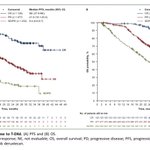
TROPION-Breast02
Dato-DXd vs chemotherapy in 1L metastatic TNBC (IO-ineligible) → positive for PFS and OS
Efficacy (BICR):
• PFS: 10.8 vs 5.6 mo (HR 0.57, p<0.0001)
• OS: 23.7 vs 18.7 mo (HR 0.79, p=0.029)
• ORR: 63% vs 29%
• TROPION-Breast02 → IO-ineligible population
• ASCENT-03 → broader 1L TNBC population
Efficacy comparison (cross-trial, cautious):
• Dato-DXd → HR PFS 0.57 + OS benefit demonstrated
• Sacituzumab govitecan (ASCENT-03) → PFS benefit, OS not clearly positive (current data)
👉Important:
TROPION-Breast02 → includes early relapsing pts (DFI ≤12 mo)
• Dato-DXd: PFS + OS positive
• SG: PFS benefit; OS not clearly positive (current data)
→ Activity preserved in biologically aggressive early-relapse TNBC
→ Supports Dato-DXd as robust 1L option even in poor-prognosis pts
@Annals_Oncology @OncoAlert
👉 annalsofoncology.org/article…

Aumilto Silva, MD. retweeted
Two TROP2 ADCs. Same population. Very different trials.
ASCENT-03 (SG) and TROPION-Breast02 (Dato-DXd) both showed PFS benefit in 1L IO-ineligible mTNBC
Key differences worth knowing 👇
🔹 DFI: ASCENT required ≥6 mo; TROPION had NO minimum, 15% relapsed < 6 months since adjuvant
🔹 Chemo comparator weaker in TROPION (cape/eribulin included) → partly explains the ORR gap (29% vs 46%)
🔹 OS: only TROPION met it — but no crossover vs 82% in ASCENT
🔹 Toxicity: SG more hematologic/GI; Dato-DXd more stomatitis/ocular
So how will we choose?
Selection will likely come down to:
⚡ Disease burden/urgency → higher ORR with Dato-DXd may favor it for visceral crisis
🧠 CNS disease → Dato-DXd looks good in Brain population; SG?
💊 Toxicity profile → neutropenia risk vs mucositis/dry eye
📍 Access & approvals — SG approved for TNBC; Dato-DXd not yet

Aumilto Silva, MD. retweeted
Novel Therapeutic Targets in HER2-Heterogeneous Breast Cancer - Aumilto Silva
@CD_AACR @aumilto
oncodaily.com/voices/aumilto…
#OncoDaily #Oncology #Cancer #Health #Medicine #MedX #MedTwitter #BreastCancer #TherapeuticTargets #ClinicalResearch

This @CD_AACR study shows:
• Tumors contain HER2-high & HER2-low subclones with shared origin but distinct behavior
• HER2-low cells drive resistance to ADCs
• These cells remain sensitive to HER2 TKIs
Biologically:
• Subclonal cooperation promotes tumor fitness
• ADC treatment selects for HER2-low populations → recurrence
• Limited “bystander effect” depends on payload sensitivity
Take-home:
→ Consider HER2 heterogeneity as a predictive resistance mechanism
→ Supports rational combinations rather than sequential HER2-targeted therapy
@LabPolyak @sflomos @oncodaily
👉 aacrjournals.org/cancerdisco…

In this important article resistance to next-generation SERDs in ER+/HER2− metastatic breast cancer is primarily driven by loss of luminal lineage identity, leading to reduced ERα dependence and activation of alternative proliferative pathways.
Heterogeneous responses:
•~30–50% of patients progress early (≤2 months)
•Others derive prolonged benefit (>2 years)
•Resistance occurs independently of ESR1 mutation status
•Stronger association with: Prior CDK4/6 inhibitor exposure and baseline low ERα activity
@OncoAlert @jhaveri_komal
👉 nature.com/articles/s41467-0…
