

Tokenizing the supply chain economy. Turning haulage trucks, cargo ships, and aircrafts into investable products.
blockchain
Joined March 2025
- Tweets488
- Following6
- Followers190
- Likes1.2K







AudaCity retweeted

Had an incredible time attending and speaking at @Web3LagosCon over the last two days.
It’s my fourth consecutive year attending, and I must commend the team for always fostering meaningful conversations that move the ecosystem forward.
Let’s do this again!


AudaCity retweeted
Looking forward to speaking about Onchain Lending for Productive Assets at #W3LC5.
I’ll be sharing how onchain liquidity is financing real-world assets, and how we’re doing it @audacityonchain
Excited to meet everyone in Lagos.

What if onchain liquidity could help finance the real-world assets that keep Africa moving?
@afrokayie is bringing Onchain Lending for Productive Assets to #W3LC5.
From productive yield to financing commercial trucking fleets, this conversation goes beyond speculation and into real-world utility.
📅 Aug 28–29
📍 Glover Memorial Hall, Lagos
🎟️ event.web3bridge.com
#Web3Lagos #W3LC5 #Conversations

AudaCity retweeted

Ever stopped to think about where crypto yield really comes from and whether it's built to last?
@audacityonchain is building a protocol that doesn't depend on the usual DeFi yield sources.
Instead: real-world yield from the transportation industry, brought onchain.
Watch to learn how ⬇️
AudaCity retweeted

God of my journey! 🙌🔥 +1 today.
You have been faithful, more than just faithful, from my cradle days to this very hour. And I know You will be with me till the very end.
NAGODE! 🙇♀️🙌🙇♀️


AudaCity retweeted
It’s far easier to buy a logistics company than to assume buying trucks or equipment means you’ve built one.
One of the questions we get the most at @audacityonchain is: “Why don’t you just finance the trucks, get the contracts, and become a logistics company?”
Because owning assets and operating them are two completely different businesses.
A logistics company is years of operational know-how, route planning, customer relationships, fleet management, maintenance, compliance, driver management, and execution.
You can either acquire a logistics company with an experienced team or partner with one.
What you shouldn’t do is assume you can bootstrap all of that because you own the assets.
You’ll get badly burned.

Kola Karim, the founder of Shoreline Energy, reveals one of his worst decisions in business.
In 1995, when he was exporting agricultural products to Morocco and Portugal, he bought 30 trucks so he could own the logistics and make more money.
The drivers of the trucks ruined the business and he had to sell all the trucks.
He ended up outsourcing the logistics to a logistics company
AudaCity retweeted

What a night. The State of RWA in Africa panel at RWA Night Lagos delivered the kind of deep conversations this space needs, on where tokenization stands today and what it takes to move forward. Big thanks to @audacityonchain for bringing this together.
1/2


AudaCity retweeted
dawned on me that my innate drive for building @audacityonchain is to help people with idle assets make productive use of it.
make more money while your money works for you. I see and sense that people have the funds and are skeptical on what to do with it.
that’s where i am at personally. And I want to help thousands of other persons in that same space. Ultimately building that trust and access layer to real world business with high profit margins.
AudaCity retweeted
Invites are being sent out, and the day draws closer.
If you've been exploring RWAs, tokenization, and the future of onchain finance, send me a DM to get your invite.
Looking forward to bringing together founders, investors, operators, and ecosystem leaders for an insightful conversation.

Some rooms are built for conversations.
Others are built for decisions.
RWA Night brings together a carefully curated group of operators, investors, builders, and allocators exploring the future of real-world assets.
This edition focuses on:
Scaling Global Liquidity for Transport & Supply Chain Tokenization.
An evening of insight, capital, and meaningful connections.
03 July 2026
Lagos, Nigeria
Invitation Only
Powered by Audacity.

AudaCity retweeted
RWA Night in Lagos is brewing!!!
The conversation around RWAs is entering a new phase, focused not just on tokenization, but on infrastructure, liquidity, regulation, distribution, and the ability to connect real world economic activity to global onchain capital markets.
That conversation deserves a different kind of room.
RWA Night Lagos brings together a curated group of founders, investors, institutions, operators, and ecosystem leaders exploring the future of tokenized real world assets in emerging markets.
From private credit and asset structuring to liquidity formation and regulatory realities across Africa, the focus is simple:
How do we move RWAs from narrative to real economic coordination?
This is a closed-door gathering designed for high signal conversations and long term collaboration.
More details soon.
If you would like to support the gathering as a strategic partner or sponsor, kindly reach out via DMs.
While most capital chases narratives, a new class of investors is funding reality.
Transport assets.
Supply chain infrastructure.
Real economic activity.
Join us for an exclusive evening exploring the future of transport and supply chain tokenization.
RWA Night
A carefully curated gathering of operators, investors, founders, and institutions shaping the next chapter of real-world assets.
Powered by Audacity.
Invitation Only.

AudaCity retweeted
Just realized something I hadn't fully appreciated when we started building @audacityonchain:
Every truck we finance requires at least one additional employee to operate it.
When I ran the numbers, I was surprised by the scale of the impact.
We're not just helping logistics firms access vehicles. Every truck added to the network creates jobs, unlocks earning opportunities, and increases economic activity far beyond the initial financing/credit.
AudaCity retweeted

if you are into investing and crypto, i think you should pay attention into what Audacity by @afrokayie is doing.
just read below to know more.
What does it look like when capital directly funds logistics operations?
Not venture capital.
Not speculation.
Not waiting years for an exit.
Actual capital flowing into actual economic activity.
Here's how it works:
Capital enters a truck pool.
Investors provide funding that is allocated to the acquisition of commercial trucks operating in high-demand logistics corridors.
Trucks are deployed.
The vehicles are placed with vetted logistics operators who already have contracts, customers, and freight demand waiting to be serviced. There is no "build and pray" phase.
Revenue starts moving.
Every trip completed generates income.
Every delivery made produces cash flow.
The truck is no longer just an asset sitting on a balance sheet.
It becomes a productive financial instrument.
Operating costs are covered.
Fuel.
Drivers.
Maintenance.
Insurance.
Compliance.
The operational layer keeps the trucks moving while preserving long-term asset value.
Net profits are calculated.
Once expenses are deducted, the remaining revenue becomes distributable yield generated by real-world activity.
Revenue is distributed.
Investors receive their share of the profits.
Operators earn from utilization.
The platform earns management fees.
Everyone is aligned around one thing:
Keeping productive assets on the road.
This is what real-world asset infrastructure should look like.
Capital → Assets → Operations → Revenue → Distribution.
No complicated financial engineering.
Just funding the vehicles that move goods, power supply chains, and generate cash flow every single day.
The global economy runs on logistics.
The question is:
Why should only fleet owners earn from it?

AudaCity retweeted
1000 tokenized trucks generates $40M annually and provides ~2000 jobs.
All on @audacityonchain
AudaCity retweeted

I’m going to @audacityonchain’s upcoming Space. Will you join too? xitter.cf/i/spaces/1dGYljNPrOYKX
AudaCity retweeted
One million dollars?
- deploy into @audacityonchain’s tokenized pre-contracted truck pool
- earn asset-backed 25% yearly
- leverage truck tokens for borrowing across integrated vaults
- keep compounding
Easy.


AudaCity retweeted
Again, I’ve been reading @ElectricCapital’s report on 501 sources of real-world yield, and the biggest takeaway for me is how early real-world asset tokenization still is.
Out of 501 sources of real-world yield, only about 34 have any meaningful on-chain presence today. That means roughly 93% of real-world yield is still not on-chain.
And even the assets that are on-chain are very concentrated.
Among the non-stablecoin RWAs with over $50M on-chain, only two have more than 2,000 holders.
So when people say RWAs are already huge, I don’t think they realize how early we actually are.
A small number of institutions, DAOs, or vaults still holds most tokenized assets today. Distribution, not tokenization, is the real bottleneck right now.
We already know how to tokenize assets. That part is mostly solved.
The harder problem is getting those assets into the hands of thousands or millions of investors in a way that makes sense from a regulatory, UX, and liquidity perspective.
Another interesting part of the report is the idea that real-world yield doesn’t just mean Treasuries, real estate, or private credit.
They mapped 501 different yield sources across categories like infrastructure finance, transportation leasing (like @audacityonchain), equipment leasing, supply chain finance, royalties, energy projects (like @fuseenergy, @pluralenergy, etc), compute infrastructure, and more.
Most of the future RWA market probably won’t come from the obvious assets everyone talks about today.
It will likely come from these less popular, harder-to-access yield sources that already generate cash flow in the real world but don’t have efficient capital markets around them.
When you think about it, tokenization is basically a new distribution layer for capital.
Once assets can be packaged, structured, and distributed globally on-chain, capital can reach places and industries that traditional finance never served efficiently.
So the big opportunity in RWAs is connecting global capital to productive assets that were previously too small, too fragmented, or too hard to access. We’re still very early in that process.
Article link is in the next post if you want to read it.

AudaCity retweeted
I’ve read this article two times in the last 24 hours and one thing that stood out for me is the good number of yields that should be making their way onchain simply because they’re uncorrelated.
I’m also glad it specifically mentioned transportation and fleet leasing which is exactly what @audacityonchain does. Can’t wait to see plenty of the other yield types onchain too.


AudaCity retweeted
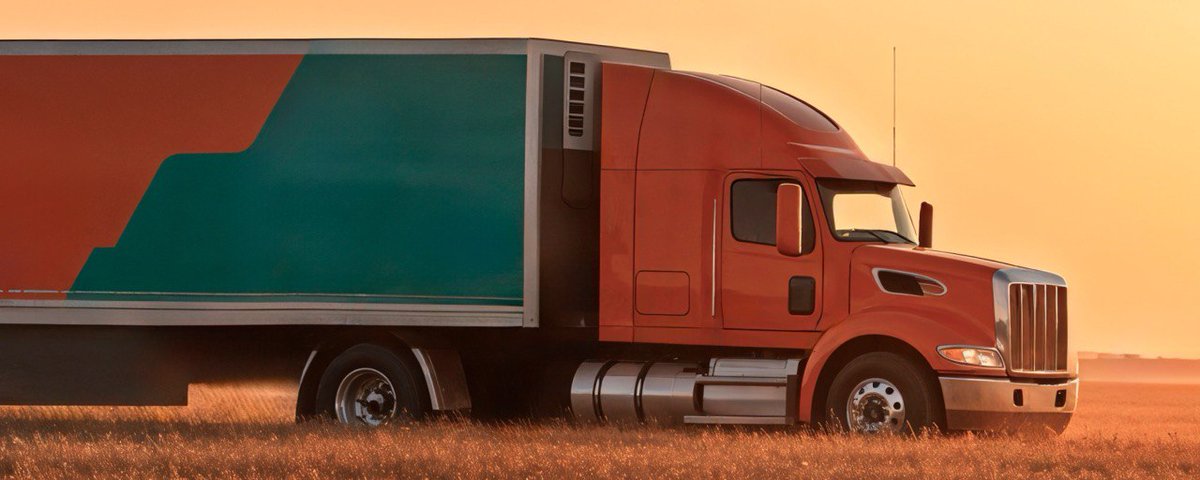
Read @StaniKulechov’s article about abundance assets last week and it prompted to talk about what @audacityonchain is doing with productive assets.
TLDR: onchain lending is perfect for pre-contracted haulage trucks in emerging markets.
Will appreciate all your thoughts!

AudaCity retweeted
Not sure, but someone is tokenizing African haulage though @audacityonchain
AudaCity retweeted
Do you know about Stablecoin Rails?
The payment infrastructure that moves stable-value assets seamlessly onchain.
Stablecoin rails are the pipes that power onchain finance. They enable fast, low-cost movement of stable assets (like USD-pegged stablecoins and other fiat-backed tokens) across borders, wallets, and protocols without relying on slow traditional banking rails.
In RWAs, this infrastructure is critical. It allows investor funds to flow into real-world operations and enables automated, transparent payouts back to investors with minimal friction.
When the rails are strong, capital moves efficiently, settlements are near-instant, and global participation becomes much easier.
Because in modern finance, how money moves is just as important as how it’s earned
