
Retired Assistant Director Missile Defense Agency, Air Traffic Controller, Commercial Pilot, plays Sax and Alto Clarinet.
Huntsville, Al
Joined July 2013
- Tweets6.4K
- Following5.8K
- Followers2.3K
- Likes221K













Arthur Tysen retweeted

“Fue llamada Phillis, porque así se llamaba el barco que la trajo, y Wheatley, que era el nombre del mercader que la compró. Había nacido en Senegal. En Boston, los negreros la pusieron en venta:
-¡Tiene siete años! ¡Será una buena yegua!
Fue palpada, desnuda, por muchas manos.
A los trece años, ya escribía poemas en una lengua que no era la suya. Nadie creía que ella fuera la autora. A los veinte años, Phillis fue interrogada por un tribunal de dieciocho ilustrados caballeros con toga y peluca.
Tuvo que recitar textos de Virgilio y Milton y algunos mensajes de la Biblia, y también tuvo que jurar que los poemas que había escrito no eran plagiados. Desde una silla, rindió su largo examen, hasta que el tribunal la aceptó: era mujer, era negra, era esclava, pero era poeta.”
Phillis Wheatley, fue la primera escritora afroamericana en publicar un libro en los Estados Unidos.

Arthur Tysen retweeted

Make your whole day a constant silent prayer of thanks and watch your life change. 🙏🌻

Arthur Tysen retweeted
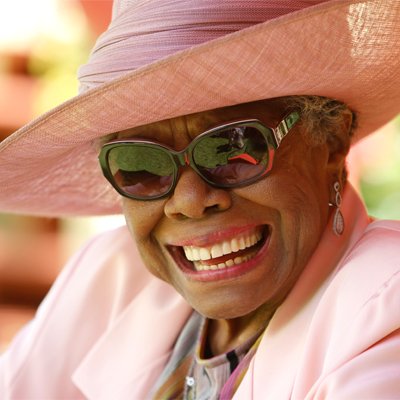
Wisdom Wednesday 🕊️
For nearly six years as a child, Maya Angelou chose not to speak. She would later find her calling in writing about “hope… joy and triumph in the human spirit.”
Her journey reminds us: finding your voice can take time, but your voice still matters.
#MayaAngelou
Arthur Tysen retweeted

The bill said zero and, in that moment, she realized someone had finally treated her like a person
The woman at table seven stared at the receipt, blinking through tears she could not stop. Not tears of embarrassment or fear, but something rarer. Relief. Respect. It had been four days since her last real meal. Not crackers eaten in a rush. Not whatever could be found cheapest. A real plate of food, prepared with care. Pan seared chicken over quinoa. Vegetables roasted until fragrant. Apple crisp still warm, served on proper plates beneath soft lights that felt welcoming instead of cold.
When the server approached with the check, her stomach tightened. She was ready for the moment she dreaded most. The moment she would have to say she could not pay.
The paper was set gently on the table.
Minimum zero dollars. Suggested donation twelve dollars. Pay what you can or volunteer for thirty minutes.
She read it again. Then again.
There was no explanation. No pity. No catch. So she stood up, walked into the kitchen, and asked if she could wash dishes. Half an hour later, with wet hands and a tired smile, she understood something had changed. She had not just eaten. She had been restored.
This is JBJ Soul Kitchen, created by Jon Bon Jovi and his wife Dorothea, a place designed not to save people, but to see them.
Most people know Jon Bon Jovi for stadiums and anthems about surviving hard times. Fewer know that for more than a decade, he and Dorothea have been quietly running community restaurants built on dignity rather than charity.
The idea began years earlier in Philadelphia. Jon was filming a music video when he noticed people living under a bridge. Instead of moving on, he sat down and listened. One man told him something that stayed with him. Hunger hurt, but invisibility hurt more.
That truth echoed memories from Jon’s childhood in New Jersey, where his parents struggled but never surrendered their pride. By 2011, Jon and Dorothea knew that writing checks was not enough. Dorothea, a former restaurant owner, believed food should bring people together, not divide them. Soup kitchens fed bodies, but often stripped away dignity.
So they tried something different.
Everyone would eat the same meal. At the same tables. With the same respect. If you could pay, you paid. If you could not, you volunteered. No labels. No shame.
JBJ Soul Kitchen opened in Red Bank, New Jersey, and critics predicted it would fail. They said people would take advantage. That paying guests would disappear.
They were wrong.
Most people paid the suggested amount or more. Others volunteered. Many did both. The community carried the mission because it felt human.
Lives changed in quiet ways. Volunteers became staff. Guests became mentors. People returned not just for food, but because they felt visible.
Jon washed dishes. Dorothea trained volunteers. There were no staged moments and no special treatment. When the kitchens expanded to Toms River and Newark, they adapted to each neighborhood. During the pandemic, the doors stayed open, serving tens of thousands of meals when need spread far beyond what anyone expected.
On holidays, the tables are set with real plates and flowers. Jon has been known to sit quietly with guests who do not want to eat alone. The model has inspired similar kitchens across the country, and everything they learned has been shared freely.
Because dignity should never be owned.
Jon Bon Jovi has achieved nearly everything fame can offer, but when asked what matters most, he points to the rooms where strangers sit side by side, equal at the table.
Somewhere tonight, someone will finish their meal, look down at a bill that says zero, and remember they belong.
What would change if help always came with dignity?

Arthur Tysen retweeted

Glen Campbell cried the first time he heard "Wichita Lineman."
The song was not even finished.
Jimmy Webb had imagined a lonely lineman maintaining wires that connected everyone else while missing someone he could not reach.
He gave Campbell a demo with only two verses and no bridge. Campbell recorded it anyway, using a guitar solo where the missing verse might have gone.
The song reached No. 3 and went gold.
Bob Dylan reportedly called it "the greatest song ever written."
I understand why.
Few songs have ever made loneliness sound so beautiful.

ALT Glenn Campbell


Arthur Tysen retweeted
When you replace 'why is this happening?' with 'what is this teaching me?' everything shifts. 🌱✨

I loved this story.

Two kids knocked on my door offering to rake my entire yard for $10 total—and what I did next changed how they'll see hard work forever
It was a Saturday afternoon when I heard the doorbell. Two boys, probably around 11 or 12, stood on my porch holding rakes that looked almost too big for them. The taller one cleared his throat nervously: "Excuse me, sir. Would you like us to rake your yard? We'll do the whole thing for ten dollars."I looked past them at my lawn. Leaves everywhere. It was going to be at least two hours of work, maybe three."Ten dollars each?" I asked.They glanced at each other. The shorter one shook his head. "No sir. Ten dollars total. We'll split it."Five dollars each. For hours of hard labor.I could have said yes. I could have gotten my entire yard raked for pocket change and called it a teaching moment about negotiation. But something about the way they stood there—hopeful, polite, willing to work—reminded me of myself at that age. Hustling. Trying. Just wanting a chance."Alright," I said. "You've got a deal. Get started."For the next two and a half hours, I watched those kids work. They didn't cut corners. They didn't complain. They raked every section, bagged the leaves, and even swept off my driveway without being asked. When they finally knocked to let me know they were done, they were sweating, exhausted, and smiling.I walked out with my wallet. "You boys did incredible work," I said, handing them four twenty-dollar bills. "Here's your payment."The taller one's eyes went wide. "Sir, we said ten—""I know what you said. But I also know what two hours of quality work is worth. You earned every dollar of this."They stared at the money like they couldn't believe it was real. Then the shorter one looked up at me and said quietly, "Thank you. Really. Thank you."As they walked away, I heard them talking excitedly about what they'd spend it on. And I realized something: we talk a lot about teaching kids the value of hard work, but we don't always show them that hard work actually gets valued.Those boys didn't ask for a handout. They offered a service. They showed up. They delivered. And in a world that sometimes feels like it punishes effort and rewards shortcuts, I wanted them to walk away knowing that good work doesn't go unnoticed.If you work hard, if you show up with integrity, if you give your best even when nobody's watching—good people will see it. And they'll bless you for it.That's not just a lesson for kids. That's a lesson for all of us.


Arthur Tysen retweeted

Let's try to find the joy,
make the joy,
be the joy,
whenever
and how-
ever
we
can!
💗
#JoyTRAIN #ThursdayThoughts


Arthur Tysen retweeted

92 years old but still has handles. 🤣 😂
Readers added context they thought people might want to know
No verified source or original footage confirms a real 92-year-old performing these moves at "Blastur Dunk City." This matches a known genre of AI-generated elderly-athlete videos, with tools marketed specifically for creating "slam dunk" clips from any uploaded photo. supermaker.ai/video/slam-dun… mcgill.ca/oss/article/me…
Arthur Tysen retweeted

Kurt Warner shares the lesson that changed his entire career and it applies to everything.
He sat on the bench for 4 years in college. When a friend asked the coaches why he wasn't playing, the answer wasn't what he expected:
"The reason I wasn't playing was because I was not very good in practice."
His first reaction? Allen Iverson mode.
"Practice? What're you talking about, practice?"
But then he did the math.
"In college we play 12 games in 365 days. In the NFL we play 16 games in 365 days."
That's less than 5% of your year.
"95% of our lives are lived in practice. And the biggest impression we make on people, the way people can understand and really realize who we are, is what we do every day in practice."
This is the 95% Rule. And it applies to everything - sports, business, relationships, life.
1: Show Up With Your Best Effort - Compete and give your best every single day. People can't question how you show up - your effort, attitude, and actions. Consistency removes doubt.
2: Trust Is Built In Practice, Not Games - Trust is earned in the thousands of moments before it's given. Before you can be trusted, people want to know you're dependable. Every day. Not just when it matters.
3: Master Daily Consistency - Success isn't about intensity - it's about consistency. Your habits compound. What you do daily defines who you become.
4: Big Moments Are Earned In Small Moments - The little details make the biggest difference. Greatness starts with preparation - it's earned in the boredom of doing the work when no one's watching.
Excellence isn't an event - It's a habit.
Practice is where trust is built.
How you show up daily is who you really are.
(🎥 @pttorch)
(🎥@kurt13warner)


Arthur Tysen retweeted
“Whenever you think that some situation or some person is ruining your life, it’s actually you who are ruining your life. It’s such a simple idea. Feeling like a victim is a perfectly disastrous way to make go through life.”
— Charlie Munger

Arthur Tysen retweeted

My religion is #LOVE. ❤️
Every #Heart is my temple. #RUMI
#JoyTrain #Joy #Love #Mindset #MentalHealth #Mindfulness #Quote #Blessed #Mindset #SundayThoughts #SundayMorning #SundayVibes #ThinkBIGSundayWithMarsha RT @Iran_Style
