

Bioinformatics, immunogenetics, high-throughput immune repertoire sequencing. Decoding adaptive immunity.
Yerevan, Armenia
Joined May 2014
- Tweets707
- Following1K
- Followers1.4K
- Likes1.2K






Pinned Tweet
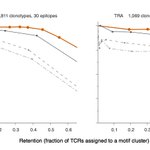
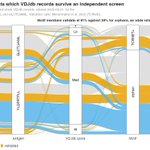
1/7 We are pleased to report the 2026 VDJdb release, just published in Nucleic Acids Research: 203,230 TCR:pMHC records over 2,090 epitopes and 236 MHC alleles, 37-fold the first release, 4-fold our 2022 COVID-19 compendium.
#immunology #bioinformatics
academic.oup.com/nar/advance…

Mikhail Shugay retweeted

Bottlenecks in the study of TCR-antigen specificity:
nature.com/articles/s41592-0…

Mikhail Shugay retweeted

Filling the massive AI drug discovery data gap
nature.com/articles/d41573-0…
Charlotte Deane, co-leader of the OpenBind initiative, discusses the need for more protein–small molecule binding data

Mikhail Shugay retweeted

The trogocytosis plot of T cell-B cell interactions thickens!
T–B interactions yield CD3+ B cells and CD20+ T cells with pathogenic features in multiple sclerosis
pnas.org/doi/10.1073/pnas.26…

Mikhail Shugay retweeted

The emerging reproducibility crisis in AI-driven biomedicine will only intensify unless the community redefines multiomics data quality nature.com/articles/s41587-0…
rdcu.be/a3yYAYF4vAya

Mikhail Shugay retweeted

Can we predict which T cell receptors will recognise which targets?
That's the challenge being tackled by team MATCHMAKERS.
Their latest research has shown that this may be more feasible than previously thought. Their work, built on a rigorously validated TCR dataset, reveals early predictive capabilities.
There's still much more to do, but findings like these are helping to lay the foundations for a future where data-driven approaches can accelerate progress against cancer.
Congratulations to @MariusMessemak1 (pictured right), Bjørn Kwee (pictured left) and Ton Schumacher from @NKI_nl, and all collaborators for publishing this latest research in @ImmunityCP.
🔗 Read the paper: bit.ly/4e89Hbr


Mikhail Shugay retweeted

Hi, we would like to introduce PAIR-Scan, an HLA-agnostic library-on-library screening technology that can identify reactive TCR–antigen pairs with optimal killing activity among up to ~100,000 possible candidate pairs in a single-step.
🧵(1/7)
biorxiv.org/content/10.64898…

Mikhail Shugay retweeted

Missed our latest Unravelling T Cell Recognition seminar?
Prof Chihiro Motozono, discusses the molecular basis of T cell antigen recognition and immune escape in viral infections, with lessons from SARS-CoV-2.
The full seminar is now freely available 👇
youtu.be/x-Ox8MwcHjc
🤖 Made with AI

Mikhail Shugay retweeted
Anthropic's discovery of array-associated reverse transcriptases?
Turns out it was already done by a Danish scientist. He used Claude for administrative tasks, but not in an agentic manner for the discovery. He already filed a patent and gave talks on it
nytimes.com/2026/09/27/scien…

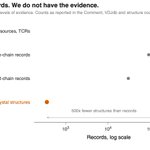
6/7 For structural evidence we modelled 14,612 TCR:pMHC complexes with TCRmodel2/AlphaFold2 across 39 epitopes, against 294 native structures, and report ipTM for each. In IMMREP25, only structure-based methods gained over random classifiers on unseen epitopes.

7/7 Which residues drive recognition? Explore CDR3–peptide contacts as interactive complementarity maps at vdjdb.com. All 14,612 models are on HuggingFace: AlphaFold output at scale, no GPU months required.
huggingface.co/datasets/isal…

Mikhail Shugay retweeted

Thymic selection of the T cell receptor repertoire is biased toward autoimmunity in females
elifesciences.org/articles/1…

Mikhail Shugay retweeted
Universal seropositivity, markers of recurrent reactivation, and a convergent T-cell response implicate cytomegalovirus in Susac syndrome
researchsquare.com/article/r…
Mikhail Shugay retweeted

Identification of broadly tumour-reactive γδ TCRs from multiple myeloma @Nature @UHN_Research
nature.com/articles/s41586-0…

Mikhail Shugay retweeted

T Cell Thoughts. Not a classic review: pubmed.ncbi.nlm.nih.gov/4271…
