

A/Prof of Computer Science @UPTuks, neural networks researcher. I love science, and science loves me.
Pretoria, South Africa
Joined September 2014
- Tweets469
- Following479
- Followers428
- Likes1K




Pinned Tweet
We have reviewed over 100 papers on regularisation, and conducted experiments to show: regularisation doesn’t always help! 💯 human-made review of regularisation in NNs available here: ieeexplore.ieee.org/abstract… #neuralnetworks #regularisation #ieeetransactions

Alchemy indeed. This is why we still need to study all the mysterious things: the high-dimensional loss landscapes, the training trajectories, the hidden useful subspaces.

Deep learning is often taught as a sanitized collection of facts and math. But work at the frontier of AI is messy and empirical.
Our new class, Deep Learning Alchemy, aims to teach the art and science of deep learning in the hands-on spirit of Language Modeling From Scratch.
Students build intuition by running experiments on small LMs, then test it through prediction quizzes: given an unseen code diff, can you predict what happens?
deep-learning-alchemy.github…
My co-instructor @kothasuhas and I think there's significant demand for classes that treat students as serious learners who want to be assessed for what they’ve learned, and so we're trying a new exam-heavy approach to the class (7 exams, 85% of the grade, with the remaining 15% in-person discussion assessments).
We’ve designed the class so students can use AI agents to run their experiments and do their assignment, but they then have to demonstrate that mastery on exams without access to the assignment, and any partial credit on the exam has to come through citations to the assignment, incentivizing them to know what’s in their write-up.
The same assignments and quizzes are public for anyone to try (lecture recordings will be released through @StanfordOnline with some delay). We have some very fun assignments and quizzes covering both classic topics (like NQM, run-to-run stochasticity, and scaling laws) and new and timely topics like muP or hyperball. Made by some real experts like @TristanThrush and @wen_kaiyue
Try some quizzes below!

Deslopping. This is what my role is slowly getting reduced to as a supervisor of postgraduate students. The two main tasks are (1) generating novel ideas that I can pass to students to investigate, and (2) deslopping the reports/dissertations/papers the said students produce.


Hot off the press: We look for strange galaxies in radio-astronomical data - and find them! academic.oup.com/rasti/advan…
#AstroML✨

Anna Sergeevna Bosman retweeted

Deep Learning Indaba, the largest Research and Innovation Gathering + Conference + Workshops + Community Meeting + Continental Pride ........... is coming to South Africa in 2027 🇿🇦🇿🇦🇿🇦🇿🇦🇿🇦🇿🇦🇿🇦. 10 year anniversary loading. @DeepIndaba
@dstigovza
@commsza
Anna Sergeevna Bosman retweeted

Deep Learning Indaba happening at South Africa next year 🎉
@DeepIndaba

Anna Sergeevna Bosman retweeted

🌍 Join the global neural networks community at IEEE #IJCNN2027, June 14-18, 2027 in Cape Town, South Africa!
Under the theme “#AI for Africa,” the global AI community will explore advances in #NeuralNetworks, AI, and intelligent applications.
ijcnn.org/2027

I am reviewer-bidding on AAAI papers, and 99% of the titles are formatted as "MethodAcronym: My Method is Awesome". The colon is so pervasive that I can't help but wonder: Is this a science fashion trend or a linguistic local minima promoted by the LLMs?
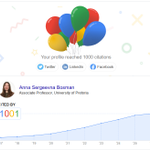
This might be petty, but I'm all about celebrating small victories. My research publications have been collectively cited 1000 times: scholar.google.co.za/citatio…
#LifeAfterThesis

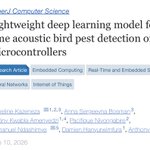
We deployed NNs on tiny microcontrollers to automate pest detection on small farms in Rwanda: article published today in @PeerJCompSci peerj.com/articles/cs-3925 #EmbeddedComputing #Real-TimeandEmbeddedSystems #NeuralNetworks #InternetofThings

Still rooting for recursion! Depth = unwinded stack.

Anna Sergeevna Bosman retweeted

For over a decade, we’ve accepted that end-to-end backprop is the only way to train deep networks. But holding the entire network in memory all at once is why AI training is hitting a resource wall.
We found a new way to break the network into blocks and train them independently. The trick? Treating the network’s forward pass like a diffusion model denoising a signal.
This reinterpretation slashes the memory needed to train deep models. In our #ICLR2026 paper (arxiv.org/abs/2506.14202), we matched end-to-end performance across ViTs, DiTs, and LLMs. We did this while training just one isolated block at a time.


Introducing DiffusionBlocks: Block-wise Neural Network Training via Diffusion Interpretation
pub.sakana.ai/diffusionblock…
What if we didn’t have to hold an entire neural network in memory to train it?
Standard neural net training optimizes all parameters jointly. As a result, the memory required during training grows linearly with the depth of the network.
In our #ICLR2026 paper, we propose DiffusionBlocks, a principled framework to train networks one block at a time, drastically reducing memory requirements while matching end-to-end performance.
With DiffusionBlocks, we split the network into blocks and train them one at a time, so you only need memory for a single block.
How? We explicitly assign each block a role: to move the representation a little closer to the target than the block before it did. That role turns out to be precisely what a diffusion model does, step by step. Each block only needs to optimize its own objective and can be trained independently.
We validated this across five different architectures:
• ViT
• DiT
• Masked diffusion
• Autoregressive transformers
• Recurrent-depth transformers
In each case, performance is competitive with end-to-end training while using a fraction of the memory.
This perspective also extends naturally to recurrent-depth (Looped) transformers, which apply the same network iteratively and normally require expensive backpropagation through time (BPTT). Viewed through DiffusionBlocks, we can replace those multiple iterations with a single forward pass during training.
Read our paper and code, to learn more.
Paper: arxiv.org/abs/2506.14202
GitHub: github.com/SakanaAI/Diffusio…
🐟
Anna Sergeevna Bosman retweeted

🚨 CALL FOR ABSTRACTS OPEN 🚨
Do you want to speak at Deep Learning Indaba𝕏 South Africa 2026 🇿🇦?
Submit your abstract and contribute to the conversations shaping Africa’s AI future.
⏰ Deadline: Friday, 22 May 2026
🌍 Submit abstract here:
indabax.co.za/register/abstr…
#IndabaXSA

Anna Sergeevna Bosman retweeted
Applications are now open for the Deep Learning Indaba𝕏 South Africa 2026!🤖
⏰Apply by the 22nd May 2026.
🎓Students can apply to attend for free.
✈️Limited travel grants available.
Apply: indabax.co.za/register/now/
#IndabaXSA #IndabaXSA2026 #AIinAfrica

Anna Sergeevna Bosman retweeted

Why do massive networks generalize on real data instead of just memorizing noise?
As a model trains, its output space dynamically splits. High mobility directions capture the coherent signal. The vast remaining dimensions form a reservoir that safely traps residual noise so it cannot hurt test predictions.

Anna Sergeevna Bosman retweeted
🚀#IndabaXSA2026 is coming to Durban!
Join us from 6-10 July'26 at UKZN Westville Campus for Deep Learning IndabaX🇿🇦2026 under the theme "From Foundations to Frontiers: Africa's AI Journey".
Application and Registration coming soon. Sponsors: [email protected]
#IndabaXSA

Drumroll for the IJCNN decision letters, due this week 🥁 My research group submitted three papers on three very distinct topics. I have also acted as both a reviewer and an AC, and I confirm that reviews were stern and demanding! Hoping for the signal to outweigh the noise 🤞🤞
Anna Sergeevna Bosman retweeted

Thrilled to announce the 3rd African Computer Vision Summer School (ACVSS)
👉acvss.ai
🎓Learn computer vision from the best scientists
🌍Google, Accra, Ghana
📆July 19-29, 2026
🎓Apply before March 1st (full grants available)
❤️ Follow us
#ACVSS #computervision #ai

Anna Sergeevna Bosman retweeted

Discrete Diffusion just got a huge upgrade!
with "Categorical Flow Maps", it is now much faster + capable of test time inference.
This paper shows you can make diffusion/flow models for discrete stuff (text, graphs, binary images) generate in 1–2 steps by flowing continuously on the probability simplex and self-distilling an endpoint-consistent “flow map”.
This keeps predictions valid (on-simplex) and unlocks the same fast guidance tricks we use in continuous diffusion.
So few-step speedups to categorical generation without the usual discrete-step pain!

I knew it!

Are ViTs secretly RNNs? #ICLR2026
Our 2-block recurrent transformer recovers 96% of DINOv2’s IN-1k accuracy & reproduces its activations 1-to-1, motivating the Block-Recurrent Hypothesis: arxiv.org/abs/2512.19941
w/ @thomas_fel_ @RichieHakim @ABrondetta Demba Ba @t_andy_keller