Scientist at @harvardmed and @WyssInstitute in @geochurch's lab | Working on solving aging

Joined October 2019
Our paper is out in @NatureAging. We looked for factors that make old cells' gene expression young without erasing their identity. SRSF1 came out as a promising rejuvenation target that reduced aging hallmarks in human cells and extended median lifespan of aged mice by 14%. 1/4
8
40
5
131
6,758
Alex Plesa retweeted
So proud to have been part of this work on cellular rejuvenation through identity-preserving reprogramming, out now in @NatureAging! Grateful to my mentors @geochurch @amplesa and all of our co-authors. nature.com/articles/s43587-0…
Our paper is out in @NatureAging. We looked for factors that make old cells' gene expression young without erasing their identity. SRSF1 came out as a promising rejuvenation target that reduced aging hallmarks in human cells and extended median lifespan of aged mice by 14%. 1/4
2
4
2
21
1,632
Two new results since the preprint: SRSF1 reduced DNAm age of old fibroblasts, and there was no activation of pluripotency programs. Still, this is in human cells and mice; we need to figure out delivery and dosing, and ideally have another lab replicate the lifespan. 3/4
2
1
15
412
Thanks to @geochurch, Sascha Jung, and all our co-authors. You can find the paper here: nature.com/articles/s43587-0… Free to read: rdcu.be/ypTLcckieF8a And more on the initial screen here: xitter.cf/amplesa/status/1737852… 4/4
Can we reverse aging? 7 yrs ago, Ocampo et al. showed that partial reprogramming can ameliorate aging hallmarks. But, OSKM induction has safety limitations & no new factors have emerged since. Here, biorxiv.org/content/10.1101/… we used 🧬 screens to find new rejuvenation factors🧵1/8
2
1
13
425
There's a new imaging modality in town: functional ultrasound imaging. I went down a deep rabbit hole to understand how it works computationally. Read all about how it works physically and how *you* can improve it..
6
15
3
112
11,699
Alex Plesa retweeted
In 12 weeks, we built a research facility that is run entirely by AI. AI designs, executes, and observes experiments end-to-end across biology, chemistry, and materials science. We’re introducing SciUniverse: a benchmark that measures AI’s ability to do real-world scientific research.
243
393
220
2,815
801,409
Alex Plesa retweeted
Science – debatably the #1 journal in the world – published a paper on a "virtual biotech" AI system this week but the authors never even test if it works well! all the evidence for its performance is 3 anecdotes the paper has no benchmark scores, no baselines, no replicates
21
42
10
336
40,064
The most widely used way to study a living cell is to kill it and read out 20,000 genes. Once. Then we train AI on that data and wonder why it can't predict what cells do... amplesa.substack.com/p/ai-fo…
4
6
5
58
16,338
Alex Plesa retweeted
One of the most comprehensive studies of human mutations across tissues and age was released last week. 53 cell types, 172 people, ages 0-93. Many takeaways, but the big highlight is that mutation rates vary a lot - and not in the ways you'd expect. A thread:
3
11
1
73
5,208
I recently looked up life expectancy over time for an essay. Wonder how the curve's going to look in a few hundred years...
2
1
6
240
Alex Plesa retweeted
We’ve just published what we believe is the first clinical trial of a treatment for primary age-related sarcopenia in cats. 💊😼 In a randomized, double-blind, placebo-controlled trial, our multi-target therapeutic showed significant positive effects on key measures of age-related muscle loss vs. placebo. 💪 A step toward treating one of the most consequential and under-studied manifestations of aging in cats. Preprint linked in the comments.
11
26
14
88
17,996
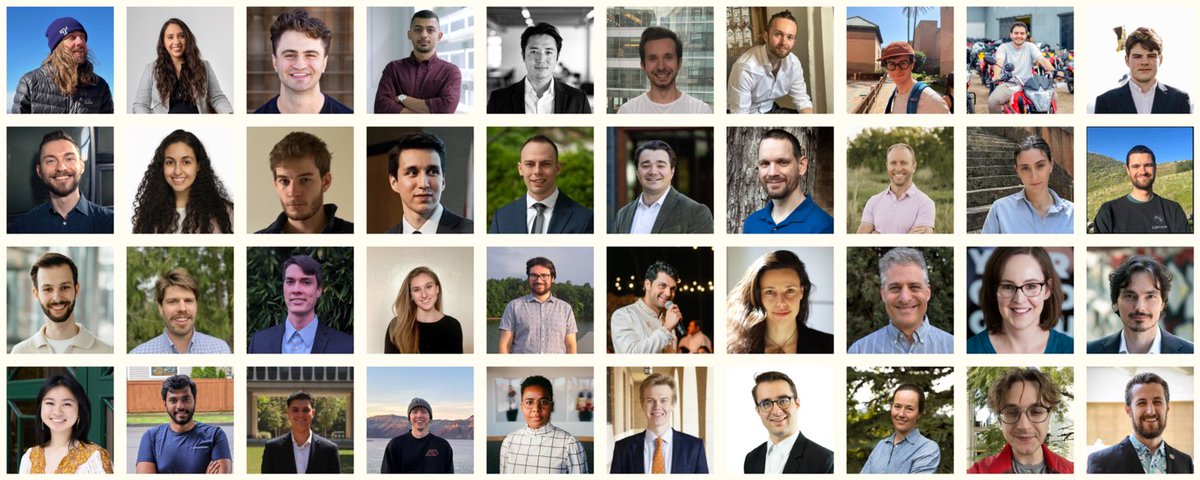
41 outstanding progress intellectuals joined the 2026 Blog-Building Intensive Program.
9
10
60
28,837
No, we're not on the brink of ending aging. More clickbait, even from prestigious scientific magazines that should know better. Why not? A short 🧵 1) The strongest lifespan-extending intervention in mice is caloric restriction, discovered nearly a century ago. So even in animals we haven't truly made much progress on how to slow (much less reverse) aging. 2) Our understanding of the aging process and its cellular and molecular drivers is still poor - which helps explain 1). 3) There is no proven intervention that retards human aging itself. Cellular reprogramming is an exciting technology with many companies* and labs now working on it. It may have important clinical applications, including the current clinical trial for glaucoma - fingers crossed! But while reprogramming allows cells to be rejuvenated in vitro, we don't yet understand whether or how it can be used safely and effectively in whole organisms. And rejuvenating cells isn't the same as rejuvenating an organism. Remember that an immortal cell is a cancer cell, so rejuvenating a cell may or may not be beneficial in an organism made of many different types of cells. We know from mouse experiments that reprogramming can induce cancer, so it needs to be carefully controlled and tailored to the tissue and context. *Disclosure: I'm CSO of YouthBio, a company developing rejuvenation gene therapies based on cellular reprogramming.
24
27
2
137
21,654
AI transformed coding, science is next @ReactorfieldAI makes scientists and deep tech startups AI-native Built by me and @berkbuilds to accelerate science with frontier AI
186
199
93
631
238,711
Alex Plesa retweeted
Just published on Substack: Why Epigenetic Rejuvenation Won’t Give Us Radical Life Extension — Lessons from 58 Generations of Cloned Mice. This is my take at the results of a landmark Nature Communications paper (20+ years, 1,200+ mice, 58 generations of serial cloning with full epigenetic reset) shows it still collapses. Mutations accumulated 3× faster. Epigenetic reprogramming works… until it doesn’t. There is an irreducible level of damage that cannot be undone. To my taste, this is a very important study. Popular literature claims cloning erases aging signatures. In short-lived species it may look that way — the entropic damage simply doesn’t have time to kill. In longer-lived animals we expect the picture be very different (and there is an anecdotal evidence for that with a lot fewer generation before the collapse). This is also why I dislike the language of “information theory of aging.” Flipping the sign on entropy and calling that "information" (changing from the Boltzmann to Shannon equation) doesn’t repeal thermodynamics. Of course, you can still hope for better Yamanaka factors or else. My interpretation of the experiment is not yet a proof of anything - certainly not. However, the experiment removes a lot of ground under proponents of epigenetic rejuvenation. If you want to keep your identity, better to stop aging than try to reverse it. Challenge me. Subscribe, Like & repost. Link: peterfedichev.substack.com/p…
28
26
13
140
31,775
It’s been great working with @Harlan_Stevens1 on this! He showed that blood stem cell aging hallmarks trace to the fragility of specific regulatory networks. This and the recent AP1 work make you wonder… How much of aging is set by the wiring of a cell’s identity programs?
Entropy is random. Its effects on aging are not. Aging destabilizes the regulatory networks in blood stem cells🩸 But not every part breaks equally. The hallmarks of blood stem cell aging trace to one thing: fragile TF programs collapse with age, while stable ones expand. 🧵1/8
2
4
12
2,199
Alex Plesa retweeted
long-lived species and humans living 100+ years are known to have increased DNA repair capacity but how DNA repair could be boosted to extend human lifespan is largely unknown our research in Nature Aging today proposes a target to enable such a boost: the DREAM complex
6
26
5
97
7,503