

Institutional grade reports and real time signals for funds, family offices and market professionals by @swissblock__
Zug, Switzerland
Joined May 2025
- Tweets386
- Following12
- Followers12.7K
- Likes56



Altcoins taking over? Not necessarily
The Bitcoin–Altcoin Cycle has crossed into Altcoin Season. During bear markets, that signal appeared near BTC local tops or during extreme weakness
Today looks closer to late rotation. The next move will show whether a local top is forming

ETH/BTC broke its six-month downtrend with strength.
ETH has dominated the Market Phase since July, surviving brief BTC rotations.
ETH remains the bridge to altcoin expansion, but leadership cuts both ways: sustained strength lifts alts, while weakness spreads quickly.


Is ETH/BTC about to break out?
The six-month downtrend is being tested.
ethereum:native has reclaimed leadership, while ETH/BTC is attempting to reverse its prolonged relative weakness.
That confirms the strength ETH has shown against Bitcoin and the demand that entered during ETH’s breakdown.
But this setup needs to be viewed through a longer-term lens.
Interest in ETH never fully disappeared.
It was compressed by the bear market.
If ETH/BTC confirms the breakout, that accumulated relative strength could position ETH as one of the strongest outperformers of the next cycle.


The altcoin expansion window didn’t just reopen. It exploded.
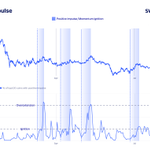
Bitcoin’s breakout showed the way, and Altcoin Impulse surged to 93%, leaving almost no altcoin behind.
But breadth above 75% is overextended. Watch for exhaustion, a reset, and the next reignition. Don’t chase.

The phase has changed. So has the battle.
Market Trend has confirmed the regime shift.
Buyers are taking control, reopening the altcoin expansion window.
This is the moment to watch Alts Impulse carefully, looking for exhaustion and the next reignition.

Market Trend defines the phase.
Altcoin Impulse defines the battle.
In Breakdown, corrective pressure dominates.
During Consolidation, sellers begin losing control and momentum starts to ignite.
In Recovery, buyers take control and Positive Impulse expands across the market.
During a Bearish Transition, momentum fades and corrective pressure begins rebuilding.
The phase tells you where the market is, Impulse tells you which force is dominant.

Negative Impulse dominance makes altcoins increasingly vulnerable to any BTC breakdown.
Corrective pressure has dominated throughout 2026, intensifying steadily since July.
While Negative Impulse holds above the 25% ignition threshold, altcoins remain structurally fragile.

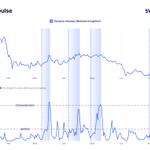
SOL has followed every previous Positive Impulse ignition with an upside move.
This time, it has lagged.
Despite Positive Impulse igniting, SOL continues ranging and gradually losing traction.
The failed follow-through suggests SOL is under a Distribution phase.

solana:So11111111111111111111111111111111111111112 holders remain deeply underwater.
Since November, every rebound has provided only temporary relief before profitability deteriorated again.
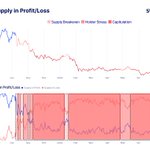
Today, 481M SOL sits in loss versus just 144M in profit, more than a 3 to 1 imbalance.
Price has stabilized above $70, but holders remain closer to Capitulation than Supply Breakeven.
The decline may be slowing, but recovery has barely begun.

ethereum:native holders have endured one of the harshest capitulation periods in its history.
Since late January, most holders have remained underwater. The April–May rally briefly pushed supply toward breakeven, but renewed stress gave way to deep capitulation.
Holders can finally breathe again, though the light remains distant.
This is how cycle bottoms are built: through prolonged stress, capitulation, and survival.

How stressed is ethereum:native right now?
Only one other time in history has ETH seen this many holders in loss for this long:
the 2018 bear market.
Not even FTX created this level of sustained stress.
COVID was brutal, but fast.
The tariff-war bottom was a milder stress event.
What ETH holders are living through now is different:
a prolonged capitulation state.
A long period where losses persist, conviction weakens, and ownership slowly changes hands.
That is painful.
But it is also where the next cycle’s holders are usually born.
The key question is when the last remaining sellers finally capitulate.
Because once selling pressure exhausts, this stress can become the foundation for the next cycle bottom.

If ETH remains at the wheel, what does that mean for altcoins?
ethereum:native tends to lead Altcoin Impulse ignition.
When ETH strengthens, Positive Impulse usually expands across the broader market.
But the latest ignition has already faded.
ETH is leading, but its traction across altcoins is not yet engaging.


The Risk Index measures market stress, Market Phase measures how that stress spreads.
As capital rotates from BTC → ETH → Large Caps → Small Caps, beta rises and volatility expands exponentially.
The same Risk reading does not produce the same outcome across every phase.
Risk tells you how much pressure exists. Market Phase tells you where that pressure will be amplified.
That is how volatility propagates through a crypto cycle.

Market Trend defines the phase.
Altcoin Impulse defines the battle.
In Breakdown, corrective pressure dominates.
During Consolidation, sellers begin losing control and momentum starts to ignite.
In Recovery, buyers take control and Positive Impulse expands across the market.
During a Bearish Transition, momentum fades and corrective pressure begins rebuilding.
The phase tells you where the market is, Impulse tells you which force is dominant.
Is ETH/BTC about to break out?
The six-month downtrend is being tested.
ethereum:native has reclaimed leadership, while ETH/BTC is attempting to reverse its prolonged relative weakness.
That confirms the strength ETH has shown against Bitcoin and the demand that entered during ETH’s breakdown.
But this setup needs to be viewed through a longer-term lens.
Interest in ETH never fully disappeared.
It was compressed by the bear market.
If ETH/BTC confirms the breakout, that accumulated relative strength could position ETH as one of the strongest outperformers of the next cycle.
Bear-market bottoms are defined by holder exhaustion.
solana:So11111111111111111111111111111111111111112 has moved beyond Structural Stress and into a full Capitulation regime.
More than 75% of holders are now underwater, while Supply in Profit has fallen to cycle lows.
After the forced selling and emotional capitulation, what comes next?
History suggests not an immediate recovery, but a prolonged period of exhaustion.
During the 2022–23 bear market, SOL spent months in a similar stress regime before a structural recovery finally emerged.
Capitulation creates the conditions for a bottom. Time is what completes it.

The relief window for altcoins has opened.
In the previous update, Altcoin Impulse was fully suppressed.
No broad corrective pressure, but also no momentum ignition: that was the waiting phase.
Now the structure is changing.
Bitcoin Risk has exited Capitulation Risk, easing selling pressure across the market.
At the same time, Positive Impulse has ignited across altcoins. The key now is managing the window.
The relief move starts to lose strength if Positive Impulse pushes above the 75% overextension threshold, or if Bitcoin selling pressure begins rising again.
For now, the window is open.

While Bitcoin remains anchored in Capitulation Risk, Altcoin Impulse is in a Suppressed Impulse phase.
Both positive and negative impulse remain below the 25% threshold.
That means there is no broad corrective pressure. But there is also no momentum ignition.
This is a delicate phase for altcoins, usually they become choppy, unstable, or continue grinding lower while impulse remains suppressed.
But notice the pattern:
After suppressed impulse phases, altcoins often experience a sharp positive impulse relief.
That is where explosive upside moves can happen.
The key is timing: those relief moves usually appear after Risk Index exits Capitulation Risk and selling pressure begins to ease.
Until then, altcoins remain suppressed. Once Risk eases, the relief window opens.

Negative Impulse tells us when downside pressure dominates.
Positive Impulse tells us when buyers start taking control again.
So far in 2026, that has been fleeting.
Every recovery attempt has produced only brief bursts of Positive Impulse.
Most of the time, altcoin momentum has remained compressed below the 25% ignition threshold.
That means buyers have not been able to create a sustained market-wide impulse.
Now, however, altcoins are showing the first signs of life.
If Bitcoin continues to stabilize, the window for Positive Impulse could open wide.

Saying downside pressure in altcoins has been intense may be an understatement.
So far this year, the market has spent more than 70 days in a corrective pressure regime.
That means Negative Impulse has remained above the 25% ignition threshold, with a broad share of the top 100 altcoins under downside pressure.
This is not isolated weakness. It is a persistent regime of altcoin compression.
The key now is whether Negative Impulse keeps expanding toward overextension, or starts fading as selling pressure exhausts.
Until that happens, altcoins can keep grinding lower.

How stressed is ethereum:native right now?
Only one other time in history has ETH seen this many holders in loss for this long:
the 2018 bear market.
Not even FTX created this level of sustained stress.
COVID was brutal, but fast.
The tariff-war bottom was a milder stress event.
What ETH holders are living through now is different:
a prolonged capitulation state.
A long period where losses persist, conviction weakens, and ownership slowly changes hands.
That is painful.
But it is also where the next cycle’s holders are usually born.
The key question is when the last remaining sellers finally capitulate.
Because once selling pressure exhausts, this stress can become the foundation for the next cycle bottom.
If we talk about Capitulation, ETH is experiencing the kind of sustained and intense stress that has historically been associated with bottom formation.
Last year, ETH bottomed after a relatively short Capitulation Phase.
Market Phase anchored in ETH, stress peaked, and that process ultimately became the foundation for ETH's rally toward new highs in the summer of 2025.
This time is different.
$ETH has spent months trapped in a persistent Capitulation State.
Under normal conditions, this level of stress would already be consistent with a bottoming process.
The problem? The stress is still ongoing.
Capitulation creates bottoms only after selling pressure begins to exhaust.
Now the question is whether this process is approaching exhaustion, as Bitcoin begins allowing the broader environment to relax.

While Bitcoin remains anchored in Capitulation Risk, Altcoin Impulse is in a Suppressed Impulse phase.
Both positive and negative impulse remain below the 25% threshold.
That means there is no broad corrective pressure. But there is also no momentum ignition.
This is a delicate phase for altcoins, usually they become choppy, unstable, or continue grinding lower while impulse remains suppressed.
But notice the pattern:
After suppressed impulse phases, altcoins often experience a sharp positive impulse relief.
That is where explosive upside moves can happen.
The key is timing: those relief moves usually appear after Risk Index exits Capitulation Risk and selling pressure begins to ease.
Until then, altcoins remain suppressed. Once Risk eases, the relief window opens.
If we talk about Capitulation, ETH is experiencing the kind of sustained and intense stress that has historically been associated with bottom formation.
Last year, ETH bottomed after a relatively short Capitulation Phase.
Market Phase anchored in ETH, stress peaked, and that process ultimately became the foundation for ETH's rally toward new highs in the summer of 2025.
This time is different.
$ETH has spent months trapped in a persistent Capitulation State.
Under normal conditions, this level of stress would already be consistent with a bottoming process.
The problem? The stress is still ongoing.
Capitulation creates bottoms only after selling pressure begins to exhaust.
Now the question is whether this process is approaching exhaustion, as Bitcoin begins allowing the broader environment to relax.
