

Philadelphia’s hub for AI enthusiasts, builders & learners. Meetups, workshops & conversations on the future of intelligence.
Philadelphia
Joined April 2024
- Tweets369
- Following129
- Followers82
- Likes602



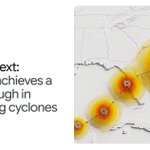



1/ Google DeepMind's WeatherNext Cyclones model delivered about one extra day of useful forecast lead time.
Across 2023-2025 storms, its 3-day forecasts for track, intensity, and wind size matched the accuracy of leading operational models at 2 days.

4/ WeatherNext Cyclones gets these results from 28 km inputs, about 100x coarser than traditional regional models.
That challenges the assumption that finer resolution is required for accurate intensity forecasts. DeepMind says why this works remains an open question.

5/ Google is releasing the code and model weights, plus a smaller version that can run on one TPU in a public Colab.
This supports human forecasters; it does not replace official warnings. Read the article, then follow NWS/NHC for alerts:
deepmind.google/blog/weather…

AI Philly retweeted

Skip the conference format. Decentralized Philly is co-hosting Brunch'N Blocks: three hours of food, drinks, and conversation across blockchain, AI, fintech, startups, and media.
Sun, Aug 16, 9 AM-noon, @block_space_phl
luma.com/wlzpbmjl


The recurring need is not abstract civics. It is procedural help: requirements, compliance, and processes. ATLAS suggests one useful role for AI may be translating bureaucracy into an understandable sequence of next steps.
Read the report: blog.google/innovation-and-a…


RSVP for tonight: meetup.com/ai-philly/events/…

AI Philly Skill Share is tomorrow!
Bring your laptop plus one skill, rule, hook, project file, or workflow you want to improve.
5:30 PM at Blockspace, 215 S. Broad St.
RSVP required to attend: meetup.com/ai-philly/events/…

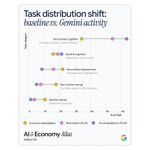
Generative AI is breaking the old automation pattern. Traditional software excelled at routine work. In Google’s ATLAS, non-routine cognitive tasks—strategy, analysis, creative design—make up 35% of the task baseline but 65% of AI conversations. 🧵

Routine cognitive work appears in AI use too. But manual and interpersonal tasks are underrepresented relative to their share of the economy. The current center of gravity is judgment, problem-solving, synthesis, and creativity.
That 65% does not mean 65% of these tasks are automated. For non-routine cognitive work, less than 10% of conversations were classified as end-to-end automation attempts; most involved drafting, review, ideation, or learning.
Read the report: blog.google/innovation-and-a…
AI Philly retweeted

Had a great time at Turkish Brew with @pysolver33 and @CxCPhilly and some of the coolest and most cracked geeks in Philadelphia. If you missed it this week, let’s run it back next week 💪❤️


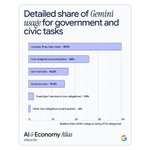
People don’t use AI in proportion to the time they spend on each activity. In Google’s ATLAS, requests about purchases, medical care, legal services, and government or civic tasks are far more common than their share of daily time would suggest. 🧵

The sharpest gap is government services and civic obligations: nearly 20× their share of human time. Professional and personal care services over-index by more than 7×; consumer purchases by nearly 3×.
These are high-friction tasks: rules, fees, eligibility, requirements, and procedures. AI may lower the information cost of navigating institutions, including outside office hours. That is a hypothesis, not a measured outcome.
Read the report: blog.google/innovation-and-a…

Most conversational AI use in Google’s ATLAS happens outside formal work: over 86%. Within those non-work conversations, leisure/socializing leads at 30.6%, followed by education at 24.0% and household activities at 12.7%. 🧵

That mix makes AI look less like a workplace-only tool and more like household infrastructure. People use it to learn, plan, compare purchases, manage chores, navigate personal care, and support leisure activities.
Important caveat: conversation volume is not proof of time saved or economic value. Still, these conversations span activities representing about 98% of Americans’ waking, non-sleep time—much of it outside standard GDP measures.
Read the report: blog.google/innovation-and-a…