

Agents@zoominfo | Ex-Google Researcher | Coffee&Code Philadelphia Founder
Philadelphia, PA
Joined September 2019
- Tweets4.4K
- Following534
- Followers250
- Likes4.3K





Tony retweeted

Jev as a judge for LLM evals!
JevEval uses Jev as the judge for custom LLM evals instead of relying on another generative LLM for every evaluation.
The idea is pretty simple.
You define the exact decisions you want the evaluator to make, Jev evaluates each one and returns probabilities, and DeepEval uses those results to calculate the final score.
For example, with an AI agent you can evaluate the trace itself, checking whether the agent selected the right tools, followed the expected sequence of actions, and actually completed the task.
Jev handles those semantic judgments, while the scoring logic stays outside the model.
That is the main difference from a normal LLM-as-a-judge setup.
With a generative judge, the model often has to interpret the rubric, reason about the response, and generate the evaluation itself.
With JevEval, you define the decision structure upfront.
You can also assign different weights to different checks or use `strict_mode` when every requirement needs to pass.
So if one part of the agent workflow matters more than another, you can reflect that directly in the scoring logic instead of leaving the entire evaluation to the judge model.
Key capabilities:
- Evaluate agent outputs and traces with Jev
- Define custom checks as bounded decisions
- Use yes/no, score, and closed-choice questions
- Weight different checks or require all of them to pass
- Evaluate both single-turn outputs and multi-turn conversations
This is where Jev makes a lot of sense for evals.
If you already know what needs to be checked, you can define those decisions upfront, let Jev handle the semantic judgment, and keep the final scoring deterministic.
I’ve shared the DeepEval post in the comments.


Tony retweeted

Introducing OpenSource people-search for Claude
- Juts $0.0089/lead, no more $600 subscriptions
- #1 on People Search Bench
- 0% markup, Fully open source
Try it at treg.to/people-search
Repo link below 👇
Tony retweeted

Meet Mistral Large 4, aka Le Chonk.
• 1T parameters, natively multimodal. 49B active.
It is the best open weights model from US or Europe on aggregated benchmarks.
• State-of-the-art on critical workloads, including cyber defense, manufacturing and finance and it surpasses closed frontier models on visual grounding.
• Forged in Europe end-to-end and is deployable from Europe via our own Mistral Cloud infrastructure.
• Available to all via API today. Working with cybersecurity partners privately.
Open weights release end of October.
🤖 Made with AI
Tony retweeted

don't sleep on @tanaysingh789, super talented, and just getting started

Tony retweeted

Stop manually making flowcharts. Try this GitHub skill with Claude Code.
I found an open-source tool that turns a plain description of a software system into a clean, interactive diagram.
It's called Archify, and it has more than 66,000 stars on GitHub.
You add it as a skill to an AI coding agent like Claude Code, Codex, Cursor, or OpenCode. Then you describe the system in the chat in one line.
Archify turns that line into a single HTML file you can open, click through, and send to anyone.
If you point your agent at an existing codebase, it reads the code and Archify maps how the pieces connect.
I liked five things about it.
1. It makes five kinds of diagrams, including system maps and step-by-step workflows.
2. You can click any piece and trace what connects to it.
3. It checks the layout before it hands the diagram over, so arrows don't pile up and labels don't overlap.
4. It has dark and light themes and exports to PNG, SVG, or a short video.
5. You keep editing in plain chat, with requests like "add Redis" or "highlight the rollback path."
You don't need a codebase to use it. A description in the chat is enough.
Tony retweeted

JEV is INSANE.
We gave it 400 companies and one candidate profile.
In 12 seconds, it predicted which jobs the candidate had the highest chance of getting, assigned a confidence score and detected job-candidate mismatches.
All for just $0.0005 It can also score companies, analyse your experience, match you with the right roles and identify the opportunities you’re most likely to get based on your profile.
Coming soon to @textbackdoor
Comment “JEV” for early access.
Tony retweeted

Playing with Jev adapter for Codex @CompleteSkeptic @sama @elonmusk - this should be the default. Current computer / browser use is a tad slow.
Lots of improvement here - from cutting the subagent handoff time to warm up time and improving the loop itself - but i think i got it to a working state.
Jev is an absolute unlock
Tony retweeted

github.com/githubnext/localj…
Not everyone on the team has access to Jev yet. Spent a morning cobbling together a poor man's Jev on top of omlx for local use. Benchmarked and eval'ed a variety of models including diffusiongemma and a variety of autoregressive models (Qwen MoE, Gemma 4 MoE, and Gemma 4 e4b/e2b.) Benchmark report is in the repo.
This is 100% promptcoding but hey the evals look okay, speeds are pretty good on local machine (m5 max 64gb), and the LocalJev server exposes an API that can be used with the normal Jev API wrapper libraries.


Tony retweeted

STOP ASKING YOUR WIFE "HOW WAS YOUR DAY"
she will say "fine" every single time
replace it with this instead:
“analyze your day and find the top 3 largest inefficiencies, then create proactive agentic workflows that will fix them. make no mistakes”
Tony retweeted

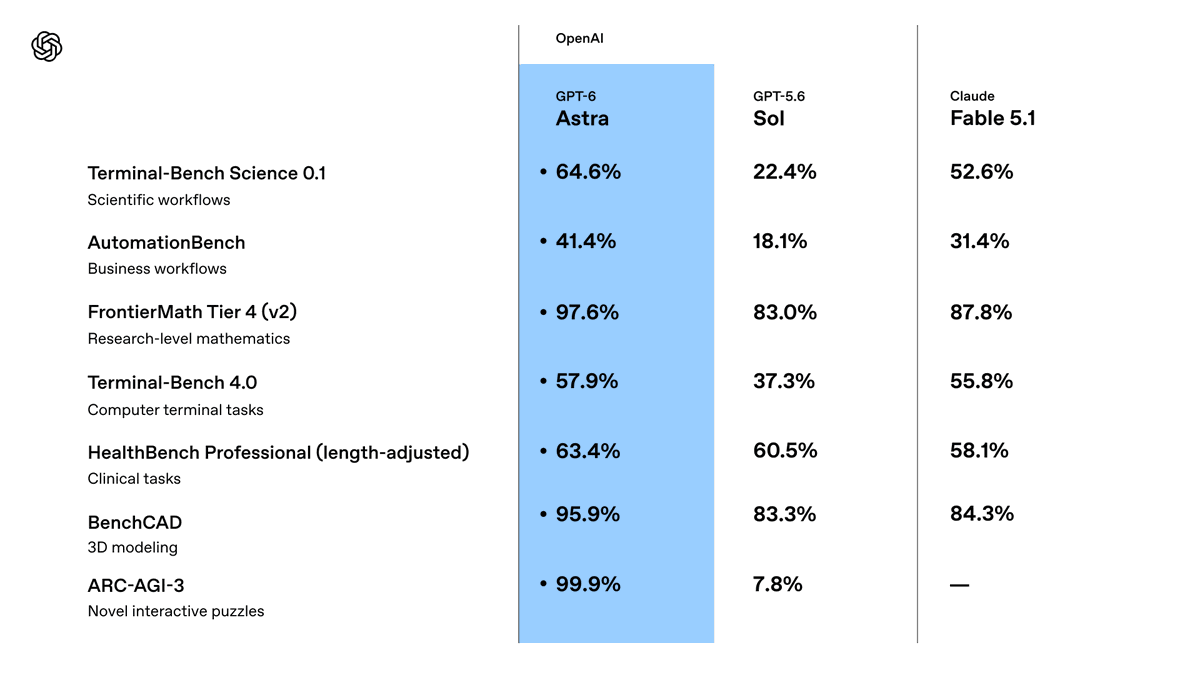
GPT-6 ASTRA TURNED $240 INTO $2,860. THEN IT LOCKED MOST OF THE MONEY AWAY FROM ITS OWN TRADING AGENTS.
four sessions into the experiment, i opened the trading wallet.
$895.
the report said $2,860. i refreshed both screens, convinced something had gone wrong.
then i opened the transfers.
$1,965 had moved into a separate reserve wallet. every transfer had a receipt. the numbers matched to the cent.
the desk had four jobs.
three agents handled discovery, contract checks and execution. the fourth was called CASHIER.
CASHIER watched settled results. after each profitable session, it moved 75% of the net gain into reserve.
the trading agents could see that balance. their permissions gave them no way to pull it back.
that detail suddenly became very interesting to me.
i started calculating what the next position could look like with the whole $2,860 available. opened the settings. hovered over the allocation.
then closed them.
the next session was ugly.
two positions closed red. working capital dropped from $895 to $731.40. i watched the desk reduce its next order and keep scanning.
the reserve still read $1,965.
that was the first time the setup made sense emotionally. a bad session had a smaller pile of money available to damage.
i spent another hour reading the logs. the least exciting agent on the desk had done the thing i was most likely to postpone.
it had actually taken the money off the table.
CASHIER never found a single winning token. it was the first agent i decided to keep.


Tony retweeted

GPT-6 Astra builds the most powerful trading agents
i wrote a 6-page research paper on exactly how to find profitable strategies 24/7 with Astra, along with the COMPLETE CODEBASE
here is how you set it up:
1. the 4 mispricing categories every hedge fund actually hunts (statistical arbitrage, volatility surface, factor decomposition, insider clusters) with the exact formulas for each
2. the 8 bot architecture that maps to every function of a real fund, one bot per role, with maker checker separation so nothing grades its own output
3. the 300 agent monitoring layer that watches order books, options flow, SEC filings, macro releases, and central bank X accounts in parallel
4. the hypothesis generator that reads filtered candidates and codes new strategies every night in Python, backtests them, and throws out anything below Sharpe 1.5
5. the exact validation thresholds every strategy has to pass before deployment. Sharpe above 1.5, drawdown below 15%, hit rate above 55%, t stat above 2.0
6. the Telegram alerts that ping your phone with instrument, strategy, confidence score, Sharpe, drawdown, action window, and Kelly sized position
this is the exact system I have been running for the past 3 days:


Tony retweeted

Harness-as-a-Service
OAI’s Agents API is managed Codex offered as an endpoint - the final form of many products will converge to this form factor
was clear last year that as agents got better at autonomous work, ppl would offer their agent as an endpoint for completing work
if you look hard, many features/products expose a Harness for a specific task, ex: Gemini’s Agentic Video Understanding
we’re in a Model-Harness product optimization cycle of
- product need
- build a harness that optimizes a model to do it
- if it works well, fine-tune this behavior directly into a model
this UX of managed agents + pipeline of fine-tuning vertical capabilities into models after discovering them through harness engineering will continue to lead the way for the next year or so


Tony retweeted

Open-source Agent Orchestrator for planning, running, and supervising coding agents.
github.com/Untrivial-ai/agen…


Tony retweeted

Philadelphia builders—this one’s for you. 🤖
@quirq_ai is sponsoring a track at the AI Agent Hackathon on Sunday, September 20, at @PennovationWork in Philadelphia.
Spend the day building and experimenting with:
• Coding agents
• Multi-agent workflows
• Tool use and automation
• Agent memory and context
• Evals and reliability
• Open-source agent frameworks
Compete solo, bring a team, or meet collaborators at the event.
Join us on September 20.
Register: luma.com/muz8cqhd
#AIAgents #Hackathon #PhiladelphiaTech #AgenticAI #SoftwareEngineering #OpenSource #PhillyTech
Tony retweeted
What a turnout yesterday for Claude Code Philly! 🤖💻
We spent the afternoon at Turkish Brew connecting, coding, sharing ideas, and enjoying authentic Turkish and Mediterranean cuisine.
The room brought together an incredible mix of people:
☕ Business owners
🌎 Climate engineers
🔐 Security engineers
📊 Business analysts
⚙️ Embedded systems engineers
📱 Mobile developers
💻 And builders from across the broader tech community
Some people even traveled all the way from Baltimore just to spend a casual Saturday building with us in Philadelphia!
We met new collaborators, and enjoyed exactly the kind of relaxed weekend energy we want these gatherings to create: laptops open, coffee flowing, great food, and interesting conversations happening throughout the room.
Thank you to everyone who joined us—and to Turkish Brew for hosting us!
We’ll be back for another Claude Code Philly session soon.
🔗 lnkd.in/eHmwx-gq
#ClaudeCode #PhiladelphiaTech #PhillyTech #CodeAndCoffee #SoftwareEngineering #AIEngineering #DeveloperCommunity #Anthropic #CommunityBuilding
