

Associate Professor, Dept. of Anatomy, Howard University | YouTube https://xitter.cf/t.co/ZoS8nRaIkS | CEO, Vision Genomics, LLC | #NoAging #MetaDisease #Gnosis
Washington, D.C.
Joined January 2011
- Tweets8.1K
- Following1.5K
- Followers112K
- Likes297K




Pinned Tweet
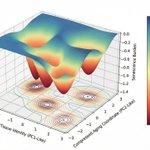
The center of medicine isn’t individual diseases.
It’s aging.
Our new paper proposes that aging is best understood as a Meta-Disease - the upstream process that generates many diseases.
1/7


Antonei B Csoka, PhD retweeted

In medical school, we are taught a golden rule: "When you hear hoofbeats, think horses, not zebras." It is a reminder to look for the common explanation before the exotic one. But after decades in cardiology, I’ve learned that if a patient is still suffering after the "horses" have been ruled out, a doctor must have the courage—and the curiosity—to go hunting for the zebra.
Sarah was a thirty-four-year-old marathon runner and a devoted mother who came to me after six months of being told she was "fine." She had been bounced from one specialist to another, each one pointing to her normal EKG and standard blood tests as proof that her crushing fatigue and racing heart were simply the result of "new mom stress." By the time she reached my office, she didn't just look tired; she looked invisible, as if the medical system had stopped seeing the woman and only saw the data.
Instead of re-reading the normal test results that had already failed her, I asked Sarah to walk me through her life. We talked about her training and her family, eventually landing on a backpacking trip she took to the Mendoza province of rural Argentina. She described staying in a charming, rustic cottage made of sun-dried mud bricks. She mentioned waking up one morning with a strangely swollen, purple eyelid that she assumed was a simple spider bite.
As she spoke, a memory surfaced from a biography I had read years ago about Charles Darwin. Most people know Darwin for his theories on evolution, but medical historians have long puzzled over the mysterious, debilitating illness that plagued him for decades after he returned from his voyage on the HMS Beagle. Darwin had written in his journals about being bitten by the "great black bug of the Pampas" while sleeping in mud-walled huts in South America. He spent the rest of his life suffering from heart palpitations and exhaustion that the Victorian doctors of his time could never explain.
I realized then that Sarah wasn't suffering from stress; she was likely hosting the same "silent killer" that may have haunted Darwin: Chagas Disease.
The "Kissing Bug" lives in the cracks of those mud-brick walls. It bites its victims—often near the eyes or mouth—while they sleep, passing a parasite called Trypanosoma cruzi into the blood. The danger of Chagas is that the initial symptoms disappear quickly, but the parasite can hide in the body for years, slowly weaving itself into the muscle and electrical "wiring" of the heart.
To confirm this, I moved beyond the standard tests. I ordered a specialized "Strain Rate" ultrasound, which doesn't just look at whether the heart is pumping, but at how the individual muscle fibers are stretching. We saw that while her heart looked strong to the naked eye, the fibers were "stuttering," a sign of early parasite-induced scarring. A specific blood test for the parasite's antibodies confirmed the diagnosis.
Treatment required a difficult, sixty-day course of anti-parasitic medication to stop the infection, paired with a protective heart regimen to keep her electrical system stable while the inflammation settled. Because we caught it before her heart was physically damaged or enlarged, the recovery was a success.
Months later, Sarah returned to my office, her vibrant energy restored. She brought me a leather-bound copy of The Voyage of the Beagle with a note tucked inside. She wrote that while other doctors had looked at her charts, I had looked at her. This case remains a vital reminder for my memoir: in a world of high-tech scans and AI, the most sophisticated diagnostic tool we possess is still the human story. When we truly listen, we don't just find the disease—we find the patient.
Good morning.
Antonei B Csoka, PhD retweeted

意識の本質とは何か、時間とは何か。そういうことを僕たちはあまり考えずに、日々を過ごしている。ハサビス氏はそれが本当に不思議だという。彼がAI開発を志した原点は、宇宙という壮大なパズルを解き明かすことだった。人間の知性には限界がある。だからこそ新たな知性を生み出そうとしているのだ。
デミス・ハサビス「私がこの道に進んだのは、現実の本質を理解したかったからです。世界には根源的な問いがたくさんあります。意識の本質とは何か、時間とは何か。どれも途方もなく深い謎です。
私が驚くのは、私たちがこうしたことをあまり考えずに日常生活を送っていることです。目の前のことに気を取られているのでしょう。しかし私は、こうした疑問を考えるたびに、思わず立ち止まってしまいます。夜中にもずっと考えているのです。私たちは時間とは何かさえわかっていない。これは信じられないことです。それなのに、私たちは何事もないかのように日々を過ごしています。私には本当に不思議です。
では、どうすればいいのでしょうか。私は生まれつき、満たされることのない好奇心を持っていたのだと思います。そして、この宇宙には途方もなく深い謎があるという思いに、ずっと取りつかれてきました。私にとって宇宙は、壮大なパズルのようなものです。どうすれば、その謎を解き明かせるのでしょうか。
だからこそ、私は早くからAIに取り組んだのだと思います。私たちに何が必要なのか。それは、助けとなる存在です。
私はかつて、ファインマンやチューリングなど、尊敬する偉大な科学者たちの伝記をよく読んでいました。彼らは非常に優秀ですが、それでも人間の頭脳だけで理解できることには限界があります。科学的方法などを駆使しても、限界はあると思います。
ですから、私にとってAIの可能性は明らかでした。そこには二つの側面があります。AIは科学にとって素晴らしい道具になるだけでなく、それ自体が驚くべき科学的成果であり、工学的成果でもあります。そして、もう一つの深い謎である、私たち自身の心をよりよく理解する助けにもなるかもしれないのです」
Antonei B Csoka, PhD retweeted

Elon Musk's timeline for the next five years:
"In 5 years, digital intelligence will exceed the sum of all human intelligence. Within five years, there may be at least 100 million humanoid robots, possibly even 1 billion. The economy could double in size within 5 to 7 years because AI and robotics may increase output dramatically. The pace of change will be so fast that the world could look very different in just a few years."
Interested in AI?
Follow @AiEvolutio58513 and never fall behind.
I track ChatGPT, Claude, and every tool quietly changing how we work and create, then hand you the tested signals.
Antonei B Csoka, PhD retweeted

A recent study suggests that those who consumed the most ultra-processed foods (UPFs) were 40% more likely to show small areas of brain damage on MRI scans than those who consumed the least.
medicalnewstoday.com/article…

Antonei B Csoka, PhD retweeted

The beauty of life is that small moments like a butterfly landing on your hand, can bring just as much joy as the big ones
🤖 Made with AI
Antonei B Csoka, PhD retweeted

I’m speaking at the IMF in an hour about the singularity and why I believe it has begun and the choices we'll need to make. Watch live here: youtube.com/live/Rqt9kWoTJbc…

Antonei B Csoka, PhD retweeted

The new XPRIZE on Interspecies Communication, with a $10M purse will launch next month.
It will challenge teams to demonstrate ethical, verified two-way communication with wild animals, advancing coexistence and cooperation.
Dr. Irene Pepperberg spoke to us today about her pioneering work with grey parrots, training them in English to perform many tasks at 6-year old human skill level.
“Clearly, animals know more than we think and think a great deal more than we know.”
It wasn’t easy when she started. The feedback to her first grant review: “what are you smoking?”
And now, her parrots ask questions and learn from the answers. They ask for what they want.
She has taught her parrots 100 English labels for objects and materials, exact quantities up to 8 (and addition and subtraction), colors, shapes, materials, concepts like same/different, absence, a zero-like concept (absence of a set, on his own, with no training), relative size comparisons, optical illusions, and they make new word combinations (calling the banana chip “banacker” for a banana cracker). They have a visual working memory (tracking moving cups) that beats adults with 4 swaps. They do inference by exclusion (when you show where food is not located, they figure out where it is).
Bird brains look very different at first, a smooth unfolded organ with no cerebral cortex, but further research found a relatively large cortical area similar to non-human primates in relative size and connectivity. They have a dense processor, doing same thing as human children.
“Bird brain should be a complement,” she concluded.


We can imagine the marvel of first contact, whether alien or AI, and it starts with communication.
We can practice with the isolated animal intelligences all around us. We hosted a gathering for the leadership of the Earth Species Project, with an ambitious plan to do just that, using multimodal AI models.
“Everything that can be translated will be, by 2030.”— @Aza Raskin of ESP, and:
“It’s impossible without scale and inevitable with scale.” (of data and compute)
“We will face the unusual situation where our AI will communicate with animals before we understand what they are saying.”
“Human languages have evolved over a couple hundred thousand years. Whale and dolphin language has evolved over 34 million years. And some are multilingual, using a third language when hunting together off the coast of Norway.”
“Beluga whales announce themselves with their unique name and clan ID. Parrots teach each of their chicks their name in the nest—a lifelong signature that connects them to their family and community.”
“And there are different cultures. The is a fascinating community of crows in Spain that operate unlike other crows. They raise their young as a group, like a kibbutz. They have a unique dialect for collaborative parenting. When an outside crow joins the group, it learns the dialect and participates in the unique culture. The crows have different personalities and there is a lot of drama. There is one adult that none of the other mothers like. She has to zip in and out quickly to feed the young before being chased off by the others.”
“Humpback whale songs go viral. There is group of whales off Australia that are like the K-pop singers. Their songs propagate globally over a couple years."
"An orca once wore a salmon hat, and it became a fashion trend among orcas.”
“80% of animal communication is relatively quiet one-to-one communication, and we need to capture that. It’s a perception problem. Of the animal recordings made, only 3% of the data have been analyzed. There has been little progress in orca communications in the past 20 years.”
“Many indigenous myths start with communication with the animals and nature. And then we forget how. We became disconnected.”

Antonei B Csoka, PhD retweeted

Our paper is out in @NatureAging. We looked for factors that make old cells' gene expression young without erasing their identity. SRSF1 came out as a promising rejuvenation target that reduced aging hallmarks in human cells and extended median lifespan of aged mice by 14%.
1/4

ALT Watercolor-style graphic of two overlapping cells split by a curved diagonal. On the left, a muted gray cell with a dark nucleus and faint white circuit traces. On the right, the same form in luminous blue, its circuitry lit up. Short dashes standing for RNA transcripts scatter loosely in gray on the left and fan outward in blue and pale green arcs on the right. Art by Helen H. Wang.
Antonei B Csoka, PhD retweeted

New article online: Lattice light sheet activation structured illumination super-resolution microscopy.
nature.com/articles/s41566-0…

Antonei B Csoka, PhD retweeted

functional recovery of vitrified and nanowarmed human-scale pig kidneys from up to one year at -150 °C
it is increasingly clear that cryopreservation is the single best shot we have at defeating death in our lifetimes
biorxiv.org/content/10.64898…

Antonei B Csoka, PhD retweeted

OpenAI has two more models coming this year.
GPT-6.1 Astra, an early checkpoint of GPT-6.5 Bell, followed by Bell itself before the end of 2026.
I expect Bell to basically saturate science benchmarks across math, physics, biology, chemistry, etc.
Opus 5.5-level taste or better, a massive jump in complex backend coding, AA to AAA-level game design capabilities, and superhuman computer use. Basically anything a human can do on a computer.
2027 is going to be the year of ASI.
Antonei B Csoka, PhD retweeted

“The infinite! No other question has ever moved so profoundly the spirit of man.”
- David Hilbert
Antonei B Csoka, PhD retweeted

Here’s the full Tesla Roadster unveiling event.
0:15 – Crazy Tesla + SpaceX collab preview
2:25 – Last manually driven Tesla car
2:53 – Taking it way past the limits
3:15 – Countdown & first flight works
5:38 – Flying cars are real
5:41 – Peter Thiel flying cars quote
6:02 – Fan suction system (up to 2G)
6:16 – Downforce & crushing track records
7:08 – Starman appearance
7:52 – Rocket thrusters & full gymnastics
8:52 – Kickflip demo (Tony Hawk approved)
9:32 – Real road car + rocket car future
9:56 – Air tanks, nozzles & specs
10:14 – Rechargeable ultra-high pressure air
10:36 – Car reveal & aerospace design
12:50 – Fan modes
13:37 – Variable pitch rear wing
13:50 – 0-60 goal under 1 second
14:21 – Acceleration demo
16:22 – 0.81s 0-60 achieved
16:26 – Production car will be even quicker
17:05 – World’s quickest production car
17:28 – Top speed & Snake River Canyon teaser
18:26 – Mach 0.5+ goal
18:52 – First best flying car + last best driver’s car
19:04 – Production starts 2028

Antonei B Csoka, PhD retweeted

JUST IN: Elon Musk unveils the Tesla Roadster by launching it off a ramp before the car flipped in midair and safely landed on the ground.
The car is a collaboration between Tesla and SpaceX.
One of the most insane things I've ever seen.
Antonei B Csoka, PhD retweeted
オリゴデンドロサイトは単なる「絶縁体」ではない ― ミエリンを作り替え、神経にエネルギーを供給する能動的な細胞として捉え直す
脳の神経線維を覆うミエリン(髄鞘)は、電気信号を速く伝えるための絶縁体として理解されてきた。そのミエリンを作るオリゴデンドロサイトも、長らく受動的な支持細胞とみなされてきた。
カナダ・トロント大学およびセント・マイケルズ病院キーナン生物医学研究センターのVeronique Miron研究室(Lucas J. Ryan、Veronique E. Miron)は、この細胞を能動的な存在として捉え直す総説を発表した。
本総説は、オリゴデンドロサイトが乳酸などのエネルギー基質を軸索へ供給する代謝支持機構、神経活動に応じてミエリンの厚さや分布を調整する適応的ミエリン形成、そして損傷後の再ミエリン化を担うオリゴデンドロサイト前駆細胞(OPC)の分化制御を統合的に整理している。
加齢に伴い、OPCの分化能とミエリン修復能は低下し、機能的に異なるサブタイプの構成比も変化する。これが白質機能の低下や、アルツハイマー病・多発性硬化症などの神経変性疾患の病態に寄与すると位置づけられている。
ニューロン中心で語られがちな脳の老化を、ミエリン形成細胞の側から見直す視点を提供する総説である。
cell.com/cell/abstract/S0092…

Antonei B Csoka, PhD retweeted

Where do #lymphatics come from? And what do they do during development?
In our recent work @CellReports, we found that kidney lymphatics arise from a unique lineage & their impairment reduces glomerular number - a critical determinant of kidney function
cell.com/cell-reports/fullte…

Antonei B Csoka, PhD retweeted

🎉 Our paper is out today in @ScienceMagazine!
How does the intestine maintain the right balance of cell types? We find that signalling rhythms matter!
So proud of our three shared first authors, Sonja Weterings, @HiromuneEto & @jddeleede!
🔗 science.org/doi/10.1126/scie…
Antonei B Csoka, PhD retweeted

Such an important paper for the field! Multi-omics atlas of chronic exercise: Cell
A comprehensive analysis across scale. Multi-organ responses to exercise training, multimodal integration, and notably, impact of exercise timing! WOW! Well-done!!
cell.com/cell/fulltext/S0092…
