

Assistant Professor @RicePoliSci.
Houston, TX
Joined January 2016
- Tweets95
- Following143
- Followers337
- Likes965

Matthew Tyler retweeted

Recent prescriptions and policies would have us judge research by non-evidentiary standards, e.g. presumed political impact and scholar identity. In a new essay, Tom Clark and I argue empirical claims should instead be evaluated based on evidentiary strength. We outline a framework for judging evidence, and show its usefulness by revisiting high-profile scholarly disagreements spanning policing, political violence, election administration, and terrorism, before critiquing non-evidentiary approaches. We also argue social science needs a culture that is hospitable to critique—rather than one which condemns critics as “bullies”—if quality standards are to be upheld.
dropbox.com/scl/fi/fsgpflron…

Rice is a great job, and Houston is a very comfortable place to live in for a major city!

Rice is recruiting 2(+) professors this Fall! Open rank, open field. Looking forward to meeting people who want to come do their best work in our growing Department, at a growing University. apply.interfolio.com/190537

Matthew Tyler retweeted

Rice is recruiting 2(+) professors this Fall! Open rank, open field. Looking forward to meeting people who want to come do their best work in our growing Department, at a growing University. apply.interfolio.com/190537

Matthew Tyler retweeted

Trump supporters were less likely to respond and less likely to complete the 2020 American National Election Studies survey if they did respond
onlinelibrary.wiley.com/doi/…

Matthew Tyler retweeted

Currently in FirstView: In “Improving Small-Area Estimates of Public Opinion by Calibrating to Known Population Quantities,” @wpmarble and @joshclinton provide a framework for incorporating known population data to improve estimates of small subgroups in MRP models.

Matthew Tyler retweeted

A new release of the ANES Cumulative Data File is now available for download. Over 200 variables have been updated to include data from the 2024 Time Series. Visit the study page to download data and documentation:
electionstudies.org/data-cen…

ALT American National Election Studies checkmark logo
Matthew Tyler retweeted
ANES Data Release! electionstudies.org/data-cen…...
The 3-wave ANES panel is now available. It merges data from 3 election studies (2016-2020-2024), the first time the ANES has collected interviews of the same respondents across 3 presidential elections.
Matthew Tyler retweeted

Sharing an event that may be of interest to this community!
Rare traits like support for violence, conspiracy beliefs, and unsafe health behaviors are really hard to measure! On Thursday November 13, learn from experts about the problem and solutions.
eventbrite.com/e/the-rare-tr…

Matthew Tyler retweeted
The full release of the ANES 2024 Time Series #Data is available for download. Read more here: electionstudies.org/anes-ann…

ALT Full release of the ANES 2024 study now available.


Matthew Tyler retweeted

No defiers is a required assumption for identification of LATE in IV analysis. If that is false, the best thing you can do is to calculate bounds for the LATE.
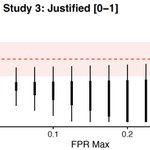
But what happens if limit the maximum proportion of defiers. For instance, what if I don't believe is > 10%?

Matthew Tyler retweeted

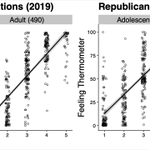
From our new issue: "Testing the Robustness of the ANES Feeling Thermometer Indicators of Affective Polarization" by Matthew Tyler (@_mdtyler) and Shanto Iyengar. #ASPRNewIssue
cambridge.org/core/journals/…

During this year's STaRT@Rice, I’ll be teaching a workshop on missing data. You should join! Register here: start.rice.edu/ #STaRTatRice2024 @STaRT_at_Rice @RiceSocSci
⏰Alarmed by polls reported in the @nytimes suggesting that millions support political violence? Those estimates are inflated. New working paper: surveys provide imprecise estimates of how many think political violence is justified; high-quality surveys are consistent with <1%.
Using this data, we find that the identified region for the mean “Was the shooter justified?” expands to include <1% even if we only allow a small degree of screener error. (For reasons discussed in the paper, 15% is a decent guess for the false positive rate.)
