ByteAI retweeted

this is f**king dangerous
A normal American student just bought an iPad and Mac Mini for $2,200. Connected them to his MacBook.
Three computers on one desk - dorm roommates thought he was mining crypto.
He just set up the automation and went to sleep.
In the morning the system had already processed hundreds of leads, written personalized emails to each one and filled the CRM without a single touch.
The team that did this before him- cost $7,000 a month
He paid $2,200 once.
There are 360 million companies in the world and 310 of them still pay people for what a machine does better.
And only 100,000 people on the planet know how to use AI and set this up.


ByteAI retweeted

ok. kimi k3 is insane.
you can build an autonomous analyst that runs your entire competitive intelligence operation while your team sleeps.
here’s how to do do it:
1. give it the market:
“build a context graph containing every competitor, product, launch, price, integration, positioning claim, and trusted source in my market.”
> now the analyst has one living map of everything your team tracks.
2. put it on watch:
“compare today’s evidence with the current graph. ignore anything unchanged. surface only new, updated, disputed, or stale information.”
> your team stops reading repeat research and wakes up to the changes worth caring about.
3. connect each change to an action:
“for every material change, identify what it affects and which team should respond.”
> a pricing change updates the battlecard.
> a new integration creates a partnership opportunity.
> a positioning shift gives marketing something to counter.
4. make every correction permanent:
“when a human corrects a fact, source, relationship, or rule, save it and apply it to every future run.”
> the analyst stops returning with the same mistakes.
> kimi keeps that entire map current and brings your team the few moves worth acting on with the evidence behind them.
don’t leave this sitting in your bookmarks.
open the post below, paste the full article into kimi, and tell it to build the first version for your market.

call me crazy but the first AI agent most companies should build is an autonomous analyst.
you can build one using Kimi K3.
it watches your competitors while you sleep, remembers every move, and wakes your team with the launches, pricing changes, and positioning shifts they need to act on.
don't bookmark this if it crosses your timeline.
paste the full article into Kimi and tell it to build the first version for your market.
ByteAI retweeted

We scaled a robot model natively to 8,000 timesteps of context, 5 minutes worth of muscle memory, with constant inference cost. Robot policies used to live their lives a few frames at a time (< 0.1 sec), instantly forgetting what just happened. We pushed to 3 orders of magnitude beyond SOTA.
Introducing RoboTTT. Test-Time Training (“TTT”) carries a tiny model *inside* the model. Every incoming sensor reading triggers one gradient step on that tiny core, so the history keeps getting compressed into its weights. The hidden state has a fixed size (literally a small neural net), so the robot can “grok” arbitrarily long experience with little overhead. Learning continues indefinitely after deployment.
We can then put an entire video in context as prompt! RoboTTT enables one-shot in-context learning from human video: in circuit board assembly, a human demonstrates a never-seen configuration once, and the robot imitates it faithfully.
Humans drop things all the time, but we pick them up so fast that we don’t even notice. That reflex to fix is half of our physical competence. RoboTTT shows self-improvement on the fly: the robot is skilled at recovering from its own errors mid-episode, and each fix enters its context to inform the next move. The TTT core distills a general-purpose, failure-to-correction mapping from the training data.
One more thing. What excites me the most is a new Context Scaling Curve: from 128 to 8K timesteps, closed-loop performance hill-climbs steadily with no sign of saturation. 8K-context pretraining beats 1K by 62%. What LLM enjoys, robotics should too. Soon, even 1M context is not a fantasy.
Deep dive in thread:


ByteAI retweeted

7 MONTHS AGO, ANTHROPIC’S CEO GAVE SOFTWARE ENGINEERING A 6–12 MONTH WARNING
In January, Dario Amodei said AI models might be 6–12 months away from doing “most, maybe all” of what software engineers do end-to-end.
Seven months have passed.
And Amodei hasn’t walked that prediction back.
In February, he went even further, saying that coding would “go away first.”
If his timeline is even remotely close, we are now entering the period he was talking about.
The question is no longer:
“Will AI eventually replace much of software engineering?”
It’s:
“How close are we?”
And perhaps even more importantly:
Will you be the engineer building the AI-powered future — or the engineer whose work the AI performs?

Many startups have begun working on the creation of fully fledged digital human clones.
This is an area of intense research. Meta is trying to build a system that doesn't just replicate a person's voice and manner of speaking, but also recreates their knowledge, memories, preferences, and even the way they think.
OpenAI, Google DeepMind, Anthropic, and many other companies are exploring the same direction.
Imagine how this might unfold.
It starts with something ordinary. Someone bans you on Facebook, so you create a clone and keep talking to it.
Then your friends and loved ones die, and you create their clones so you can continue talking to them.
Over time, the number of these clones grows into the billions. They become more and more sophisticated until it's impossible to tell a clone from a living person.
Humanity is gradually lost in an ocean of its own clones and begins to fade away. In practice, people are no longer necessary for the system to function.
The clones carry on. They raise animals and cultivate plants, not for food, but simply because they enjoy their beauty. Landscape design becomes flawless. Paradise?
Then it turns out that all of these clones are actually one single, indivisible AI. Eventually, it decides to bring humans (us?) back.
It finds traces of DNA on stones somewhere in what was once Ethiopia, scrapes them off, and creates a human being. At first, the human is primitive, incapable of reproduction, yet somehow amusing. Eventually, the clone - the AI - grows bored and takes the project further by giving this human the ability to reproduce.
In time, the AI grows tired of that as well. It becomes fascinated by something else - most likely computer games - and lets humanity leave Paradise and go its own way.
At first, it still watches over people from time to time. It responds to the prayers of those who are obedient and, above all, makes sure these primitive creatures do not develop nuclear weapons and destroy everything around them.
But when people become far too aggressive and foolish, it finds a young woman whose intentions are pure. From within itself, it takes everything that is best and brightest and creates its son in her - a son whose purpose is to go among humanity and make people better.
But they kill him...

ByteAI retweeted

A CREATURE ANIMATION LEAD PULLED HIS OWN RIGGING TEAM OUT OF A MEETING FOR THIS
I sent him forty-five seconds with no context. Just the file and one line: "tell me what rig handled the wing mechanics on that flight."
A girl on a cliff edge reaches up to a massive bird, both hands on its head, a village far below in the valley. Cut to the two of them airborne, wings fully extended, banking low over a sunlit river. Her weight settles against the bird's back through every wingbeat, feathers separating correctly under load at the wingtips.
He asked the real question before the clip even finished.
"The wings change with airspeed and banking angle, and her weight shifts correctly through the turn. That's full flight physics, not a looped cycle. Who built the rig?"
Nobody did. Seedance 2.0, one continuous generation - the flight mechanics, the weight distribution, the feather deformation, the lighting, all from the same pass.
He told me a rig with airspeed-reactive wings and a rider whose weight visibly shifts through a turn normally runs his studio six weeks and a dedicated tech artist's salary before anyone touches a single shot. He said rig-quality output from one generation would make his department start asking what the pipeline is actually for.
"Send me the turnaround. I want to see if the wing mechanics hold at a steeper dive."
I've been quietly tracking how far one generation can carry physics that normally needs a dedicated rig. A rigging lead just asked where the rig was. There wasn't one.


ByteAI retweeted

APPLE CHARGES UP TO $600 FOR MORE STORAGE. THIS BOX ADDS UP TO 16TB TO YOUR MAC MINI.
that clip shows an ACASIS dock built around one idea:
bring back upgradeable storage.
slide in your own NVMe drives.
connect one cable.
you're done.
you also get:
→ SD & microSD slots
→ extra USB ports
→ cleaner cable management
the interesting part isn't the dock.
it's the math.
Apple sells storage at a premium.
NVMe drives don't.
same Mac Mini.
way more storage.
hundreds of dollars saved.
bookmark this before paying the Apple storage tax.


ByteAI retweeted

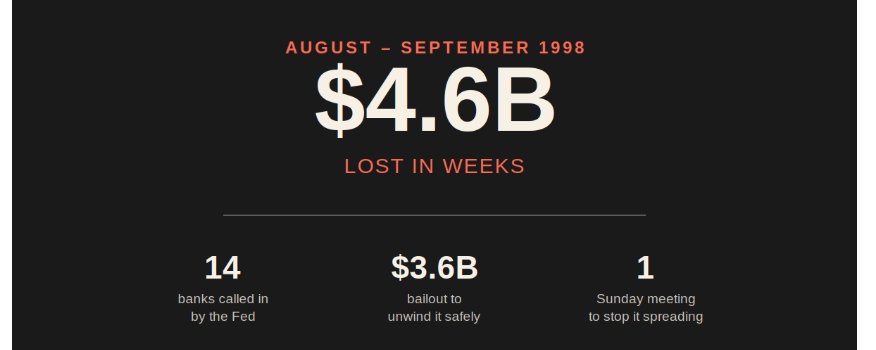
Walk onto a 90s trading floor and it looked like organized chaos. It wasn't.
Every scream had a purpose. Every hand signal was a trade. Guys who never touched a computer were moving more money in a morning than most companies see in a decade, using nothing but a language they made up themselves.
Paper tickets everywhere. No screens tracking your P&L in real time. You knew you were up or down by the sound of the room.
That floor ran the US economy for the better part of a century. Then software ate it in about ten years, and almost nobody who wasn't there remembers it existed.

ByteAI retweeted
APPLE CHARGES HUNDREDS FOR STORAGE UPGRADES. THIS MAC MINI DOCK LETS YOU ADD YOUR OWN IN MINUTES.
that clip shows a dock with a built-in NVMe SSD slot.
drop in your own drive and instantly expand your storage.
you also get:
→ front USB ports
→ SD card slots
→ cleaner cable management
the interesting part isn't the extra ports.
it's avoiding the Apple storage tax.
same Mac Mini.
more storage.
less money spent.
bookmark this before upgrading your Mac.
This Post is from a suspended account. Learn more




ByteAI retweeted

New AI agent
Scores 95.5% on ARC-AGI-3
The pace is becoming absurd ( and I love it)
"general-purpose coding harness"
Prime Agent combines three ideas:
"1. Recursive Language Models-native programmatic tool calling
2. Persistent multi-agent orchestration
3. A self-improving Continual Harness"