I've a ton of new followers recently, so I'd like to say: Hello! I'm a writer, editor, and educator who believes that experimental literature can be as fun as it's demanding. If you're ever looking for book recs -or even my own work- check out my website!
shorturl.at/uQgpX
It's the month of Halloween, my favorite holiday! I love the return of Fall with its transformative, melancholic moods and the lurking chance of terror. Every October, I try to reread, rewatch, replay, and relisten to select spooky works.
Maybe you might enjoy trying them too?
Replying to @salem_zarir
For me, that series of passages where Honda studies reincarnation, weaving philosophical traditions and interpretations, only for him to surface at the conclusion of the war was a huge "eureka!" moment for me. The act of reading as analogue and response to history was brilliant.
If I had to pick my most personal nine novels, I'd have to frame it around those novels which either provided a vocabluary for how I thought, or such violent "eureka!" moments that radically transformed my approach to writing.
How wonderful that such lists continue to change.
Replying to @brianonhere
1. Aye... and Gomorrah by Samuel Delany
2. Family Game by Nicholas Mosley
3. The Dead by James Joyce!
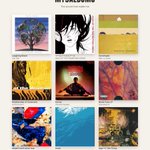
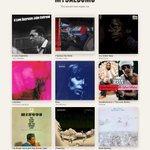
Just 9 albums was too cruel! I simply needed to expand the list a little more.
Depending on the time of year, any one of these could be in heavier circulation than first set of essentials.
Replying to @nickgreergkcin
BUT I SAW YOU LEAVE
AND CRAWL INTO A BED OF BROKEN WINDOWS!!!
Another weekend begun with my top 9! Since I first heard album, they've remained requirements on my every mp3 player.
And specifically France The Mute's Japanese pressing, which includes its titular track.
... and if I had the chance to expand that list further, I would! My artistic education has always been modular and multimedia.
As our lives and experiences grow more complex, I appreciate an art form that comprehends our world in fantastical, ruthilarious fashion.
Picking my top nine games is much harder than choosing among my favorite books! But if I had to curate, I would do so based on those games which I try to return to at least once each year.
So many hours spent in simulations which draw further satisfaction from me each time.
While such a course was a singular experience, its lessons are still available! Throughout this thread are links to the lectures and works that filled the semester.
Such experiences are invaluable, those that encourage transformation and play to find and recall community.
The course clearly meant a lot to me! Taken in my freshman year, such lessons informed my own writing, the poems and fictions I wrote and the theories which invigorated me.
The course taught me how to travel the world and listen in order to write my honors thesis.
Paul Carter Harrison's Drama of Nommo refers to the titular river spirit of African myth, who blue the boundaries of reality as a means of exhorting truth.
The acts of contradiction and obfuscation are the metaphor by which meaning is conveyed and traversed across borders.
What we quickly understood was the indefatigable drive behind Blues artistry. How do we respond to the terrors of modernity, by any other means than transformative flight?
How do we recall ourselves upon transformation, and share what happened with those long after us?
In order to keep pace with scholars, our class was put to task! To understand the Blues required an extensive vocabulary across disciplines. Our voracity of reading made us better listeners in turn.
From such readings, I was gifted an adaptive pedagogical framework for art.
Answering that question became a national effort! Scholars from across the U.S. visited our classroom to share their own study of Great Migration, blues culture, and narratology.
Our class was gifted the sight of real geniuses at play, encouraging our own inquiry in turn.
The course used a visiting exhibtion of Romare Bearden's Black Odyssey series, with weekly, analytical visits to the collection. How did Bearden's work fit within the overarching narratives of Great Migration?
Reverend Andrews reflects here:
youtu.be/0Pxz7dVdfT8?si=XRiD…
The course was co-taught by two professors who had planned the course for at least a decade:
Mark Sanders, a scholar of Black testimony, who later became my thesis mentor.
Rev. Dr. Dwight Andrews, who scored August Wilson's plays! Try his lecture here:
youtu.be/g93Ie8CtQjU?si=H_5a…
I've been asked a few times in the last month about books I've read and their context. Friends found it interesting, so I thought others might too.
I'd like to talk about the best college class I ever took: The Blues Odyssey!
Replying to @EmmettStinson
What a book! While not itself a secondary text, I found Paul Carter Harrison's The Drama of Nommo a great primer for Divine Days' narrative structure. The novel's language play was a delight, but reading narratology and performance as part of the novel gifted layers of payoff.
Everyone please share congratulations to @DbDjamel for winning the prestigious Ville Grillet residency, which will send my dear friend to Lyon among the great living artists of French language art.
Djamel will be a giant in world literature, get ready!
villagillet.net/articles/dja…
The next great writer is here! Djamel Bouchenaki's debut novel comes out next year, but you can read an excerpt now at @MinorLits. He writes a simmering, musical descent into fury like Rachid Boudjedra, Mathias Ènard, and John Hawkes before him.
Get to know this future titan!