

I created & patented French language products that decode thru #orthoepic games! I live to laugh, play and create. #linguist #onted #eduqc #success4all #UWO
Woodstock, ON Canada
Joined September 2011
- Tweets11.2K
- Following4.5K
- Followers1.7K
- Likes6K




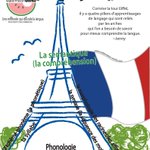


Which is why we do what we do en français. Teach the code. Www.watermelon-works.com

“Encoding is not simply a step to writing; it is a vital but underappreciated route to reading. It requires a deeper and more consistent practice of identifying the individual speech sounds in words and linking those sounds to letters. It engages children from the beginning with meaningful words, not isolated skills.
The segmentation and construction of spoken words build essential neural networks and provide a meaningful route to phoneme awareness and phonics, as children learn to master the ingenious code of letters that makes spoken words visible.” ( Herron & Gillis, 2020).
Read this do-not-miss article, Encoding as a Route to Phoneme Awareness and Phonics: A Shift in Literacy Instruction, by Jeannine Herron and Margie Gillis, here:
onlinedigeditions.com/articl…

This is what we have been doing since '97 and publicly since 2009. En français. #patentedmethodology

Wondering where to spend most of your time when teaching phonemic awareness? Research supports focusing on three skills: isolating sounds, blending sounds, and segmenting sounds.
🎧 Listen Now! What Research Says About Phonemic Awareness with Matt Burns
ow.ly/FYPh50Wh0e2

Phonological awareness is an umbrella term for manipulating sounds.Phonemic awareness (PA) is identifying sounds without letters. Developing students’ PA skills USING letters is phonics. We patented a method for teaching students #French phonics. Www.watermelon-works.com
I have been teaching this forever en français. #frenchsounds


Of course spelling supports reading. It's why we created and patented les sons français. So all kids have chance to succeed même en français.

English spelling is much more regular and predictable than we may think! Dr. Louisa Moats outlines several key principles for making sense of the English spelling system in this article.
Find the resource 👉 onlit.org/resource/how-spell…

The most amazing person! Love her work.

I just published a blog on reading fluency. Defining, assessing and teaching. Looking forward to comments!
medium.com/inspired-ideas-pr…

La phonétique est impotante. On a créé et brevetée une méthode qui décode la langue française pour les apprenants qui ont les troubles d'apprentissage. @ONeducation
@OECMCollaborate patented Canadian innovation.

I teach it every day en français.
Here's something they don't tell you when you become a teacher: You have to explicitly teach writing! Students need to have something to write about - so writing needs to be connected to reading & learning. 🤯🫣
Listen 🎧 ow.ly/yMwf50UzcrF

I'm attending the 2024 Make Math Moments Virtual Summit from @makemathmoments #mmmsummit2024 RT if you think others will find this helpful 🙌 summit.makemathmoments.com #mmmsummit2024

Watermelonworks had been doing this for a decade en français. #fsl #frimm #screening #decoding #endocding


We notice the same thing.
It's why we do what we do en français. We have been explicitly teaching the code in French to students for 25 years.
#fsl #fls #explicite
As someone who exclusively works teaching reading to students at the Tier 3 level, I have found that more often than not it is not that some kids can't learn to read, but rather that many kids are often not taught the way they need(structure/explicit instruction) and/or provided instruction at the intensity they need with the amount of practice they require.
For many, it is easier to think that it is the kids and the family's fault for the struggle that so many kids experience.
The truth is different.
The more a child deviates from being able to learn "the way school districts teach reading" the less successful they are likely to be. Why? Because the system is rigid and is not designed to be self-accountable and to revise itself in real time.

I've been preaching this for years!

Writing letters by hand leaves clearer memory traces in the brain than typing them does—indicating deeper learning. 🖊️
Learn more about the research here: edut.to/3VXsn5i

ALT Did You Know? Writing letters by hand leaves clearer memory traces in the brain than typing them does, indicating deeper learning. Brain scans of preliterate children reveal crucial reading circuitry flickering to life when kids hand-printed letters and then tried to read them. The effect largely disappears when the letters are typed or traced. Sources: James & Engelhardt, 2012; Askvik, Van der Weel, & Van der Meer, 2020
Jenny Gray🍉 M. Ed. retweeted

Have your heard about our FREE CPF membership?
Click the link to find out more information and join CPF! You’ll be able to access many online resources, be the first to know about new events and meet like minded people who value FSL learning and education
cpf.ca/en/join-cpf/
I have been preaching this for years! Amen!

"In kids studies show that tracing out ABCs, as opposed to typing them, leads to better & longer-lasting recognition & understanding of letters. In adults, taking notes by hand during a lecture...can lead to better conceptual understanding of material" npr.org/sections/health-shot…