
-The Urban Action Innovations Lab (UAL)- a knowledge-based approach for engaging with issues of sustainable urban development challenges.
Kampala, Uganda
Joined September 2016
- Tweets704
- Following939
- Followers1.2K
- Likes491






Urban Action Lab retweeted

📄 Expenditure and Revenue: Two sides of the same coin?
Our latest blog post, by @astihaas, Lecturer & Fellow at the Africa Urban Lab, is out! Astrid explores why budget execution belongs at the center of the conversation on municipal revenue in Africa.
Underspending gets far less attention than revenue mobilization in African municipal finance. Cities raise the money, it sits in the budget, and the investment step does not follow. Kisumu, Kenya, spent just 32% of its budgeted capital expenditure in the 2019/20 financial year. In Nakuru, Kenya, development budget absorption fell from 9.4% in FY2018/19 to 8% in FY2024/25.

What can Uganda learn from Germany’s spatial planning and regional development experiences?
Join us today at Makerere University for an insightful guest lecture with Oliver Weidlich from the University of Würzburg, Germany, as we explore planning challenges, comparative perspectives, and opportunities for further study.
📅 15 October 2026
🕑 2:00–5:00 PM
📍 GIS & RS Lab, COCIS Building, Block A, Level 1
All are welcome!
#SpatialPlanning #RegionalDevelopment #MakerereUniversity #UrbanDevelopment

Today, we celebrate Uganda’s journey with pride and purpose. 🇺🇬
At @UrbanActionLab , we’re working towards a safer, greener, and more resilient #Uganda , especially in our fast-growing cities.
Happy Independence Day! Let’s keep building a sustainable future together.
#UgandaIndependenceDay #Uganda #UrbanActionLab #SustainableCities #ClimateResilience #UrbanDevelopment
@pmukwaya
@AfricanCities_
@HakimuSseviiri
@karenhelmy1
@imutesi1

Urban challenges rarely happen in isolation and neither should our solutions.
Systems mapping helps us see how waste, drainage, flooding, health and livelihoods connect, what drives these challenges, and where change is possible.
Through the Urban Futures Project, communities are helping us build this bigger picture and shape solutions grounded in lived experience.
Tap the link below to read the full article and learn more.
news.mak.ac.ug/2026/10/maks-…
@pmukwaya
@imutesi1
@HakimuSseviiri
@karenhelmy1
@AfricanCities_


Blocked drains and uncollected waste are easy to see. But what is actually driving these problems?
Our co-design workshops are digging deeper to understand how community practices, institutional systems, political priorities and growing population pressures shape the challenges we experience every day.
Because addressing what we see on the surface is not enough. Co-design brings communities and other actors together to unpack why these problems persist and where meaningful change can begin.
@pmukwaya
@imutesi1
@karenhelmy1
@HakimuSseviiri
@AfricanCities_


Urban Action Lab retweeted
🎙️ New Episode of the Africa Urban Lab Podcast: Ken Opalo on State Building, Urbanization & Economic Growth
In this episode, Africa Urban Lab Founder & Executive Director @kurtislockhart sits down with @kopalo, Associate Professor at @Georgetown’s School of Foreign Service and writer of An Africanist Perspective, to explore state capacity, economic growth, political institutions, and development across Africa.
Ken describes urbanization as a potential “cheat code” for state building, explaining how cities can make populations easier to reach, strengthen public service delivery, and generate the revenue needed to support growing populations. He also explores why practical urban planning and infrastructure matter, and how subnational politics shape the way states develop.
🎧 Listen Now!
Spotify: open.spotify.com/episode/1NS…
Apple Podcasts: podcasts.apple.com/us/podcas…
YouTube: youtu.be/tVEotnAt_cs?si=RZUX…
You can also listen to all of the Africa Urban Lab Podcast episodes on our website: aul.city/podcast
Waste and drainage may look like separate problems, but they are closely connected. Poorly managed waste often ends up blocking drains, while inadequate drainage leaves communities more exposed to flooding.
But who collects the waste? Who maintains the drains? And where does responsibility sit when things fail?
This is why co-design matters. It brings communities and other actors together to understand these connections and develop practical solutions together.
#UrbanFutures #CoDesign #Kampala
@buyinza_ambrose @imutesi1 @HakimuSseviiri @KasaijaPeter2 @pmukwaya @IDS_UK


Why does flooding keep happening in our informal settlements?
It’s easy to blame heavy rain, but the story is much bigger than that.
Poor waste management can block drainage. Inadequate drainage makes flooding worse. Limited investment in basic services leaves communities exposed. And when coordination between those responsible is weak, the same problems keep coming back.
Then there’s the human side: people already struggling financially often have fewer options to protect themselves or recover after a flood.
That’s what our co-design workshops are trying to unpack with communities: not just where flooding happens, but how different everyday problems connect to produce the risk in the first place.
We have observed that, flooding starts long before the rain falls.
#UrbanFutures #Kampala #Flooding #InformalSettlements #CoDesign
@Makerere @karenhelmy1 @HakimuSseviiri @pmukwaya @KasaijaPeter2 @imutesi1


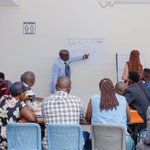
The Urban Futures Project at Makerere university's Urban Action Lab has entered an exciting new phase of co-design.
Through community-led workshops, we are exploring how solid waste management, drainage, flooding, governance, health and livelihoods intersect in informal settlements and, importantly, what can be done differently.
Together with communities, we are identifying key actors, power dynamics, vulnerabilities, existing adaptation practices and opportunities for change.
The goal is simple: move beyond researching communities to designing solutions with them.
#UrbanFutures #CoDesign #InformalSettlements #UrbanGovernance #Kampala #happenningnow @HakimuSseviiri @pmukwaya @KasaijaPeter2 @imutesi1 @joanakiberu @karenhelmy1 @IDS_UK

Kasasiro Kingdom! Obwakabaka bwa Kasasiro' youtu.be/jjrke7AK52s?si=Vh5h… via @YouTube
Community Theatre on Electricity Access and Land Matters in Kiseyi, a Ka... youtu.be/srwbe_b3ACo?si=YLC2… via @YouTube
The @UrbanActionLab is pleased to have hosted @MandyPazAlencar (Prof. Amanda Paz Alencar) from @erasmusuni (Erasmus University). During her stay Makerere University, she offered training on digital ethnographic geography methods, guided graduate students, early career and community researchers on project coordination, research integration and capacity building of teams with various skillsets, dived into opportunities for post graduate studies and work available at Erasmus University, the Netherlands and the wider European Union territory and engaged in field-based research on digital livelihoods of Eritrean and Congolese refugees in Kampala. The key thematic details of our engagement during her research stay are as follows;
Digital ethnography matters more than ever:
She highlighted that digital ethnography is increasingly mainstream because everyday life now unfolds across platforms, chats, feeds, and online communities. A key takeaway is that digital spaces function as social worlds, not just communication channels and so researchers need approaches that capture meaning-making as it happens in context. Methods such as walkthroughs, media go-alongs, scroll back analysis, and observing interactions over time in messaging apps like WhatsApp are very essential in digital geographic studies.
These strategies help researchers study behaviour, narratives, and relationships, but they also require careful ethical decision-making around consent, anonymity, and how public content is used.
However, it was emphasised that platforms are never neutral: algorithms affect visibility, datafication affects what is treated as valuable, and both shape what researchers can observe. As a result, good digital research must combine methodological creativity with critical awareness of how technology structures the research landscape itself.
#DigitalEthnography #QualitativeResearch #SocialMediaResearch #ResearchMethods #DigitalCulture
Research coordination is also knowledge production:
Amanda indicated that strong research projects advance not just through good ideas, but through effective coordination, clear editorial structure, mentorship, and shared accountability. Her session illustrated this by focusing on our plans of producing an edited book on climate change, health, and urban informality in African cities where she accepted to offer support, while also strengthening the surrounding research community. A key highpoint was the commitment to co-production, bringing together academic researchers, students, and community researchers to jointly generate knowledge.
The discussion extended beyond planning chapters to cover dissemination strategies, audio-visual storytelling, qualitative analysis training, and practical collaboration systems such as shared digital workspaces and internal review processes.
The session’s main lesson was that research impact increases when coordination is treated as a core intellectual activity. With clear timelines, early engagement with publishers, structured editorial support, and meaningful capacity building, contributions can be shaped into a coherent, influential body of work.
#ClimateResearch #UrbanHealth #KnowledgeCoProduction #ResearchLeadership #CapacityBuilding
Academic opportunity requires strategy, not just ambition
Amande revealed that international academic opportunities are attainable but often complex. Access to Master’s and PhD pathways in the Netherlands depends on understanding differences between institutions, funding models, and how prepared applicants must be.
Key opportunities discussed included; Dutch Research Council (NWO), Erasmus Mundus programs, paid PhD positions listed through Academic Transfer, and Marie Curie fellowships. Across all of them, success requires a strong academic profile, tailored applications, relevant research experience, and early planning because academic mobility is about strategic positioning, not just finding an opening. The links to some opportunities include; nwo.nl/en; unic.eu/fr/about; euraxess.ec.europa.eu/; eur.nl/
The discussions also addressed practical realities such as housing and living costs, language expectations, and the importance of publishing early. Overall, it balanced ambition with concrete preparation steps, offering guidance that many students and early-career researchers need when pursuing global academic pathways.
#AcademicMobility #ErasmusMundus #PhDOpportunities #HigherEducation #EarlyCareerResearchers
Field-research on digital livelihoods of Eritrean and Somalis refugees in Kampala
In collaboration with Refugee-Led Organisations Network (RELON), we did field work in Kamapala to highlight the way digital financial initiative, accelerated by budget cuts, are often framed as pathways to self-sufficiency, yet frequently focus more on improving aid delivery efficiency than on resolving refugees’ deeper concerns about financial access and rights. In practice, participants described how they must continually adapt to gaps in existing support, turning to community-driven, technology-enabled strategies to navigate socioeconomic exclusion in everyday life. Digital social media platforms, fin techs and online marketing was revealed to support livelihoods of refugees. This experience reinforced the central need to move beyond interventions that expect refugees to cope with inadequacy, and instead centre refugee needs and agency in the design of responses. This constitutes part of an ongoing collaboration with partners in Nairobi, with an aspiration to generate comparative insights in the middle Eastern, European and South American cases.
Thanks to ErasmusTrustFunds, UAL and its local partners for facilitating this research stay period. @relonuganda @AfricaUrbanLab @AfricanCities_ @DLwasa @erasmustrust @HakimuSseviiri @judithmbabazi @pmukwaya @KasaijaPeter2 @NamuliFisa @RitahPavin @kareem_buyana @karenhelmy1 @erasmusuni @europeanunion @jacquelinem104s


Urban Action Lab retweeted
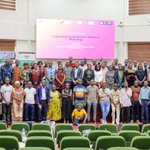
The University Coalition on Curricula for Cities (UCCC) has taken another step toward strengthening urban planning education across East Africa.
Last month, UCCC founding universities convened regulators, professional bodies, practitioners, and city leaders at Ardhi University in Dar es Salaam to validate the gap finding report and co-design the next phase of urban planning curriculum reform interventions.
The workshop established a shared implementation pathway, with immediate actions including a public lecture series, a training-of-trainers program, and the development of African urban planning case studies, alongside longer-term curriculum reforms across partner institutions.
This workshop marks an important milestone for UCCC, moving from identifying curriculum gaps to implementing practical, collaborative solutions that support planning education that is practical, Africa-based, digitally capable, and aligned with the needs of rapidly changing African cities. The workshop was held with support from the IJURR Foundation.
Learn more about the workshop: aul.city/blog/uccc-convenes-…
@ChuokikuuArdhi @KenyattaUni @Makerere @MekUniETH @PLANNINGKe

Urban Action Lab retweeted

Meet Our Moderator: Prof. Rachel Tolhurst
Strong conversations need thoughtful leadership, and we're delighted to welcome Prof. Rachel Tolhurst, Professor of International Public Health, as a moderator for Room 1: Community-led Data and Urban Transformation at the Muungano@30

The @UrbanActionLab is deeply grateful for the enriching NVivo training session delivered by @MSchmidtSane from @IDS_UK and Case Western University alongside partners at Makerere University.
The training was a genuinely eye-opening experience that catalyzed a paradigm shift in how we think about qualitative research handling and analysis.
From the very first steps, we were reminded that qualitative data management doesn’t have to be chaotic or scattered across folders and hard drives. We began with importing data into NVivo, and we were pleasantly surprised by how much the platform accepts: documents and PDFs, audio and video, survey exports, and even social media data. Bringing all raw materials into one project workspace means everything is centrally organised hence saving enormous time, especially when working with large datasets spanning multiple sources.
Then we moved into coding which is the heart of NVivo’s approach to qualitative analysis. Coding is essentially the process of labelling meaningful segments of your data with tags that capture what that segment is about. The example that stayed with us was simple but powerful: when you read an interview transcript and a participant reflects on feeling excluded from decision-making in their community, you can highlight that statement and assign codes such as “exclusion” or “community participation.” Over time, as more data is coded, patterns naturally begin to surface. Ideas that repeatedly appear across interviews and sources start to converge to form a basis upon which themes begin to take shape.
But NVivo doesn’t stop at organising. The session also showed us how querying takes qualitative analysis from description to interrogation. If coding is about labelling and structuring the data, querying is about asking systematic questions of that structured body of evidence. For example: A text search query scans every file in the project and retrieves all instances of a word or phrase—something that would be extremely time-consuming to replicate manually. Yet, a coding query helps you extract all data associated with a specific node (or combination of nodes), allowing you to review how a concept shows up across participants.
Most importantly, a matrix coding query allows you to cross-tabulate codes against each other such as comparing how men versus women discuss a theme, or how perspectives differ between urban and rural participants. That kind of structured comparison is fundamental to rigorous qualitative analysis, and NVivo helps make it systematic rather than purely impressionistic.
We also explored visualisations, a dimension that many researchers underestimate. The training touched on tools such as word frequency clouds, cluster analysis diagrams, and mind maps. Seeing your data represented visually helps you detect relationships and patterns that may not be as obvious when reading alone. It adds depth, clarity, and new ways of interpreting the same evidence.
What stood out most is this: NVivo does not replace the researcher’s intelligence, it strengthens the researcher’s process. The software creates the conditions for deeper, more rigorous analysis by handling organisation, retrieval, and traceability. The intellectual work remains firmly with the analyst; NVivo simply ensures that nothing is lost and that every insight can be traced back to the original data.
In short, this was a session well worth attending, one that will undoubtedly shape how we approach qualitative research going forward. @DLwasa @pmukwaya @judithmbabazi @NamuliFisa @KasaijaPeter2 @AfricaUrbanLab @AfricanCities_ @HakimuSseviiri @NPA_UG @KCCAUG


@UrbanActionLab is pleased to have moderated a policy workshop on: Climate Change, Environmental Management and Sustainable Growth in Uganda organised by @IGC_Uganda, and @BOU_Official, bringing together government, the academy, Civil Society Organisations and practioners to reflect on emerging findings and discuss practical solutions with relevance for current policy debates. The key discussion points were as follows:
Climate change is already a macroeconomic issue for Uganda, not a future environmental concern. The workshop cited a fiscal deficit of up to 7.6% of GDP, partly driven by the cost of repairing infrastructure after floods, droughts and related shocks.
Climate policy should be treated as growth policy. Speakers repeatedly linked resilience to productivity, competitiveness, labor mobility, public health and long-term structural transformation.
Uganda faces a major climate finance gap. The updated NDC reportedly requires about USD 28 billion by 2030, while current climate funding remains below 5% of what is needed and is heavily dependent on external financing.
Domestic resource mobilization matters. The KCCA-linked research on predicting property values for about 2 million buildings in Greater Kampala shows how better data can widen the local tax base, improve fairness and finance climate-resilient urban investment.
Households and firms are already carrying climate risk.
The workshop highlighted that many households are one climate shock away from poverty, while young and small firms in flood-prone areas are the most likely to exit after flooding.
Cities are both a source of emissions and a platform for solutions. The workshop noted that cities account for a large share of emissions, but they also hold major potential for efficient transport, better land use planning, stronger service delivery and scalable adaptation. @pmukwaya @KasaijaPeter2 @DLwasa @HakimuSseviiri @AfricaUrbanLab @AfricanCities_ @MinofHealthUG @mofpedU @min_waterUg @URAuganda @_U_C_L_ @KCCAUG @OfficialMubs @nemaug @NPA_UG


The UAL is grateful for a rich training engagement on co-design and systematic participatory action research (SPAR) approaches with a vising scholar Dr. @MSchmidtSane from @IDS_UK and Case Western University. The training sharpened our thinking on systems mapping, participatory action research, and climate–health adaptation pathways in informal settlements and reminded us that progress in development requires more than good intentions or good evidence.
A standout issue was the practical meaning of Systemic Participatory Action Research (SPAR): bring a systems lens into participatory work so that multiple voices, scales, and lived realities actively shape the response, not just the outputs.
From drainage and waste management to communication systems and local governance, the training made the interconnections impossible to ignore. Climate and health challenges in informal settlements are deeply linked through the way risks are produced, experienced, and managed. Systems mapping helps us see those links more clearly, turning “many issues” into a connected picture of causes, constraints, and opportunities.
One powerful message we’re carrying forward: research should not end with a report on a shelf. Participatory approaches challenge us to return to communities, listen better, and create knowledge that supports action. In other words, evidence has to travel from analysis into dialogue, and from dialogue into real decisions and improvements on the ground.
We also reflected on the realities of co-design: power dynamics, different mandates, literacy gaps, the role of local knowledge, and the time pressures that vulnerable communities face. The takeaway was clear; good methods must meet people where they are, and co-design needs to be designed with constraints in mind, not treated as an idealized process.
We’re particularly excited by the idea of adaptation pathways that extend beyond one-off interventions. Instead of asking only “what do we do next?”, the training pushed us to think in longer horizons: what needs to happen in year 1, year 5, and year 10 to strengthen resilience in informal settlements? That long-view planning is essential if adaptation is to be sustainable.
One insight we’re keeping front and center: local voices should not be an afterthought in research. They are central to understanding climate risk, health vulnerability, and what realistic action looks like in everyday life.
It was encouraging to see students, researchers, and practitioners in one room learning together and discussing how evidence from phase one can guide the co-design phase. Capacity strengthening works best when it’s practical, open, and collaborative.
We also appreciated the space to discuss how systems maps can evolve from draft analytical tools into practical co-design instruments useful for community dialogue, city-level discussions, and national coordination. That bridge between analysis and action matters.
Our biggest takeaway from today: co-design is not about arriving with ready-made solutions. It’s about building a shared understanding of problems, priorities, and pathways for action—with communities, researchers, and decision-makers shaping the direction together.
Finally, the engagement reinforced an important point: climate–health work is not only about infrastructure. It’s also about knowledge, awareness, communication, coordination, and shared priorities across communities and institutions.
#ClimateHealth #CoDesign #PAR #SystemsThinking #ParticipatoryResearch #SPAR #ResearchMethods #UrbanHealth #ClimateAdaptation #UrbanResilience #CommunityEngagement #ActionResearch #InclusiveResearch #Equity #AdaptationPathways #ClimateAction #HealthSystems #ClimateJustice #ParticipatoryMethods #CapacityBuilding #ResearchTraining #SystemsMapping #PolicyDialogue #UrbanAction #ClimateHealth #CollaborativeResearch #LocalKnowledge @MSchmidtSane @IDS_UK @DLwasa @pmukwaya @HakimuSseviiri @KasaijaPeter2 @judithmbabazi @karenhelmy1 @MinofHealthUG @NPA_UG @KCCAUG


