

Computational NeuroImaging and Connected Technologies Lab
University of Illinois
Joined June 2015
- Tweets702
- Following159
- Followers332
- Likes952



The CoNeCT Lab retweeted

🔥 OK I just posted a NEW VIDEO:
🔥 Can AI Diagnose Every Brain Disease? Data Scaling Laws & the ENIGMA Consortium | MICCAI 2026 youtube.com/watch?v=hknxO_U1…
🔥 Can AI diagnose every brain disease from an MRI with over 90% accuracy? And if not, how much more data would it take?
🔥 Our ENIGMA Consortium pooled 300,000+ brain scans from 45 countries across 30+ disorders. What kinds of AI models work best with this data? + when do we "have enough"?
Some notes:
🧠 Simple models win, i.e. are most accurate, if you only have small samples of data to train them. But higher-capacity models (variational auto-encoders and vision-language models) overtake them once you have enough training data, + you can predict the "crossover point" using martingale theory + spectral analysis.
🔥 The "Zeta Law of Discoverability" predicts how diagnostic accuracy (AUC) grows w/ training data, based on the spectrum of the data in the encoder's embedding space. Under some reasonable assumptions, accuracy scales with data according to a semimartingale, which you can decompose via Doob-Meyer decomposition into the sum of (1) a predictable component (truncated Riemann zeta function for LDA in p-dimensions), and (2) a martingale you can model using the Strasbourg Gamma-Calculus (the uncertainty cone of models trained on bootstrapped samples - see video)
🔥Vision-language models (VLMs) trained on brain MRI reach AUCs of 0.94–0.98 for Alzheimer's, stroke+epilepsy on 127 different scanners used in model training. On unseen scanners they reach 0.81–0.89, but domain shifts lead to spectral mixing, which is a 2nd heat semigroup in the encoder embedding
🌍 🔥 MASSIVE THANKS to 2,000+ co-authors across 1000+ institutions !
BONUS: for your next new study or AI challenge, you can estimate whether you need more data, different data or a better model (+ why you should use Ville's theorem on the cones!!!!).
🔥🔥🔥 36-minute talk w/ chapters in 1st comment. youtube.com/watch?v=hknxO_U1…
#MICCAI2026 #MedicalAI #Neuroimaging #ScalingLaws #ENIGMA

The CoNeCT Lab retweeted

I'm so proud of the @INSneuro Science committee who have published the first ever paper led by a committee! Our global INS survey across more than 30 countries reveals international disparities in neuropsychological testing tandfonline.com/eprint/DSDQM… @DrLenaDobson

The CoNeCT Lab retweeted
Wonderful to catch up with Professor Liang Zhan today who gave an incredible talk on about 10 extremely challenging problems in 30 minutes (!).
In one ingenious paper, PACE [1], developed with Alex Leow, detects hierarchical communities in functional MRI by repeatedly splitting the brain network into groups with more consistently positive connections within groups and negative connections between them, testing if each successive split is statistically supported. This is interestingly related to the Ising model (1920) that comes up in the study of magnetism, where atoms are represented as spins pointing up or down, and interactions favour either alignment or opposition. PACE applies the same idea to brain networks so that consistently positive fMRI correlations favour placing regions together, but consistently negative correlations favour placing them apart. So then you can re-cast the puzzle of finding brain communities as finding a low-energy arrangement of interacting spins. you can then use normalised mutual information to measure how much 2 community partitions agree, and find disease effects (by permutation testing).
[1] pmc.ncbi.nlm.nih.gov/article…

The CoNeCT Lab retweeted
I'm going to have to update my neurogenetics class in the Fall with this cool new result (July Nature Medicine):
🔥a 34-circRNA "circular RNA" blood signature detected biomarker-confirmed Alzheimer’s disease with AUC=0.945 versus 0.877 for the famous Alzheimer's biomarker pTau217, giving an amazing 0.977 when combined.
🔥so what is "circular RNA"? we all have them + circRNAs arise through “back-splicing,” when a downstream splice site loops back and joins an upstream site, creating a stable RNA ring. they kind of build up as they are fairly stable and they are not always transcribed into proteins. I can't tell if they are a splicing mistake as it seems like they also have useful functions (like mopping up other microRNAs, need to read about this..)
🔥Their predictive model held up and generalised to independent Knight-ADRC and preclinical A4 cohorts, except AUCs went down to 0.863, 0.723.
🔥This bizarre signal apparently changes 2-4 years before symptoms, so apparently it may pick up near-term synaptic or neurodegen. processes beyond amyloid.
The last author is a very modest person, I had lunch with him on Thursday and we talked about knowledge distillation for omics/imaging + he didn't even mention his new cool finding !!

The CoNeCT Lab retweeted
🔥 TOMORROW at NIH I will give a talk on dementia subtyping using AI, specifically knowledge distillation.
🔥 Recently neuroimaging and proteomics AI-based methods for differential diagnosis of Alzheimer’s disease, LATE/TDP-43, LBD and vascular disease have different strengths with CSF/PET performing best for beta-amyloid and tau, diffusion MRI/SWI best for cSVD (cerebral small vessel disease) and vascular dementia, T1w MRI best for detecting atrophy and hippocampal sclerosis and subdomain neuropsych, SuStaIN, and AI-assisted computer vision on MRI for TDP-43.
🔥 With knowledge distillation you can use cross-modal attention to distil a teacher AI model trained on multimodal data into student AI model that works on blood data; in theory, the student can do better when only given blood-based proteomics than if it had only been trained on proteomics.
🔥 We will present a power analysis based on a double-zeta law ( zenodo.org/records/22063388 ) for these models in terms of the modes of the cross-modal spectrum.
🔥 This will tell us when we will benefit most from better assays, a higher sample size N of the same assays, or a better cross-modal encoder (AI model).

The CoNeCT Lab retweeted

Please join us in Congratulating the 2026 ACNP Travel Award Class! 👏🤩 Click Here ➡️ tinyurl.com/5bzaz8va for more information on Travel Awards. 📝

The CoNeCT Lab retweeted

Future Leaders in Psychiatry Program (FLIPP) is a one-year program designed for undergraduates at accredited U.S. universities.
Apply: ow.ly/bUtE50ZunHX

The CoNeCT Lab retweeted

If you're funded by NIH or NSF, the new White House science report and its budget annex are worth your time. They set the direction for the next few years and annex has a lot of specific detail.
I read both, plus the hearing. Some thoughts:
open.substack.com/pub/letthe…

The CoNeCT Lab retweeted

📣NIH is recruiting for the role of Deputy Director for Intramural Research.
This position oversees the Office of Intramural Research which develops and implements in-house research projects and policies throughout NIH. It also helps coordinate intramural research, training, and technology transfer conducted within NIH labs and clinics.
Learn more and apply ➡️ bit.ly/4vDVSYZ


The CoNeCT Lab retweeted

1/7: On June 9, we marked a major milestone in mental health research with the formal launch of the Noel Drury, M.D. Institute for Translational Depression Discoveries at the University of California, Irvine—the first institute in the nation to formally unite …
The CoNeCT Lab retweeted

What If AI Chatbots Are Saving Lives? Don't ban them based on anecotes, say @adamomaryphd and Jennifer Huddleston open.substack.com/pub/humanp…
The CoNeCT Lab retweeted

NEW: A serious staffing shortage — of the Trump admin's own making — is delaying the agency's ability to send billions to universities around the US, leaving labs reeling.
“I thought we were at rock bottom”, a senior NIH official said. “We are below rock bottom now.”

The CoNeCT Lab retweeted

Brain–body-environment interactions must move beyond isolated exposures toward the expotype: the dynamic configuration of physical, social, lifestyle, and internal factors that jointly shape brain–behaviour phenotypes. At @NatRevNeurosci (nature.com/articles/s41583-0…), we propose a future agenda to assess the exposome as a complex, time-varying system that requires nonlinear models to capture interactions, thresholds, synergistic effects, and cross-domain buffering mechanisms. Although predictive machine learning can support individual risk estimation, the next frontier is to move from prediction to mechanism, from association to dynamic synergetic inference. Multivariate learning, causal machine learning, aging clocks, longitudinal designs, and generative biophysical digital twins are beginning to provide this bridge. Brain–body–environment diversity can reveal how ecology becomes biologically embedded. We call for a future exposomic neuroscience that integrates nonlinear temporal modeling, generative mechanisms, and population diversity to understand, simulate, and modify trajectories of brain aging and disease. Congrats Sarah Genon, @MasoudTahmasian & @INM7_ISN

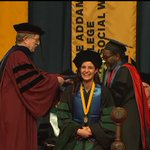
Commencement is always a special time but this year, @UIConect lab is proud to have two of our graduates get their doctorates. Congrats to Dr. @aksuugunay and Dr. @michelleksheena!


The CoNeCT Lab retweeted
An important policy position statement from the leading peer-support network for people living with mood disorders in the U.S., @DBSAlliance
dbsalliance.org/get-involved…


The CoNeCT Lab retweeted

Rising Star spotlight at @SOBP✨
Catch Dr. Jeesung Ahn’s (@JeesungA) talk: Personalized Treatment Selection in Depression Using Clinically Interpretable Neuroimaging Biotypes
What if matching patients to treatments based on brain circuit profiles could more than double remission rates?
This work uses fMRI to turn neural circuitry into actionable, individualized treatment decisions—moving precision psychiatry closer to reality.
📅Fri, May 1 | Rising Star Oral Presentations (3–5 PM EDT)
⏱️Talk: 4:05-4:25pm EDT
📍SOHO Complex
#PrecisionPsychiatry #fMRI #DepressionResearch #SOBP2026

The CoNeCT Lab retweeted
ACNP Travel Award Applications open TODAY for the ACNP 65th Annual Meeting: January 10-13, 2027, San Diego, California. Deadline to Submit is May 14, 2026, at 5:00 pm Central. tinyurl.com/5bzaz8va #ACNP2027 #travelawards

The CoNeCT Lab retweeted

Digital phenotyping uses smartphone & wearable data to study mental health, but many methods rely on static summaries. @ConstantAxel, @lena_pl & co propose dynamic digital markers that better capture how behavior & physiology change over time
nature.com/articles/s44277-0…
