

Learner/TennisPlayer/Faculty/ID/Undercovers Reader-"The Elasticity of imagination & compassion is what writing & reading promote"~Julia Alvarez
Library
Joined June 2013
- Tweets6.3K
- Following2.2K
- Followers490
- Likes28.3K




10RepLearning retweeted

No words needed … and a good precursor to the weekend.
(Classical Gas - Glen Campbell)

10RepLearning retweeted

Carl Jung believed the people who irritate you are showing you yourself.
He called it the shadow: every trait you refuse to admit you have, you start hunting in everyone else. That’s why the reaction is always too big for the crime.
Jung, in 5 minutes on Deepstash.
10RepLearning retweeted

I'm sharing the lifetime reading list from my high school English teacher. He loved books, thought deeply, and told us that during the War he always had a paperback in his back pocket to escape into.
*not my checkmarks, had to get a copy from a friend after losing mine


10RepLearning retweeted

There are people who put a lot of effort into their home for Halloween and there is this guy.

10RepLearning retweeted

In 1869 a one armed Civil War veteran pushed four wooden boats into the last blank space on the map of the United States, not knowing whether the river came out the other end.
John Wesley Powell lost his right forearm at Shiloh on April 6, 1862. He was twenty eight. He went back to the army and served until his discharge in January 1865.
He had no college degree. He had attended three colleges in Illinois and Ohio and finished none of them. He was a naturalist by instinct, and he collected and taught his way into a professorship and a museum curatorship anyway.
And he had a question.
By the late 1860s almost all of the continental United States had been surveyed. The canyons of the Green and the Colorado had not. Several hundred miles of the map were just empty.
Nobody knew what was down there. The stories said there were waterfalls nothing could survive. Some people said the river went underground.
On May 24, 1869, Powell and nine men put four boats in the water at Green River, Wyoming Territory. Three were heavy oak. The fourth was lighter pine, and Powell rode in that one in a chair strapped to the deck, because with one arm he could not row and could not swim well. His job was to sit up front and read the water.
Within three weeks they had destroyed a boat and lost roughly a third of their provisions along with instruments they could not replace.
They lined boats down rapids on ropes and carried them around the worst of it. They were soaked constantly and slept on rock. One man, Frank Goodman, had seen enough and walked out at the first chance he got.
The food went bad. By late summer they were living on rancid flour, dried apples and coffee, sifting the flour through mosquito netting to get the mold out of it.
And here is the thing people forget. They did not know how much river was left. Not roughly, not at all. They had no idea whether they were a week from the end or two months, or whether the next bend held a drop that would kill all of them.
On August 28, in a side canyon, three men quit. Oramel Howland, his brother Seneca, and William Dunn looked at the next rapid, decided it could not be run, and said they were going to climb out and walk. Powell wrote that he could not talk them out of it.
The men who stayed got in the boats and ran it.
Two days later, on August 30, 1869, six men in two boats came out of the Grand Canyon at the mouth of the Virgin River. Three months on the water. Roughly a thousand miles.
The three who climbed out were killed up on the plateau. The standard account is that Shivwits Paiute killed them, possibly over a murder committed by different white men. A competing theory blames Mormon settlers. It has never been resolved. The side canyon where they left is called Separation Canyon.
Powell went back in 1871 with real funding, better boats and a photographer, and that trip produced the maps. He is the man who named the Grand Canyon.
And then he did the thing that mattered more than the river, and it finished him.
In 1878 he published the Report on the Lands of the Arid Region of the United States.
The argument was simple and extremely unwelcome. The West does not have enough water.
The slogan at the time, pushed hard by railroads and politicians and land promoters, was that rain follows the plow, meaning settlement itself would make the climate wetter. Powell had the actual rainfall data and said in print that this was nonsense.
He said the 160 acre homestead, which worked in Ohio, was worthless in the arid West. Too small to graze, impossible to farm without irrigation.
He said the square survey grid was a catastrophe waiting to happen, because it let one parcel capture all the water and left everything around it dead.
And he proposed organizing the West by watershed instead, with settlers in cooperative irrigation districts, and water rights permanently tied to the land they watered so nobody could corner the supply.
Congress passed none of it.
He became the second director of the US Geological Survey in 1881 and ran the Bureau of Ethnology at the same time, recording Native American languages.
In 1888 Congress funded him to survey the West for irrigation. Speculators trailed his crews around staking the good land. The Interior Secretary responded by withdrawing the whole public domain from entry, and western senators, led by William Stewart of Nevada, came after Powell personally. They repealed the withdrawal and gutted his budget.
He resigned from the Geological Survey in the spring of 1894 under constant political attack. He died in 1902.
He rowed a thousand miles through the last unmapped country in America with one arm, not knowing if there was a waterfall around the next bend, and came out the far side alive.
Then he told Congress how much water was actually out there, and they ran him out of his job for it.
Every water fight in the American West since has been an argument about something he put in writing in 1878.

10RepLearning retweeted

I am speechless. Thomas Aquinas College just dropped a study on the rigor of the new SAT.
It compares the 1980/87 test with 2026. The findings should terrify every parent and teacher...
Vocabulary has collapsed.
Old SAT: 70.6% of questions tested vocab.
New SAT: 15%.
The old test forced students to know a wide range of words through analogies, antonyms, and sentence completions. The new test abandoned that. Most vocab questions now just ask students to fill in one blank from context.
Reading passages also got radically shorter (average ~97 words vs 300–340).
The new test uses short expository passages and hands you the necessary background knowledge inside the text. The older tests leaned much more heavily on argumentative and persuasive writing, assumed far more historical, scientific, and cultural knowledge, and penalized students who lacked it.
This is a redefinition of what "college readiness" means.
If you believe that kids should develop rigorous vocabulary, be capable of sustained reading, and possess background knowledge, I have bad news for you. The SAT no longer measures these.
If you want a future where children can actually read difficult texts and construct complex arguments, the SAT must be replaced now.
This cannot go on.


We were concerned that the SAT has become a less reliable measure of student preparedness for a rigorous college curriculum.
So, we commissioned a study from Johns Hopkins University. What does this study tell us about the state of higher education?
The results are shocking. thaq.co/4iLThZ0

10RepLearning retweeted

Regarded by many as one of the best written, best acted scenes in Sitcom history.
PHILIP BAKER HALL delivers an all-time performance as ‘Lt. Bookman’ —The Library Cop, a role that changed this hugely talented Actor’s life & career forever.
10RepLearning retweeted

The respect given to the sanctuary of the library in this scene is next level



10RepLearning retweeted

This is for all the writers ( and want to be writers) in this beautiful community 💖✍🏼👩💻👨🏻💻📝. This gave me some serious guffaws and I hope it does for you as well 👍🏼💙. Happy writing ✍🏼🙏🏼. @LouDPhillips @DzintraSullivan @ChrisBohjalian @therealSIR3 @hwinkler4real @AuthorFleur @donnacox1021 @drdoomed01 @jameshealyjr
10RepLearning retweeted

What do you do as a teacher in an era when students don't read outside of class & often struggle to read even in-class??
You can do as the @ncte suggests & "de-center" the text, abandoning reading books altogether & replacing them with short form videos & other dross.
Or you can do as Jaime Johnson does & "re-center" the text, reading a worthy book together as a class. When you do that you can curate the act of reading itself so it becomes a meaningful, rich, empathetic habit for students.
teachlikeachampion.org/blog/…

10RepLearning retweeted
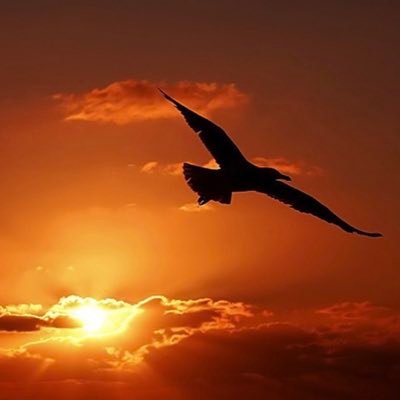
When you understand the assignment but do it wrong on purpose out of spite.. 😅
10RepLearning retweeted

Kaygıyla mücadele ediyorsan bu eseri dinle. Yaklaşık 30 saniye içinde nefes alışın değişmeye başlayacak. Bedeni sakinleştiren şey ise notaların arasındaki sessizlik.
10RepLearning retweeted
Charles Goodnight invented the chuckwagon, blazed one of the great cattle trails, hauled his dead partner hundreds of miles home in a coffin because he had promised he would, and helped save the American bison from extinction because his wife asked him to.
He died in 1929.
He was born March 5, 1836, in Illinois, and the family moved to Texas in 1846 when he was ten. He grew up on the frontier and spent his early adulthood as a scout and Ranger out on the Texas plains.
In 1866 he teamed up with an older cattleman named Oliver Loving, put together a herd, and drove it out of Fort Belknap, Texas toward Fort Sumner, New Mexico, where the Army needed beef. That route became the Goodnight-Loving Trail, and it opened the whole Southwest to Texas cattle. The drive included about ninety miles of waterless country before they reached the Pecos. Cattle died on it. They went anyway.
On that same drive, Goodnight invented the chuckwagon.
He bought a surplus Army wagon, rebuilt it with iron axles, and bolted a hinged box onto the back fitted with drawers and shelves and a lid that folded down into a work surface, with a water barrel underneath. A cook could run an entire kitchen out of the back of it a hundred miles from anything.
Every trail outfit in the West copied it within a few years, and the rigs people still build for chuckwagon cooking competitions today are essentially the same design.
He solved the biggest logistics problem in the cattle industry with a piece of carpentry.
On the second drive in 1867, Loving rode ahead and was ambushed and wounded by Comanches along the Pecos. He made it to Fort Sumner, but the wound went gangrenous and he died there.
Goodnight had promised him he would not be left in New Mexico.
So after the burial, Goodnight came back, had the body taken out of the ground, and hauled it in a coffin across hundreds of miles of plains to Weatherford, Texas, so Loving could be buried at home.
If that sounds familiar, it is because Larry McMurtry built Lonesome Dove on these two men.
In 1876 Goodnight moved into the Palo Duro Canyon in the Texas Panhandle and founded the JA Ranch with an Irish investor named John Adair. By 1885 it covered 1,325,000 acres and ran 100,000 head of cattle.
Six years earlier he had married Mary Ann Dyer, a schoolteacher from Weatherford that everyone called Molly. She went out to the Panhandle with him, where for long stretches she was effectively the only woman for a hundred miles in any direction.
And in the late 1870s she looked hard at what was happening on the plains around her.
The southern bison herd was being wiped out. Millions of animals killed in a handful of years for their hides, the bodies left where they dropped. Molly kept coming across orphaned calves standing next to their dead mothers.
She asked her husband to save some of them.
So Goodnight went out into the canyon and roped a few bison calves and brought them home, and Molly set aside six hundred acres of the ranch as a buffalo park.
From that handful: thirteen animals by 1888, around forty five by 1903, over a hundred and sixty by 1914.
And then they went out into the world. Bison from the Goodnight herd went to Yellowstone in 1902, to the National Bison Range, to parks in Montana, to Canada, to the New York Zoological Park, to zoos all over the country, and to Buffalo Bill Cody.
Along with four other private herds and the protected animals at Yellowstone, that is the reason the species still exists. Nearly every plains bison alive today descends from that small group of founding herds. Descendants of the Goodnight animals are standing in Caprock Canyons State Park in Texas right now.
Molly died in 1926. Goodnight died on December 12, 1929, at ninety three. He was born before Texas was a state and lived to see automobiles, airplanes and talking pictures.
One more thing happened in 1929.
In January of that year a man named Bose Ikard died. He had been born into slavery in Mississippi in 1843 and brought to Texas as a boy. After the war he went up the trail. He rode for Oliver Loving, and then he rode four years for Goodnight.
Goodnight said he trusted Bose Ikard farther than any living man, and that out in Colorado and New Mexico, Ikard was his detective, his banker, and everything else.
When Ikard died, Goodnight, then ninety two years old, paid for a granite marker over his grave in Weatherford and wrote the words himself.
"Bose Ikard served with me four years on the Goodnight-Loving Trail, never shirked a duty or disobeyed an order, rode with me in many stampedes, participated in three engagements with Comanches, splendid behavior."
He signed it with his own name, and died eleven months later.

10RepLearning retweeted

The one thing I’d want everyone to know about Direct Instruction is that the methods, materials and routines are far less important than the underlying drive behind it: the unswerving belief that EVERY child can achieve, regardless of circumstance.
DI is based on a deeply held conviction that if a child didn’t learn, it was because the teacher (or curriculum) didn’t teach them properly. In that sense, it is a movement rooted in social justice but one which takes responsibility for outcomes.
In the 60s and 70s, there was a view in the education academic establishment that formal academic work was premature for 4-year-olds, and doubly so for poor ones; so what they needed was enrichment and play.
Worse still, in the early 70s, some academics described DI as a racist enterprise*. Engelmann's own memoir notes that he and Bereiter were called “Nazis” and “kid-haters.”
Despite this, Engelmann taught disadvantaged 4 year olds to factor and to solve simultaneous equations, and filmed it. Bereiter and Engelmann’s argument, set out in ‘Teaching Disadvantaged Children in the Preschool’, was that the disadvantaged child was not “behind” in some general developmental sense but behind in specific, teachable things, that all kids could learn with the right scope and sequence.
The preschool they opened in the mid 60s ran for two hours a day, with three twenty-minute lessons in language, arithmetic and reading, taught to small groups by a teacher following a specific DI sequence. Those kids made huge gains which faded when they went to normal public schools.
DI has its limitations like everything but the drive behind it is sincere. As #SoldAStory season 2 will show, it has been portrayed as something very different to what it actually is and the animating principles behind it.
*Baratz and Baratz, ‘Early childhood intervention: the social science base of institutional racism.’

