

The Society for the Science of Motivation - an interdisciplinary organization of researchers in motivational science. Tweeting new findings, insights, and more.
Worldwide
Joined June 2011
- Tweets457
- Following574
- Followers888
- Likes492



Society for the Science of Motivation retweeted

That’s a wrap for #CERE2025. It was a wonderful experience filled with insightful communications, connecting with old and new friends, and enjoying some memorable social events. We look forward to seeing you all again at #CERE2027 in Torino, Italy, hosted by @PietroCipresso.

Society for the Science of Motivation retweeted

Thrilled to finally have this paper officially out! Across eight samples (n=2k+), we find that having a larger strategy repertoire can benefit goal attainment. We also discuss challenges with measuring repertoire and flexibility more broadly. w/@rayrwu J. Gross & @malfrie

Society for the Science of Motivation retweeted

We discussed what highly motivated people know about pursuing multiple goals. Thank you, @Jiabi8 and @FadayomiIbitayo. You're wonderful collaborators!
sciencedirect.com/science/ar…
Society for the Science of Motivation retweeted

NEW paper in Motivation Science
I am very pleased to share this new article, led by my PhD student @BerkeSezerPsych (based at Curtin University), which has been accepted a couple of days ago by the APA journal Motivation Science. The post-print is here:
researchgate.net/publication…

Society for the Science of Motivation retweeted

Now online! doi.org/10.1037/xge0001639

Now in press at Journal of Experimental Psychology: General
With @minzlicht , we found that people fast-forward and switch between videos to avoid boredom, but paradoxically, this makes them more bored.
osf.io/preprints/psyarxiv/n4…


Society for the Science of Motivation retweeted
7 Olympic Athletes shared their motivation secrets with Eric Spitznagel, who then shared them with me, who is now sharing them with you. I guess these are no longer secrets😉😉. Stay motivated!
webmd.com/fitness-exercise/n…
Society for the Science of Motivation retweeted

I have a #PhD #scholarship available at my @PerthLab at Curtin University, for Q1 2025. If you'd like to come to Perth, Australia, to research #EmotionRegulation and #MentalHealth, email me at [email protected] to apply and for more info.
Website: emotionpsychopathologylab.co…

Society for the Science of Motivation retweeted
🚨🚨New preprint alert🚨🚨
The Fable of State Self-Control
With Brent Roberts @BrentWRoberts
osf.io/preprints/psyarxiv/9x… /1
Society for the Science of Motivation retweeted
Research on emotion regulation often gives us different tips and tricks to help make us feel better...but what if we don't want to change our emotions? @Maia_ten_Brink and James Gross unpack the science of emotion goals @PsychToday. Check it out! psychologytoday.com/intl/blo…
For our final discussion of the day, we had a very engaging discussion on goal disengagement! Featuring @AnneCHolding, @ClaudiaMHaase, Gabriele Oettingen, Cathleen Kappes, Guido Gendolla, and Ariane Marion-Jetten moderated by Michael Richter!


Our second impact talk session featured several interesting presentations focusing on how early start and self-gratitude influences motivation, the role of intuitive faith and goal attainment, and the impacts of brief internet delays on learning.


Really interesting round table discussion on personal goals! Featuring @MarinaMilyav @EckerYael @AnneCHolding and Peter Gollwitzer moderated by @ayeletfishbach!


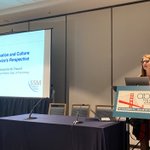
And now we welcome everyone back from lunch with an exciting presidential symposium on motivation and culture!
Leading the way is President Alexandra Freund. In her talk, she shared her journey from studying aging and motivational processes to incorporating culture.


For our second speaker we had Hazel Markus sharing her work on the power of interdependent motivation! She presented a very insightful series of studies demonstrating that shifting from “I” to “we” promotes positive outcomes in different cultures (eg., in Africa, first gen).


In our final session of the morning, we have a fascinating round table discussion on Goal Systems Theory! Featuring Arie Kruglanski, @ayeletfishbach, @CustersRuud, and Catalina Kopetz, moderated by Alexandra Freund.


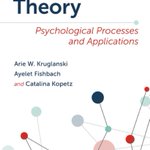
This discussion is especially timely considering the recent release of this volume on Goal Systems Theory edited by Arie Kruglanski, @ayeletfishbach, and Catalina Kopetz. Check it out!
books.google.com/books?hl=en…

Next up we have an impact talk session!
First up is Preeti Vani talking about the unexpected value of unsolicited advice. Using an array of methods, she finds that most people don’t think giving unsolicited advice is a good idea, but the receiver is actually more appreciative!


For our second talk we have Marie Ozanne asking: do people make more responsible choices in their non-native language? Across multiple studies, the answer is yes! This effect is driven by self-signalling, and is not moderated by either self-concept clarity or self-monitoring.


Our final speaker for this session is @J_R_Schroeder comparing data from participant pools! She finds that different quality checks are not really correlated, online samples are outperforming college samples, but students have better comprehension and writing quality.

