

The 999 Club | Holders of Sub 1K #Bitmap | Covering the Bitmap Market 🟧 Holding 700+ Bitmaps Long Term
Blockchain
Joined July 2023
- Tweets3.3K
- Following732
- Followers1.2K
- Likes29.5K





999 Club retweeted

This might genuinely be the biggest update to happen in Bitmap.
Blixworld now subscribes to the Bitmap Live OCI(onchain index), built by @boppleton . We’ve integrated it, tested it, and it’s ridiculously fast.
Let me explain why I think this is such a big deal 👇
We built an entire data pipeline to keep Blix up to date with Bitmap. As a builder, you need reliable data. You need to know what exists, what’s changed, and where the chain is right now.
Now, we can plug into a live on-chain index and get the data we need, right up to the tip of Bitcoin, yes, the latest block.
Think about that for a second.
An evolving collection. A persistent, on-chain record. A live index that applications can build on.
And it changes what we need to build ourselves.
We can now look at our existing pipeline, strip out unnecessary complexity, and make Blix leaner, faster and more efficient. Less reinventing the wheel and more building the actual experience.
That’s what great infrastructure does. It doesn’t just give you something new. It makes everything built on top of it better.
And I want to give bop his flowers here.
I think we should rename Bop to boptimisation, because this guy has a knack for getting right down to the granular level of compute, finding the elegant solution, and making things work the way they should.
In a landscape where most people are just trying to get things working, what bop does is rare.
It’s easy to overlook work like this. It’s not always flashy. It doesn’t necessarily make for the loudest announcement. But if you’re building full-time in Bitcoin, you understand how valuable it is to have someone in your corner who cares about efficiency, reliability and doing things properly.
That’s an asset beyond comprehension.
Bitmap has some incredibly interesting mechanics, and having infrastructure that can serve live, on-chain data to builders opens up possibilities that are genuinely exciting.
For blixworld, this means our platform can serve Bitmaps right up to the live tip of Bitcoin, with data validated against the chain rather than relying entirely on our own bespoke pipeline.
We’re building a persistent network of expression. A place where people can create, build, and bring their communities to life.
And the foundations matter.
So, well done Bitmap. And a massive thank you to @boppleton for building something we can actually rely on.
The work might be misunderstood by many, but builders know.
This is the kind of work that moves an ecosystem forward.
Be the Bopmap 🟧


999 Club retweeted

🟨 𝗕𝗜𝗧𝗠𝗔𝗣 𝗦𝗔𝗟𝗘 𝗔𝗟𝗘𝗥𝗧 🟨
✨ Sweep Alert ✨
🧹 nhjq just swept 11 bitmap for 0.00216 BTC ($178.90 USD)
🕵️♂️ Buyer: nhjq
🦉 Automated by hootertech


999 Club retweeted
🟨 𝗕𝗜𝗧𝗠𝗔𝗣 𝗦𝗔𝗟𝗘 𝗔𝗟𝗘𝗥𝗧 🟨
𝗧𝗥𝗔𝗜𝗧: Pizza 🍕
🤝 24hl just accepted an offer on 56958.bitmap for 0.00423 BTC ($351.34 USD)
🕵️♂️ Buyer: 5sh3
marketplace: @Satflow
🦉 Automated by hootertech

999 Club retweeted

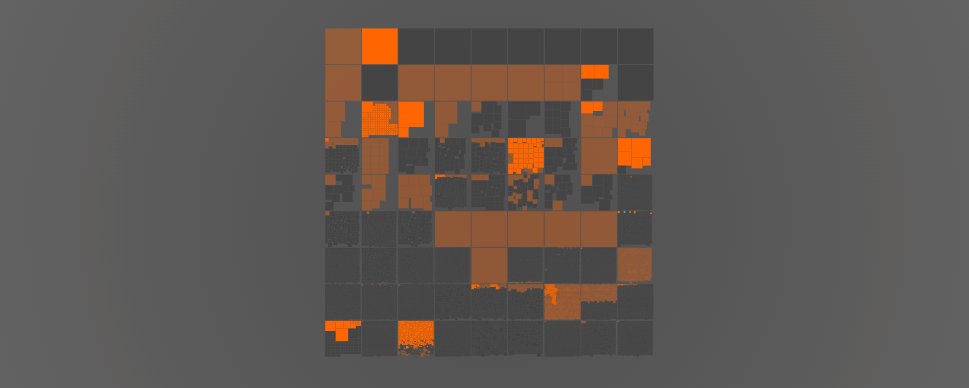
Bitmap is pushing Bitcoin to the limit.
$BTC · Ordinals · 🟧


999 Club retweeted
🌲 three.js tip: use alphaToCoverage for foliage!
instead of transparent=true (alpha blending; sorting issues, more overdraw)
or alphaTest (fragment discard; sorting works, but jagged edges)
alphaToCoverage (A2C) gives you smooth edges without the sorting/overlap headaches!
999 Club retweeted

We need to get all the NAT, Bitmap, and RSIC people on a space together to try to explain to me what the hell is going on because I am still very lost 🤣


999 Club retweeted
🟧 bitmap LiveOCI (live on-chain indexer) 🧪alpha
> get any bitmap inscription ID or sat, up to the latest block
import from js module:
🔗ordinals.com/content/0c18b83…
const id = await getBitmapInscriptionId(blockheight)
or
const sat = await getBitmapSat(blockheight)
more info 👇
999 Club retweeted

The on-chain stack for #bitmap keeps filling in:
/r/block: raw blocks on-chain
0rdinals onchain: districts drawn on-chain
LiveOCI by @boppleton: any district's claim looked up on-chain, up to the latest block
Builders can import it today.
xitter.cf/boppleton/status/21067…

🟧 bitmap LiveOCI (live on-chain indexer) 🧪alpha
> get any bitmap inscription ID or sat, up to the latest block
import from js module:
🔗ordinals.com/content/0c18b83…
const id = await getBitmapInscriptionId(blockheight)
or
const sat = await getBitmapSat(blockheight)
more info 👇
999 Club retweeted
🟨 𝗕𝗜𝗧𝗠𝗔𝗣 𝗦𝗔𝗟𝗘 𝗔𝗟𝗘𝗥𝗧 🟨
✨ Sweep Alert ✨
🧹 t2sj just swept 23 bitmap for 0.00236 BTC ($204.31 USD)
🕵️♂️ Buyer: t2sj
🦉 Automated by hootertech


999 Club retweeted
Reading #bitmap used to mean a 700GB node plus a week-long ord sync, or trusting a flaky API
Gateway fetches only the blocks you need from Bitcoin peers and indexes bitmap districts on a normal computer
Bitmap infra no longer depends on anyone's server!
xitter.cf/blockamoto/status/2105…


Introducing Gateway...
I've been building a new kind of Bitcoin client.
One that ANYBODY can run regardless of storage.
Fetch only what you need, when you need it.
On-demand, directly from Bitcoin peers.
This is at the heart of Gateway.
Sparse-by-default deep on-demand p2p-Bitcoin indexer.
Now, I recommend you feed this post your favourite AI and have it talk to you directly about it, because I'm about to get into the weeds. And I'm very excited, so it's probably better you ask your AI how this applies to you, rather than leaving a comment that it's too complicated or that you don't understand. With that being said, if you're happy to go hardcore old-school style, and actually... read the thing, here it is!
BITCOIN PEERS
Traditionally, Bitcoin clients sync nodes by requesting blocks from other peers one-by-one, from zero.
This is somewhat impractical for everyday users.
Gateway does things differently.
You can certainly sync the entire blockchain using Gateway, and become a full Bitcoin Node, and a useful Bitcoin Peer. You can even bring your existing Core node and plug it in if you already have one.
But that's not the interesting part.
The interesting part is that you don't need that.
Seek data directly from Bitcoin Peers, on-demand.
ON DEMAND
Unlike Core, Gateway does not require you to sync the entire blockchain. You can sync any range, or even just type in a block number in the top bar to fetch the block from a Bitcoin peer directly.
This approach is extremely useful for Blocks, but it has some limitations.
Transactions (and thus, inscriptions) cannot be resolved directly, without knowing the block number. The latter part of that sentence is the important part.
Gateway adds a schema that allows you to type "{tx}.{block}.bitcoin" and resolve a transaction directly from a Bitcoin peer. You can replace {tx} with either tx-hash, or tx-index (which is a new schema for Gateway), and {block} with either block-hash or block-height.
For example: 0.0.bitcoin
This becomes relevant for inscriptions.
An inscription ID is simply:
{tx-id}i{inscription-index}
So you can resolve inscriptions by including block-number in the scheme:
{inscription-ID}.{block}.bitcoin
If you know the transaction index, you can even use that instead of transaction ID in inscription ID.
That means, so long as you know the block number, any inscription can be resolved on Gateway, on-demand, by asking a Bitcoin peer directly.
ORD
When it comes to Ord, this is an extra layer on top of Bitcoin. It is an indexing system that takes Bitcoins already heavy data store, and adds its own index that can take roughly a week to sync.
For the everyday user, this is not practical.
Whilst I've demonstrated how we can fetch inscriptions directly from Bitcoin Peers without Ord, you need to know block number, and the standard in Ord is to use inscription ID, sat number, or inscription number as the key reference.
I've added block in the Gateway schema as a useful primitive that enables purely on-demand inscriptions from Bitcoin peers, but that isn't the current standard.
INDEXES
This is where you can build your own data-store directly from Bitcoin data originated through Bitcoin peers, and either become a useful participant of the network, or take what you need privately.
The baseline index is Bitcoin Blocks.
However, you do not need that to resolve the other indexes.
Each index has an "ephemeral" option, which means to seek the blocks you require from peers, strip the data you need, and discard the blocks. This is useful if you're running this on your everyday computer, and can't be spending so many GigaBytes on Bitcoin.
For example, you can index Bitmap without storing a single block.
The indexes are generally layered, so you can choose what you would like to index and when. If you index Bitcoin Blocks, you will be asked if you also want to index the other downstream indexes in parrallel, since it would be quicker to do that than re-run the index.
If you already have a Bitcoin Node, you can build other indexes on top of that.
But you don't have to have the Bitcoin blocks to sync inscriptions, Bitmap, or any other index we implement.
Now, this is still some heavy lifting, but once we start activating the Gateway peer network, we can supercharge these capabilities.
GATEWAY PEERS
Gateway users can connect to each other in a peer-to-peer network, just as in Bitcoin.
That means that, whatever data you need, you can ask Gateway peers directly and skip indexing directly from Bitcoin data, with Bitcoin as the hashed proof verification layer.
So, anything your Gateway node doesn't know, or is impractical for you to find through Bitcoin peers, can be served by Gateway peers.
This vital peer layer can become more useful as we start adding other cases for the Gateway peer network, for example, you could opt-in to become a persistent relay for a Bitmap or Ord gaming webRTC layer. We can even serve this p2p mesh layer to websites and ordinals over the web, so in the future, you will be able to connect to gateway from a website, or from an Ordinals inscription.
For now though, it requires the Gateway client. But the dream is that you can become a useful OR private participant in Gateway from different angles.
LONG STORY SHORT
A sparse-by-default on-demand bitcoin node, with full-range indexing and p2p sharing with gateway nodes.
EARLY RELEASE TESTERS
I am seeking early testers who are happy to put the client through the ringer, vet the data, or just try and break the thing so we can make sure we ship a proper robust client.
You can comment on this post if you're interested, and I'll share details when it's ready for testing.
At this stage, I just wanted to let you know that I have a client, it's working, it's almost ready for testers.
WHAT NOW?
This is just one of the things I've been working on and excited about recently, but it's the one I think is the most important in terms of vital infrastructure that can benefit the entire stack from Bitcoin peers to Bitmappeers.
Stay glued to my timeline for more! 👀
Comment if you want to get involved. 💬


