

GirlDad | Professor @CWRUSOM developing glial therapies for neuro diseases | DPhil @UniofOxford @NIHOxCam | Co-founder @convelotx | Director @riseupneo | Foodie
Cleveland, Ohio
Joined August 2011
- Tweets1.5K
- Following1.2K
- Followers1.8K
- Likes952





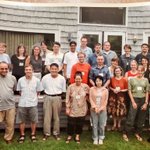
So cool to see our recent paper on environmental chemicals affecting brain health on the cover of Nature Neuroscience! Congrats again to @ErinFCohn and the team. Special thanks to Ella Maru Studio @Ella_Maru for the artwork


Excited to share this excellent article by Teddy Amenabar @TeddyAmen in The Washingotn Post @washingtonpost. It provides a clear & balanced look at our recent discovery of a class of household chemicals that are harmful to the brain's myelinating cells.
wapo.st/4dcYUL6
Proud to see work from our lab making its way to patients. I am hopeful that the investigational drug, ION356, being tested by Ionis will be found to be both safe & effective in people with Pelizaeus Merzbacher disease🙏
Link to our 2020 @Nature paper:
nature.com/articles/s41586-0…

This Post is from an account that no longer exists. Learn more
Paul Tesar retweeted

Chemicals Found In Popular Household Products Potentially Linked To Autism, Multiple Sclerosis, Study Suggests
go.forbes.com/c/yXec

Thank you @EricTopol for highlighting our paper. An open access link to the full article is here:
rdcu.be/dCpPr

New and worrisome: common household chemicals can directly harm oligodendrocytes, brain health
nature.com/articles/s41593-0…
@NatureNeuro @TesarLab @CWRUSOM Quarternary ammonium compounds (disinfectants) and organophosphate flame retardants implicated from organoids and expt'l models

Paul Tesar retweeted

MS and autism among brain health risks from common household chemicals
newsweek.com/ms-autism-house…
Common household chemicals pose a risk to the brain’s myelinating cells
Thrilled to share groundbreaking findings from our latest study led by @ErinFCohn at @CWRUSOM's Institute for Glial Sciences, in collaboration with the U.S. @EPA.
nature.com/articles/s41593-0…

I am also grateful to our supporters, including the @NIH_NINDS, @mssociety, @HHMINEWS, @nyscf, sTF5 Care, and the Long, Walter, Peterson, Goodman, and Geller families.
Paul Tesar retweeted

Great work by @bllclayton, @TesarLab, & the team. Such an insightful dive into modulation of astrocyte reactivity.
@ScienceLemon92 and I were honored to write the @NatureNeuro N&V on this piece - see rdcu.be/dzXrM.
(1/2)


Excited to share that my first postdoc publication is officially out! Combining an astrocyte cellular platform and chemical screening we identified drugs that can suppress the formation of pathological astrocytes and promote neuroprotection.
thedaily.case.edu/fixing-rog…
Paul Tesar retweeted
A phenotypic screening platform for identifying chemical modulators of #astrocyte reactivity reveals histone deacetylase 3 (HDAC3) inhibitors as suppressors of pathological astrocyte reactivity
@TesarLab @bllclayton
nature.com/articles/s41593-0…
🌟Drugging astrocytes to stop neurodegeneration
I am thrilled to resurface on X to share a significant breakthrough from our team in the Institute for Glial Sciences @CWRUSOM, shining new light on the path to combating neurodegenerative diseases.
thedaily.case.edu/fixing-rog…