

Growth Hacker🎯| Let's Accelerate Your Growth📈! #ThinkDifferent
Harare, Zimbabwe
Joined October 2013
- Tweets12.6K
- Following11.8K
- Followers12.6K
- Likes53.8K





Tapiwa Matthew Mutisi retweeted

@moove_io Set to Exit Nigeria Following Uber’s Withdrawal.
Moove, the Nigerian-founded mobility and vehicle-financing company that grew into a global transportation technology business, is preparing to leave Nigeria.
innovation-village.com/moove…

Tapiwa Matthew Mutisi retweeted
@mkopakenya has reached $600 million in annual revenue, marking a major milestone in its 15-year journey.
The company has expanded across African markets by combining smartphone financing, digital financial services and electric mobility products.
innovation-village.com/afric…
#Fintech #M-KOPA #AfricaTech #InnovationVillage

The @comptrib has conditionally approved the high-profile merger between Switzerland-based bottling giant @CocaCola HBC and @CocaColaCo Beverages Africa (CCBA). @CocaCola_ZA
innovation-village.com/coca-…

How is it actually possible that two fierce rivals arrived at such a similar look at the exact same time? @MKBHD #iPhone修理 #Xiaomi
innovation-village.com/how-d…

Tapiwa Matthew Mutisi retweeted
Nigeria’s mining sector is getting a new layer of tech-enabled security.
@terraindustries is deploying autonomous surveillance systems across Promethean Resources’ mining operations, using technology to monitor remote sites and respond to threats faster.
Could autonomous security become more common across Africa’s mining industry?
Read more: innovation-village.com/terra…
#Mining #AI #Nigeria #InnovationVillage

The proposed Thuli Moswa dam would be constructed in Thuli, #Zimbabwe, to specifically supply the Musina-Makhado Special Economic Zone (MMSEZ) located across the border in #SouthAfrica’s #Limpopo province. @MoLAFWRD_Zim @DOAgov_ZA @DWS_RSA @cidb_sa
innovation-village.com/south…

From next‑gen @MetaVR_Official glasses and Aviator‑style Ray‑Ban Meta specs to the surprise debut of Ace Attorney in virtual reality — here’s the full roundup of @Meta's biggest event of the year. @AIatMeta @MetaNewsroom @MetaforDevs #META
innovation-village.com/every…

The #iPhone18ProMax and #SamsungGalaxyS26Ultra are both massive flagship phones, offering similar #hardware but distinct ecosystem experiences. @Apple @SamsungMobile @SamsungSA @iPhone_News #iPhone #Samsung #iPhone18
innovation-village.com/iphon…

Tapiwa Matthew Mutisi retweeted
“@Apple just entered a market Samsung has been building for years.”
Apple unveiled the iPhone Duo, its first foldable iPhone, alongside the iPhone 18 Pro and other updates.
Samsung has been in the foldable space for years. Now, Apple is bringing its own approach to the category.
Could Apple’s entry push foldables further into the mainstream?
Read more: innovation-village.com/apple…
#Apple #iPhone18 #Samsung #Foldables #InnovationVillage
Tapiwa Matthew Mutisi retweeted

From iPhone Duo, iPhone 18 Pro, and iPhone 18 Pro Max to Apple Watch Series 12, Apple Watch Ultra 4, and AirPods 5… here's a look at all of the latest announcements dropping today! #AppleEvent
Tapiwa Matthew Mutisi retweeted
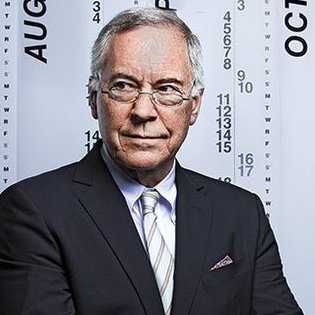
For once, the WORLD BANK GETS IT RIGHT. The Bank has warned Zimbabwe not to rush off the dollar and replace it with the ZiG.
THE ZIG REMAINS A JOKE.
🤖 Made with AI

Tapiwa Matthew Mutisi retweeted
#Apple will host its "Surprise and shine" event on September 9, with the #iPhone18Pro series and its first foldable #iPhone expected alongside new #AppleWatch models and #AirPods. innovation-village.com/apple…

Tapiwa Matthew Mutisi retweeted
Inflation is only 1 of 8 boxes to tick. RBZ says 6 are already checked, the real holdouts are import cover (3-6 months) and ZiG demand/usage. Until govt starts collecting more in ZiG and reserves build up, low inflation alone won't shift the 80%+ of transactions still in USD.

The Reserve Bank Governor has outlined 8 conditions for de-dollarization including achieving durable macroeconomic stability with low single-digit inflation.
According to the RBZ, annual ZiG inflation stood at 2.9% in August 2026, the lowest single-digit inflation outturn since 1980.
🎙️In our latest clip, @GeorgeNhewe asks a fundamental question: why did Zimbabwe dollarize in the first place?
"The reason for Zimbabwe’s initial decision to dollarize was to combat local currency inflation. And now local currency inflation has gone down."
So, is Zimbabwe now closer to de-dollarization than we thought?
📽️ Watch @dziya_mya and @GeorgeNhewe discuss de-dollarization, ZiG and the road to monocurrency.
Sponsored by @fincentcapital
Tapiwa Matthew Mutisi retweeted
2.9% is annual ZiG inflation, not proof of a turnaround. It reflects exchange-rate control and a low comparison base, not rising incomes, output, or jobs. Currency stability isn't the same as economic growth, which one are you actually pointing to?

Did I say that ZiG in circulation has increased or I said that annual inflation has dropped to 2.9% - the lowest since independence?
In July 2025, annual ZiG inflation was 95.8% and ZiG in circulation was lower than what it is today but it made sense to you because inflation was high right?
The reality of the matter is that the economy is turning around - it’s massive and disruptive but the majority of you can’t see because of toxicity and economic blindness. The sad thing is that some of you will see it too late when the economic spaces are already occupied by progressive Zimbabweans, Chinese, European and other western countries.
#Apple will host its "Surprise and shine" event on September 9, with the #iPhone18Pro series and its first foldable #iPhone expected alongside new #AppleWatch models and #AirPods. innovation-village.com/apple…
Agreed, cause you can't self-certify credibility. 80-90% dollarisation and 60% money supply growth are the market's verdict, not the RBZ's roadmap. Mono-currency is real when Treasury can sell 10-20yr ZiG paper nobody's forced to buy. Until then, it's a target date, not a fact!

Road to Monocurrency; from my vantage
On the road to mono-currency, the RBZ has developed its own self-assessed roadmap and milestones. On the face of it, these look credible. But that is not necessarily how markets and other stakeholders will determine whether Zimbabwe is ready for mono-currency. Ultimately, credibility cannot be self certified.
That is why, for example, we have independent credit rating agencies assessing countries and their debt issuances. A country cannot dictate to the market the interest rate and tenor at which investors should buy its debt. The market prices the risk. The RBZ must remember the same principle when thinking about mono-currency.
Mono-currency cannot simply be forced into existence. Single digit inflation is laudable, but it needs to persist through several annual cycles before markets regard it as durable. It is also worrying when money supply is growing at nearly 60%. Never mind that a significant portion of this liquidity is being coercively withdrawn from the market through zero-interest NNCDs and the 30% export surrender proceeds that remain unpaid. This is occurring in a financial system which, by the RBZ’s own admission, remains roughly 80% dollarised, while dollarisation across the broader economy is probably closer to 90%.
The real test for mono-currency will come when the RBZ and Treasury finally accept the discipline of a robust, market-driven domestic debt market. Treasury should operate on a proper accrual accounting basis, with its arrears and other obligations transparently recognised and ultimately represented by securities whose prices and yields are determined by the market.
Treasury must be able to issue ZiG-denominated Treasury bills and bonds that banks, pension funds and eventually international investors are willing to buy because the instruments are correctly priced, not because institutions are compelled to hold them. The RBZ must establish the conditions for a credible ZiG yield curve extending not merely six months or a year, but ultimately towards 10 and 20 years. More importantly, that market must function consistently for several years so investors become confident that its rules will be respected.
This requires Treasury and the RBZ to work together. Monetary stability cannot be credible if fiscal liabilities remain opaque, while fiscal credibility cannot develop without a functioning monetary and debt market. When Zimbabwe has a deep, voluntary and properly priced market for long-term ZiG debt, we will have a much stronger signal that trust and confidence in the currency have returned.
That, rather than a self-assessed checklist, will tell us when Zimbabwe is genuinely ready for mono-currency.
2.9% is annual ZiG inflation, not proof of a turnaround. It reflects exchange-rate control and a low comparison base, not rising incomes, output, or jobs. Currency stability isn't the same as economic growth, which one are you actually pointing to?
Did I say that ZiG in circulation has increased or I said that annual inflation has dropped to 2.9% - the lowest since independence?
In July 2025, annual ZiG inflation was 95.8% and ZiG in circulation was lower than what it is today but it made sense to you because inflation was high right?
The reality of the matter is that the economy is turning around - it’s massive and disruptive but the majority of you can’t see because of toxicity and economic blindness. The sad thing is that some of you will see it too late when the economic spaces are already occupied by progressive Zimbabweans, Chinese, European and other western countries.
Good that someone in RIDA leadership is finally being held to account ... question is whether it stops here !? Kariba families deserve full accountability, not a scapegoat!

#BREAKING: RIDA boss remanded in custody on culpable homicide charges over Kariba ferry disaster
heraldonline.co.zw/breaking-…

Sustainable only if the deficit stays unmonetized and reserves keep building. Zimbabwe's inflation problem was never really the model, it's whether that discipline holds, and the printing press stays off, once revenue pressures return.

Inflation is only 1 of 8 boxes to tick. RBZ says 6 are already checked, the real holdouts are import cover (3-6 months) and ZiG demand/usage. Until govt starts collecting more in ZiG and reserves build up, low inflation alone won't shift the 80%+ of transactions still in USD.
The Reserve Bank Governor has outlined 8 conditions for de-dollarization including achieving durable macroeconomic stability with low single-digit inflation.
According to the RBZ, annual ZiG inflation stood at 2.9% in August 2026, the lowest single-digit inflation outturn since 1980.
🎙️In our latest clip, @GeorgeNhewe asks a fundamental question: why did Zimbabwe dollarize in the first place?
"The reason for Zimbabwe’s initial decision to dollarize was to combat local currency inflation. And now local currency inflation has gone down."
So, is Zimbabwe now closer to de-dollarization than we thought?
📽️ Watch @dziya_mya and @GeorgeNhewe discuss de-dollarization, ZiG and the road to monocurrency.
Sponsored by @fincentcapital