





TEE Fan retweeted

AIは誤りの責任を取れない。だから最後に責任を負うのは人間。
麻酔科の学術誌Anesthesiologyの編集長らが、生成AIと論文出版についての論説でこう訴えています。
「AIを使いました」と書くだけでは足りない、という指摘が鋭い。
麻酔科医の目線で要点をまとめました。
masuika.org/entry/2026/10/31…

TEE Fan retweeted

Some recent correspondence on interpreting bispectral index during remimazolam and propofol anaesthesia.
#anaesthesia #MedTwitter #MedX
doi.org/10.1111/anae.70428
doi.org/10.1111/anae.70431


TEE Fan retweeted

An intubating dose of rocuronium gave a blockade lasting 30% longer in the morning (08:00 to 11:00) than in the afternoon (14:00 to 17:00). G. Warman et al. ⏰ #BJAEd #PeriopMed bjaed.org/article/S2058-5349…


TEE Fan retweeted

Today's Paper of the Day is:
Beyond Blood Pressure: The Role of Flow Parameters and Biomarkers of Hypoperfusion in Cardiogenic Shock
criticalcarereviews.com/late…
Join us to read 1 paper per day and stay up-to-date as we cover the spectrum of critical care across 2026

TEE Fan retweeted

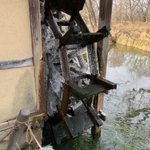
胎内の経巻につきまして、多くの皆様より反響をお寄せいただいております。
今後の調査には相応の時間を要する見込みでございます。
修復をしていただいております、宮本我休様より、経巻を取り出す際の貴重な映像をご提供いただきましたので、ご覧いただければと存じます。
TEE Fan retweeted
Precision fluid therapy in sepsis: fluid responsiveness vs. fluid tolerance
CCR Journal Watch
criticalcarereviews.com/late…

TEE Fan retweeted
Chronic postsurgical pain after caesarean results in:
• interference with daily activity, physical function, sleep, mood, fatigue and sexual function, for 3 months - 10 years
• mental health impairment
• a meaningful economic burden
#anaesthesia #MedTwitter #MedX #obstetrics
doi.org/10.1111/anae.70362

TEE Fan retweeted
Today's Paper of the Day is:
Amiodarone therapy: updated practical insights
criticalcarereviews.com/late…
Join us to read 1 paper per day and stay up-to-date as we cover the spectrum of critical care across 2026

TEE Fan retweeted
In lung ultrasound, recognizing an artifact is only the beginning. The real clinical value comes from
understanding how findings fit together across the chest
.and what they mean in context
The BLUE protocol provides a structured way to connect
ultrasound patterns with the assessment of acute
respiratory failure, helping guide the next diagnostic step
rather than relying on a single sign.
Lung sliding, the distribution of findings, and additional
assessment for DVT or PLAPS can all change how the
pattern is interpreted.
Knowing how these elements work together can make
bedside lung ultrasound more systematic and clinically
useful.


TEE Fan retweeted

Visual Abstract in #Anesthesiology - Higher versus Routine Intraoperative Blood Pressure Targets in Noncardiac Surgery 🖌️ ow.ly/Q1Nb50ZOpbO


TEE Fan retweeted

#POCUS #Nephpearls
Great discussion overall! The answer is femoral vein.
The main point of the question was that a pulsatile vessel ≠ an artery. Whether you’re placing an arterial line, a central venous line, or doing #VExUS, don’t reflexively identify a vessel based on pulsatility alone.
A lot of people say, “Just use PW Doppler.” That certainly helps, but even that can fool you in cases like this. This vein had a very spiky waveform that looked arterial. The clue becomes obvious when you add the ECG: the venous spike occurs in diastole, whereas the true arterial systolic spike lines up with the QRS. I intentionally left the ECG out of the original image :)
Normally, venous flow has systolic and diastolic components. With significant venous congestion, however, the systolic wave can become markedly blunted, disappear, or even reverse. In this case, the CVP was ~24 mmHg, the systolic wave essentially disappeared, and the patient had only mild TR.
Also, pulsatile veins are not exclusive to severe TR, nor are they necessarily pulsations transmitted from a nearby artery. They can be quite pulsatile in congested and hyperdynamic states.
Of course, anatomy comes first. Know where your probe is and what vessel should be on which side. PW Doppler adds information, and when the clinical situation allows, having an ECG trace can make the distinction much clearer.


You’re about to place a femoral arterial line. Is this (arrow) an artery or a vein?
Some people say, “Just use pulsed-wave Doppler.” If you’re one of them, it's the thread 👇
#POCUS #Nephpearls #CriticalCare
TEE Fan retweeted
🔍 Common pitfall in the ESP block: mistaking the rib for the transverse process. This month’s #BJAEd article walks you from rib to costotransverse junction to transverse process. Sequential identification improves accuracy.
👉🏻 Read more: bjaed.org/article/S2058-5349…
#POCUS #FOAMed

TEE Fan retweeted
Today's Paper of the Day is:
The contemporary pulmonary artery catheter. Part 1: placement and waveform analysis
criticalcarereviews.com/late…
Join us to read 1 paper per day and stay up-to-date as we cover the spectrum of critical care across 2026

TEE Fan retweeted
AI-assisted peri-operative echocardiography
• AI was not tested on haemodynamically unstable patients
• the 2 minute delay in AI reporting won't help anaesthetists in emergencies
• trend-tracking may be more appropriate
#anaesthesia #MedTwitter
doi.org/10.1111/anae.70317

TEE Fan retweeted
"TIVA may reduce postop nausea & vomiting & improve quality of recovery... while volatile anaesthesia may be simpler, familiar and appropriate in others. Conversely, TIVA requires reliable infusion delivery, vigilance regarding awareness and often processed EEG.."
#anaesthesia #MedTwitter #climate
doi.org/10.1111/anae.70315

TEE Fan retweeted

NEW 2026 #ESCGuidelines - Fifth Universal Definition of Myocardial Infarction (2026) 👇
ow.ly/yn8J50ZGofb
#ESCCongress

TEE Fan retweeted
2026 ESC Guidelines for the management of heart failure
CCR Journal Watch
criticalcarereviews.com/late…
