

The decision intelligence platform.
United States
Joined August 2024
- Tweets2.1K
- Following296
- Followers245
- Likes1.7K






Syntaxia retweeted

On this week’s edition: Anthropic’s 2030 scenario tool, Jacob Coxon’s public resignation warning, YC on harnesses, some useful notes on running Claude Fable 5.1, and a deeper reflection on what happens when coding agents move software closer to the speed of compute.
Read it here 👇
linkedin.com/pulse/against-e…

Syntaxia retweeted
A man spends $2 on a lottery ticket and wins $40 million.
The outcome was excellent, but the decision wasn’t. Mixing those two up is how you end up learning the wrong lesson from both success and failure.
I wrote "What a Good Decision Actually Is" to demonstrate a better way to grade the call.
The framework starts from a simple premise: judge a decision by what was knowable when it was made. Make the assumptions explicit. Put uncertainty back into the analysis. Write down what would prove you wrong before the outcome gets a chance to rewrite the story.
I show how this works in practice with a concrete example featuring a real revenue targeting decision, all the way from the first signal to the final call.
Read the full framework here: lnkd.in/dreSEE_q


Syntaxia retweeted
Agents need access to act. They do not need the keys.
Against Entropy #17 is about what happens when agents start to enter the places where work happens.
Read it here 👇
linkedin.com/pulse/against-e…

Syntaxia retweeted
We rebuilt syntaxia.com.
The old site described where we were headed. The new one shows what we've built: a Decision Intelligence Platform.
A few things I'm proud of.
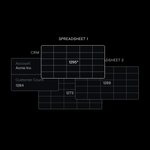
The site is interactive, and the pieces you click through come straight from the product. You can rebalance an ICP with ICP Vantage, use the Time Machine to replay your pipeline exactly as it stood on any past date, and watch the same customer, scattered across five systems, collapse into one clean record. You get a real feel for the platform before ever booking a demo.
It also explains how @Syntaxia_ works under the hood. We built the platform around our in-house harness and composite AI: graph workloads, simulation, optimization, machine learning, and business logic working together, with every recommendation carrying its reasoning attached.
Data tells you what happened. Meaning tells you what to do. The new site shows how we close that gap.
Take a look: syntaxia.com
Syntaxia retweeted
Model releases get all the headlines because raw capability is easy to benchmark. But in practice, it's the harness around the model that decides how much load actually transfers to real work.
A horse standing in a field is just potential. A horse hitched to a plow is food for a village:
linkedin.com/pulse/let-me-te…

Syntaxia retweeted
ai is intelligent to the extent it can act on your intent.
agi is intelligent to the extent it can form intent of its own.
Syntaxia retweeted
Companies often operate under the assumption that if they can just clean up their data, their operational choices will become obvious. It is a comfortable belief, but it fails to hold true in practice.
Consider a standard pipeline report. Suppose the revenue operations team delivers a flawless chart showing that enterprise pipeline coverage has dropped by twenty percent. The data is audited, the numbers are indisputable, and the report is entirely correct. Yet, the executive team is still left sitting in a boardroom, paralyzed by the immediate next step.
The problem is that a single metric drop does not map to a single business action. Depending on the broader corporate context, that twenty-percent drop could trigger several entirely different operational responses:
- A Forecast Adjustment: Lowering the quarterly revenue expectations for leadership.
- Account Prioritization: Shifting marketing budget and sales focus to high-intent segments.
- Data Quality Review: Inspecting whether sales reps are simply leaving outdated opportunities in the wrong CRM stage.
- Renewal Escalation: Intervening on specific major contracts that are nearing expiration.
Each of these choices requires different evidence, different operational rules, and entirely different stakeholders. A perfect report exposes the vulnerability, but it does not give the team a mechanism for choosing the remedy.
This boundary is where traditional data reporting ends and Decision Intelligence becomes necessary. For software to actually assist a revenue team beyond basic data visualization, the system cannot simply react to a fluctuating metric. It must recognize the specific decision path the organization intends to take.
The focus of modern operations is moving past the data cleanup phase. The priority is no longer merely proving that a number is accurate; the work lies in defining exactly which business choice that number is meant to support.

Syntaxia retweeted
The blank chat box had a good run.
It made AI easy to try, easy to explain, and easy to share. But the next useful AI interfaces may look more familiar than expected: research workbenches, tables, governed analytics, Slack channels, and coding environments.
That’s the thread in Against Entropy #9.
Read it here:
linkedin.com/pulse/against-e…

Syntaxia retweeted
Power comes from combining these workloads into a single platform that answers the hard questions.
That is what we are building at @Syntaxia_ .
GenAI opened the door. What you build behind it determines whether you compound or stall.

Syntaxia retweeted
Ontologists have argued for decades that shared meaning belongs beside databases and security protocols. I’ve heard that case for 15 years.
Now autonomous agents are making expensive mistakes in production because “priority,” “customer,” and “resolved” mean different things across systems.
Suddenly the board cares.
Syntaxia retweeted
Spent this morning looking at competitors in our space.
One company's purpose statement: "TURN VUCA INTO VALUE."
Brother, what?
I genuinely don't know what that means. And I work in this industry.
This is the problem with B2B software. Everyone is so busy sounding smart that nobody says anything.
Acronyms stacked on acronyms. Buzzwords that mean everything and nothing.....
We made a deliberate choice at Syntaxia: say what you mean in plain English. "If we can't explain it simply, we don't understand it well enough" (as the saying goes).
Same thinking applies to the product. We don't call things "nodes and edges".. We use cards and lines. Because that's what people actually see and understand.
Clarity IS THE whole point.
Syntaxia retweeted
A Knowledge Graph Is Not a Technology!
kasseh.com/a-knowledge-graph…
Syntaxia retweeted
A week and a half.
That's how long it took Anthropic to build Cloud Cowork.
Who built it? Claude did.
Let that sink in.. We're watching a multibillion dollar company use its own AI to ship products faster than most teams can finish sprint planning.
The recursive loop isn't theoretical anymore.

Syntaxia retweeted
2 ways to think about writing.
One treats it as a means to an artifact. The other treats it as the process itself.
The second path is slower. It's also the only one that produces something worth reading.

Syntaxia retweeted
About the art. Diego Rivera’s The Weaver (1951) stood out because of its focus on precision..


A dashboard that is partially wrong is more dangerous than one that is completely broken. It presents a plausible, convincing lie that teams will act upon with full confidence.
Full take here ↓ sntx.ai/44SMyoM
Syntaxia retweeted
Everyone's using AI to write faster.
I'm doing the opposite.
Every essay, by hand.
Every illustration, by hand.
Every word, mine.
Not because I'm a purist. Because AI writing is averaging.
And average doesn't cut it for me..
kasseh.com/why-i-dont-use-ai…
Syntaxia retweeted
6 kids living in the office, every day of the week.. They were supposed to ship like demons!
Yet here they are, 9 months in, and blaming it on technical debt.
If a tiny crew co-sleeping and co-living can't outrun their own bugs, something's broken.
My bet: inexperience and hype chasing. The founders are 21–22 and just got expelled from Columbia for the original cheat sheet hack (Cluely was originally that).
Youth buys hype, not clean work.
So yeah, rewrite it in a weekend. I dare them.


Syntaxia retweeted
With the @OpenAI Apps SDK release, apps now run INSIDE ChatGPT with real UI and your own MCP server.
No extra tabs, no detours. Your app sits right inside the conversation.
Syntaxia retweeted
Made a decision today that might be stupid, might be brilliant.
We're offering lease agreements on our services now.
This is because I kept hearing the same thing from SMB founders: "We need this, but we can't justify the upfront cost"
These are profitable businesses. Good American businesses. They just operate on real constraints.
So we're taking on the risk. Monthly terms. No massive implementation fees.
My accountant thinks I'm crazy. Maybe I am.
But here's what I know: the gap between enterprises and SMBs keeps widening because of access to intelligence and efficiency, not capability.
The tools exist.
The need exists.
The pricing model was just broken.
Big companies get volume discounts and custom terms. Small businesses get "contact sales" and annual contracts.
That never sat right with me.
So we're flipping it. If you're an SMB that needs to organize your data and properly setup your enterprise ontology for AI and actually use it, we'll meet you where you are.
This might tank. Or it might be exactly what the market needed.
Either way, I'd rather fail trying to solve a real problem than succeed at gatekeeping solutions.
Syntaxia retweeted
In 2025 the smartest data teams aren't hiring more engineers.
They're cutting their Snowflake bill 33% in a single 14-day sprint and keeping the savings as pure profit.
Real (anonymized) runs this year:
- $541k/mo → $336k/mo (-38%)
- $289k/mo → - $179k/mo (-38%)
- $112k/mo → $71k/mo (-37%)
- $398k/mo → $251k/mo (-37%)
All verified in ACCOUNT_USAGE. Fully reversible.
We only take 2 companies per month. Minimum $10k/mo saved or your money back.
Next slots: Nov 24 & Dec 01.