

The decision intelligence platform.
United States
Joined August 2024
- Tweets2.1K
- Following296
- Followers245
- Likes1.7K




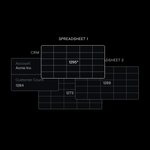
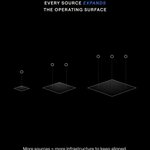


Accounts, leads and contacts are useful for running CRM workflows.
For planning and analysis, RevOps needs to know which companies and people those records actually represent.
Syntaxia reconciles the CRM objects into that real-world structure, so coverage, hierarchy and GTM analysis start from the business itself.
That’s the Golden Layer.
Explore the platform: syntaxia.com

Territory plans can lag behind the ICP.
22 target accounts now sit across Colorado, Utah, Nevada and Arizona, all outside the active territory model. The ICP moved faster than the map.
Before the next planning cycle, Sales has two options: create a Mountain West territory or fold those states into the West.
Does your territory model still match where your target accounts are?

“Where did 12.4M come from?” should have a better answer than “give me an hour".
When the number changes, RevOps needs to know which records moved, which systems contributed, and whether the underlying data was current.
Syntaxia keeps that context with the number, so the answer is there before the meeting turns into an audit.

“Bad data” is too vague to act on.
A source can be current and incomplete. Complete and barely used. Widely used and still unresolved. Each condition creates a different risk, and requires a different intervention.
Syntaxia makes those conditions visible early, so teams can find the weak point before it becomes a planning problem.
Less diagnosis. Faster path to usable data.

One customer count. Four answers.
CRM says 1,284. The spreadsheets say 1,273, 1,289 and 1,295.
Before that number can support anything downstream, the team needs to know where the disagreement starts.
Syntaxia connects the sources and makes their condition visible, so those inconsistencies surface before they become planning inputs.
Request a demo here: syntaxia.com/contact

A connector becomes an operating commitment.
The source keeps changing. So the mapping, sync, health checks and reconciliation have to keep up with it.
Multiply that across an enterprise estate and the infrastructure becomes a job of its own.
Syntaxia manages that foundation across the connected systems, so the business can get to usable data without rebuilding the same operating work around every source.

AI can move a decision from days to minutes, but if the evidence underneath it gets thinner on the way, you’ve only accelerated the risk.
Decision Intelligence should shorten the distance from signal to action while keeping the confidence bar intact.
Syntaxia is built around that standard.
Explore the platform: syntaxia.com

30% duplicate accounts.
90% were created by reps who are both still active.
That’s territory friction hiding inside data quality.
Syntaxia reconciles the records and surfaces the ownership conflicts that need review. RevOps gets the call, the owner, the deadline, and 83% confidence.
Fix the ownership. Then trust the territory.
Request a demo: syntaxia.com/contact

When Darwin tried to decide whether to marry, he made a pros-and-cons list.
The format deserves credit. But for serious decisions, it also has real limits.


That is where What a Good Decision Actually Is begins.
It starts with the limits of the list and builds toward a fuller framework for making high-stakes decisions under uncertainty.
Full guide: syntaxia.com/publications/wh…


Every AI interface decides how much work the system takes on, and how much it hands back to you.
Dashboards make you interpret. Chat makes you frame the problem. Workflows make you design the path. In revenue, too much of the decision still lands on the person in the room.
Syntaxia carries more of that work into the system. The call arrives with an owner, evidence, and a confidence bar already attached.
When you evaluate an AI interface, look at what it still leaves the user to carry.
See how Syntaxia works: syntaxia.com


You can't fix what you don't score.
This card tells us where our Go To Market motion stands: 62. Where the decisions take us: 80. What's in the way: targeting and productivity. The decision has an owner, a due date, and 78% confidence. That's above the threshold, so we move.
A decision without a score is a feeling. A feeling with a budget is how companies bleed.
Know where you are. Score what matters. Move the number.

Syntaxia retweeted

On this week’s edition: Anthropic’s 2030 scenario tool, Jacob Coxon’s public resignation warning, YC on harnesses, some useful notes on running Claude Fable 5.1, and a deeper reflection on what happens when coding agents move software closer to the speed of compute.
Read it here 👇
linkedin.com/pulse/against-e…

You can make a bad decision, get a good result, and accidentally turn luck into process. The reverse is just as expensive: a sound decision gets a bad outcome, and you learn never to make that call again.
Before you decide what to repeat, reward, or fix, grade the decision separately from what happened afterward.
What a Good Decision Actually Is is a working framework for making high-stakes, hard-to-reverse decisions under uncertainty, with the reasoning recorded before the result arrives.
Read it here: syntaxia.com/publications/wh…


AI on top of a messy CRM is a very fast way to be confidently wrong.
A duplicate account can start as a reporting error. Once AI reasons over it, the same error can influence a recommendation that leadership acts on.
Data quality has become decision quality. The decision owner sets the confidence bar. RevOps makes sure the evidence underneath it can actually clear it.
Syntaxia is built around that handoff.
See how we approach Decision Intelligence: syntaxia.com/

Syntaxia retweeted
A man spends $2 on a lottery ticket and wins $40 million.
The outcome was excellent, but the decision wasn’t. Mixing those two up is how you end up learning the wrong lesson from both success and failure.
I wrote "What a Good Decision Actually Is" to demonstrate a better way to grade the call.
The framework starts from a simple premise: judge a decision by what was knowable when it was made. Make the assumptions explicit. Put uncertainty back into the analysis. Write down what would prove you wrong before the outcome gets a chance to rewrite the story.
I show how this works in practice with a concrete example featuring a real revenue targeting decision, all the way from the first signal to the final call.
Read the full framework here: lnkd.in/dreSEE_q


A source that hasn’t synced in 31 days can still produce a clean-looking report. A CRM with 57% duplicate account rows can still produce an exact total.
Source freshness and entity resolution issues can make a poor decision look good, undermining the process and outcome.
Before your next planning session, ensure that your data reflects the reality of your business.

A model can solve dramatically more real software tasks when engineers put it inside a purpose-built environment than when they leave it in a bare chat window.
The jump comes from the system around the model.
Business AI is still often dropped on top of CRM data and asked for a call.
At @Syntaxia_ , we're building the harness around that call. The model gets a defined decision and enough business context to answer it. People get a confidence bar before they act.
Which business decision would you trust AI to support today? At what confidence?
