

Comms at work (AI + product PR @Cisco) | Momms at home (SF). Don't tempt me with a good sunrise, a community bench or a free little library. Podcast junkie.
San Francisco, CA
Joined March 2008
- Tweets5.9K
- Following1.1K
- Followers844
- Likes2.8K




Susan O'Brien retweeted

To my fellow CEOs and technology leaders: please read this today. AI is being used to find weaknesses in technology faster than many companies can fix them, and we have been given a warning while there is still time to act. I serve on the board of the Alliance for Critical Infrastructure, and I'm proud to put my name behind this guidance. It applies to whatever technology you run and whichever partners you choose. What matters is that the work gets done safely, and that it starts now. cs.co/6009Bym7DX

Susan O'Brien retweeted

New: OpenAI and Cisco are partnering on an effort to let digital infrastructure automatically fix itself during a cyberattack. “The internet was never built with security in mind,” OpenAI’s Greg Brockman tells Forbes. “Infrastructure needs to change.” forbes.com/sites/richardniev…

Susan O'Brien retweeted

We’re working with Cisco on what we think are going to be key infrastructure primitives in the new era of cybersecurity.
Everything needs to be built to be operated safely by aligned agents at machine speed.

We’re introducing Shirudo, an open-source Linux runtime allowing agents to defend systems without downtime. It lets agents write dynamic eBPF controls to shield systems from exploits, giving defenders more time to test and roll out patches. Built by @cisco together with OpenAI.
Shirudo is a first step toward self-defending infrastructure that can adapt to new threats while keeping services running. Our goal is for defenders to work with AI agents to find affected systems, test and share shields, and deploy them without disrupting workloads.
openai.com/index/introducing…

Susan O'Brien retweeted

Today @OpenAI and @Cisco jointly announced a new Opensource Linux runtime that was imagined from the ground up for the agentic era. As attacks happen at machine scale, defenses can no longer be at human scale alone. They must also be at machine scale.
There are three things that are worth mentioning:
1. AI models are getting very good at finding security flaws.
2. Attackers are getting better and faster at exploiting these flaws
3. The agents we are developing in our enterprises are a new risk vector.
These traps are only exacerbated by the speed of AI. The defenders window is shrinking.
Adversaries don’t wait for the patch to be applied. They are getting very good at exploiting minutes after the vuln is announced. Patching is hard and time consuming. In order to expand the defender’s window, mitigation shields that don’t stop all traffic. but protect the vulnerability attack chain can help organizations respond quickly to the threats without putting resilience at risk.
This is the beginning of a new security architecture that helps defend humanity against adversarial attacks by agent swarms in an agent native way.
The reason we decided to have this very important body of innovation as an opensource initiative is because the true enemy is the adversary and we have to as a community share meaningful inventions with everyone to build upon to achieve maximum impact.
Thanks to @gdb and the entire @OpenAI team for advancing our partnership for the safety and security of critical infrastructure.
Also a huge thanks to @danwendlandt, @tgraf__ and the @isovalent team for making eBPF agent native. You truly ROCK!
We hope to see many more contributors join the effort.
My blog link: blogs.cisco.com/news/expandi…


Susan O'Brien retweeted
Today was a big day. Thanks to the @OpenAI and @Cisco teams who have been working round the clock to bring Shirudo to market. @gdb, appreciate the partnership. 👇🏾

I’d bet every leader you know spent part of today thinking about how to keep up with AI-driven security threats. That’s why @Cisco and @OpenAI are open sourcing Shirudo, a collaboration to help buy security teams more time while patches are being developed. Any one of us alone is less effective than all of us together. Great work, team! More from @jpatel41: cs.co/6009ByYZCL

having a real moment with this one. Found my house / neighborhood and its got the details down to the type of car my neighbors have parked in front of their homes. And its clearly captured a recent rebuild across the street.
Just waiting for a Zillow integration here to really lose my mind...

I built a miniature San Francisco that runs in your browser.
Real buses, planes, boats, and weather. Plus robotaxis you can ride!
smallsf.com
Susan O'Brien retweeted

people don't realize how crazy this is.
regular EDRs like crowdstrike, sentinelone, or elastic's watch processes, file I/O, network requests, etc and still mostly use traditional ML techniques to flag anything that looks like an attack.
(Ex. an unnatural spike in usage at 4 am)
but EDRs themselves don't fix anything. someone has to get notified and decide whether to kill the process or "isolate" a host (cut the machine off the network)
so if that machine is your prod DB, congrats! production is down.
someone has to comb through logs, figure out what happened, wipe and rebuild the box, and bring every little thing up one by one. meanwhile the bug is still out there.
BUT what if you had an agent that runs inside the linux kernel (eBBF) and blocks only the exact, specific input that triggers the bug? effectively the bug doesn't exist anymore.
no isolation, no restart, nothing went down, users don't feel a thing.
in their demo, a shield codex wrote stopped an exploit on a live elastic server while it kept running
Log4Shell. Equifax. Heartbleed. all of these would've never happened if something like this existed.
We’re introducing Shirudo, an open-source Linux runtime allowing agents to defend systems without downtime. It lets agents write dynamic eBPF controls to shield systems from exploits, giving defenders more time to test and roll out patches. Built by @cisco together with OpenAI.
Shirudo is a first step toward self-defending infrastructure that can adapt to new threats while keeping services running. Our goal is for defenders to work with AI agents to find affected systems, test and share shields, and deploy them without disrupting workloads.
openai.com/index/introducing…
Susan O'Brien retweeted

Good on OpenAI and Cisco for building this open source project.
This is one of the most practical security releases I have seen in a long time.
The issue we have all been tracking, the vulnpocalypse, is a really wicked problem. Even enterprises with mature cybersecurity programs are in a tough spot. Patches are coming fast. If you patch without testing you can cause outages and impact the business. If you wait till everything a patch touches is tested you run the risk of adversary action which impacts the business.
This architecture leverages a widely used Linux tool called eBPF (extended Berkeley Packet Filter) which lets small programs run inside the core of the operating system so they can watch what is happening and act in real time. This also uses a strong security feature built into chips called TPM (trusted platform module) to keep it tamper-resistant and record all actions it takes.
So now, with the power of OpenAI's coding tool Codex, enterprises can create shields for their apps before patches are issued, tested and deployed.
This is AI used the right way. Should be a huge help to enterprises.
Links:
Announcement: openai.com/index/introducing…
Github Repo: github.com/shirudo-dev/shiru…

Susan O'Brien retweeted

Hats off to @Cisco and @OpenAI on this, 'cause one of the biggest headaches in security is knowing a system is vulnerable but not being able to patch it immediately because you can't afford to disrupt production.
So the idea of using eBPF to protect running workloads while teams work on a proper fix comes as a relief. Now we wait and see how well this holds up in real production environments.
We’re introducing Shirudo, an open-source Linux runtime allowing agents to defend systems without downtime. It lets agents write dynamic eBPF controls to shield systems from exploits, giving defenders more time to test and roll out patches. Built by @cisco together with OpenAI.
Shirudo is a first step toward self-defending infrastructure that can adapt to new threats while keeping services running. Our goal is for defenders to work with AI agents to find affected systems, test and share shields, and deploy them without disrupting workloads.
openai.com/index/introducing…
YES.

two months ago, i joined @openai. today, we launch openworks.
we fund local AI experts to work alongside small businesses at no cost to owners.
join us. openai.com/openworks
2
53
Susan O'Brien retweeted

Wild news cycle calls for a jam-packed show. Starting now on DB LIVE:
- Exclusive: Cisco's Jeetu Patel @jpatel41 and OpenAI's Greg Brockman @gdb on Shirudo, a new open-source project for self-defending AI systems
- @generalcatalyst's Madhu Namburi on Jensen's return and $ANT IPO
- @NaveenGRao and @amulyavy on Jensen's return
- @OfficialLoganK on Gemini's resurgence with Neon
TUNE IN: youtube.com/watch?v=LA7bT16w…

Susan O'Brien retweeted
This is a great example of AI driving meaningful change inside @Cisco. We’re not just building the infrastructure for the AI era, we’re using AI to fundamentally change how we build and secure our own technology. Great work from the team on raising the bar for our industry.

6.7 billion lines of code scanned.
Nearly 4,000 fixes shipped.
Learn what six months of frontier #AI changed at Cisco, from SVP Anthony Grieco ➡️ cs.co/6010Byp3Nr
#Cybersecurity #AI
and then there's my 80yo dad who has used ChatGPT to figure out how to disassemble his car door, take photos of various inner workings to have Chat figure out what was broken, order the new part he needed, and fix the whole thing himself for the cost of a $5 piece

A slide from @AnthropicAI's IPO roadshow. Hits hard and is very true.
AI is soooo much better than how most people are using it.

1
2
111
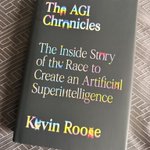
Really wish I had finished The AGI chronicles before this week happened. Feeling like I accidentally watched the sequel before I saw the original 🤯
45
Susan O'Brien retweeted
Proud of our Cisco team for an incredible start to FY27. We delivered record quarterly revenue of $18.5B, up 24% y/y, and non-GAAP earnings per share of $1.40, up 40% y/y — our strongest growth rates in over 15 years. Thank you to our teams for their execution and our customers, partners, and shareholders for their trust. We’re just at the start of this networking supercycle, and I’m confident in what’s to come.
Tune in at 4:30 ET for more on our record Q1 performance: xitter.cf/i/broadcasts/2lgklRKVJ…


Susan O'Brien retweeted

Anthropic's IPO is a distant second this week in terms of big AI stories. Which is insane.


I get up for one min and my dog decides he can do my job for me apparently

ALT Dog behind a computer screen
1
63
👏👏👏👏

Today, I stood with Airbnb co-founder and CEO Brian Chesky to announce his $100 million gift to San Francisco’s parks. This is the largest single-donor gift to the city in San Francisco’s history, and will support the development of new parks, upgrades to existing spaces, expanded hours at recreation facilities, and much more.
An initial $39 million will help unlock five projects in neighborhoods across our city. SoMa, the Mission, Bayview-Hunters Point, Potrero Hill, and downtown will all see transformational projects finish sooner, bringing more welcoming public spaces to residents across San Francisco.
As Mayor, one of my top priorities is making San Francisco a city where families can put down roots and build their futures. Earlier this year, we launched our Family Opportunity Agenda—a citywide effort to bring down the cost of living and expand economic mobility for San Francisco families.
We're building more housing, protecting tenants, expanding access to affordable childcare, and keeping public transportation safe, reliable, and affordable. We're also investing in the public spaces families rely on every day.
Our parks are an essential part of what makes San Francisco such a special place to raise a family. Our recreation programs provide exceptional and affordable opportunities for San Francisco families. With this investment, we're bringing those opportunities to more neighborhoods across our city, expanding access to recreation, and making our parks even better for the families who use them.
San Francisco has created enormous opportunity for the people who have built their businesses here. And with that success comes a responsibility to give back to the city that helped make it possible. So, my ask to every leader who sees what Brian has done today is simple: help us create more opportunities for the people who call San Francisco home. Now is the time. Our city is coming back. Don’t just watch it from the sidelines. Be a part of it.


54