
Seshat: Global History Databank compiles information on the social and political organization of human societies, and how civilizations have evolved over time.
Joined July 2015
- Tweets22K
- Following108
- Followers4.6K
- Likes27.6K





Seshat retweeted

Our 🌐 world 🌐 is becoming ever more interconnected 🤝 and interdependent – and thus, complex. Today's problems span beyond traditional disciplines, calling for interdisciplinary research to find solutions. But what these problems often have in common is the necessity to man ...
Seshat retweeted

We are having a stats postdoc position available to work with humanities datasets, including @SeshatDatabank data. Please circulate widely! jobs.ac.uk/job/DEY204/resear… @Peter_Turchin @RuthAhnert @RuthMostern @jgmanning @fotisja @Adam_Crymble @j_w_baker @dder
Seshat retweeted

Climate change has toppled some civilizations but not others. Why?
The link between environmental disasters and societal collapse, explained.
grist.org/culture/climate-ch…

Seshat retweeted

New theme issue of #PhilTransB edited by @AnnePisor, J. Stephen Lansing & Kate Magargal looks at methods people use to adapt to environmental changes. Understanding this can help researchers, policymakers and organisations better support communities as they respond to #ClimateChange: bit.ly/PTB1889 #CulturalEvoReads

Seshat retweeted

Climate resilience is built into human nature, including the innovations we design & share. In our special issue out today in Phil Trans B, 14 teams discuss how studying culture brings insight to contemporary climate adaptation: royalsocietypublishing.org/t…
Some take-homes:
1/

ALT Dr Alit Arthawiguna and a team of Balinese agricultural researchers investigate ways to reduce greenhouse gas emissions from rice paddies in Subak Bene, using traditional methods of collective irrigation management. Photo: Steve Lansing
Seshat retweeted
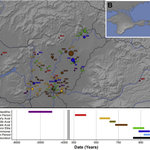
Did #warfare lead the fall of small-scale societies? @CSHVienna scientist @Peter_Turchin and his team may have added a key piece to an #archeology puzzle. Their study in @SciReports shows violent #conflict played a crucial role in #Neolithic Europe. ➡️ bit.ly/3CDBaPm

Seshat retweeted

I am delighted that the International Journal of Humanities and Arts Computing has posted a call for papers for a special issue on Spatial Humanities and the Global South. Please spread the word! Papers due end of January 2024! More information here! bit.ly/3Jak2UW
Seshat retweeted
This video interview went really well. Oli is a terrific interviewer.
youtube.com/watch?v=sH7wqxjU…

Seshat retweeted
The link between elite overproduction and cutthroat competition explained and illustrated
telegraph.co.uk/news/2023/05…

Seshat retweeted

Our study with @Peter_Turchin & @hoyerdan "Explaining population booms and busts in Mid-Holocene Europe" is online @SpringerNature @SciReports. Its social processes with violent conflict rather than climate... @leizarchaeology
rdcu.be/dd2Ms

Seshat retweeted

Time to settle down to write a little.....
BL Harley MS 2799; the 'Arnstein Bible'; Germany, W (Arnstein); c.1172 CE; f.155r @BLMedieval

Seshat retweeted

NEW: excavations at Kopilo cemetary in #Bosnia provide the first insights for Bronze & Iron Age burial practices in this part of Europe. @RealMGavranovic et al. uncovered 46 inhumation graves w/ rich grave finds suggesting wide-ranging communication. £ buff.ly/3xfMKNK

Seshat retweeted

Finished new article on urban #wineries, #oileries and the place of urban production across the #Roman world! Very happy with this one 🙏
Oileries at Volubilis (left) & wineries in #Pompeii (right) just two of the huge quantity of installations we discuss

ALT Reconstructed ancient Roman olive oil production facility at Volubilis with lever press on right and crusher on left.

ALT Reconstructed Roman lever and winch wine press at Pompeii with the head of the lever carved in the shape of a Ram
Seshat retweeted

The mitten is made from several pieces of textile sewn together. It is the only known Viking Age mitten from Norway, even though mittens were likely regularly used during winter time back then, just as they are now.

Seshat retweeted

Our new paper on surplus production, storage strategies & 'cash crops' in 4th mill Aegean-Anatolia out. Early olives, figs & grapes included! #Çukuriçi @ERC_Research
@FWF_at @oeaw @HeasVienna
Ch. Schwall et al.
en.arkeolojibilimleridergisi…

Seshat retweeted

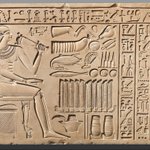
Alabaster Egyptian miniature vertical sundial (h: 6 cm; w: 5.8 cm), c. 2nd half of the 1st millennium BCE @MuseeLouvre, via isaw.nyu.edu/exhibitions/tim…

Seshat retweeted
Produced in 1798, this watercolor shows how the Ribchester Helmet looked on its discovery. A hoard of military metalwork was found in 1796 by a boy playing behind his father's house in the village of Ribchester, Lancashire, the site of a Roman fort. @SocAntiquaries #Seshat

Seshat retweeted

Arrow splits - firing one arrow and splitting it in half with the next - are a very real trick-shot in archery. One Roman auxiliary archer boasts on his gravestone that he impressed Hadrian 'by piercing with a second arrow the first arrow that was still falling through the air'.
Seshat retweeted

#Egyptianmuseum
Rahotep and Nofret Statues
Provenance: Mastaba of Rahotep, Meidum
Date: Old Kingdom, Dynasty 4, (ca. 2613-2589 BC)
Painted Limestone, eyes inlaid with rock-crystal, calcite and outlined with copper
Height of Rahotep: 121 cm; Nofret: 122 cm
Location: R32

Seshat retweeted

Oil and wine have been Greek products and symbols of Greek culture for thousands of years. How did this identification emerge in the Late Bronze Age and what does it suggest about the relationship between people and the products of their lands?
buff.ly/3j0puA4