

Marketing Professor @ImperialBiz
London
Joined June 2012
- Tweets4.3K
- Following786
- Followers2.8K
- Likes11.6K




Pinned Tweet
Our paper on "Demand Estimation with Text and Image Data", joint work with Giovanni Compiani (@GioCompiani) and Ilya Morozov, is now forthcoming at the RAND Journal of Economics.
papers.ssrn.com/sol3/papers.…
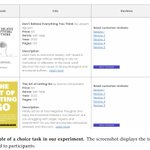
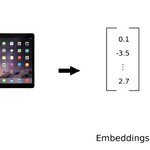
In the paper we extract product features from unstructured ... [1/4]

Stephan Seiler retweeted

My frequent co-author Chiara Farronato, who's not on Twitter, just wrote a nice HBR article summarizing a lot of recent research (including ours) on digital platforms. Do check it out!
hbr.org/2026/11/the-new-plat…
Stephan Seiler retweeted

There is no better way starting the #academic #seminar year than having an old friend @SeilerStephan from @ImperialBiz presenting super interesting new work on the #nutritional and #welfare impact of #UK #sugar #taxes @CambridgeJBS @Cambridge_Uni


Stephan Seiler retweeted

The QME October newsletter is now available online:
lnkd.in/ePJEhsF3
Subscribe to get the newsletter directly in your inbox. This months we are covering 3 recently published paper with detailed summaries and assessments by the QME editors that handled each paper.
Stephan Seiler retweeted

Are consumers aware of their future inertia?
We run a field experiment that offers over a million readers of a European newspaper auto-renewing or auto-canceling contracts.
@HECParis
#Subscriptions #Media #ConsumerProtection #QuantitativeMarketing

Stephan Seiler retweeted

Glad to see two papers in Marketing Science (one forthcoming and one just accepted)!

Newly Accepted Articles 08/26 (3 of 5)
"Retailer Price Competition and Assortment Differentiation: Evidence from Entry Lotteries" by
Hristakeva, Sylvia; Hollenbeck, Brett William; Uetake, Kosuke @hristakevas @econominable @Chanman_ECON
Stephan Seiler retweeted

My intro to quant marketing phd course starts next week. Updated syllabus here: avigoldfarb.com/s/Syllabus_R…
Stephan Seiler retweeted

Nice paper from @jdube6, Ilya Morozov, Franklin She and @tuchmanna

Studying how in-store display ads communicate information about a product’s price and quality, both directly through ad content and indirectly through inferences consumers draw, from Jean-Pierre H. Dubé, Ilya Morozov, Franklin She, and Anna Tuchman nber.org/papers/w35596

Stephan Seiler retweeted
Very very proud to have published this paper in @QME_Journal!!!!

I know Steve isn’t on X, but I don’t think he’d mind me sharing this LinkedIn post here.
One of the seminal empirical papers on online review systems is finally published.
Hats off to @btshapir!
Paper here: link.springer.com/article/10…

Stephan Seiler retweeted
Now available online at #QME:
"Going back to move forward? How search revisits on a website we built inform us about search outcomes"
by Ivy Chu Dang, Raluca Mihaela Ursu (@ralucamursu) and Pradeep Chintagunta.
link.springer.com/article/10…
The paper describes how [...]

Stephan Seiler retweeted

GLP-1 drugs are the ultimate validation of the techno-solutionist approach to society's most challenging problems.
The obesity crisis seemed liked it would just get worse and worse forever. Scolding from public health officials didn't work. Proposals to completely overhaul our food systems were dead on arrival.
Instead, we invented a weekly shot (based on Gila monster venom!) that fixes obesity directly.
And now, thanks to the economic incentives in our biomedical industry, we have follow-on drugs that will be cheaper, even more effective, and easier to administer (by taking a pill instead of a shot).
Policymakers should be focused on figuring out how we can get more breakthrough drugs like GLP-1s (and faster). They also should think hard about which slopulist ideas might inadvertently kill the goose that lays the golden eggs.

Stephan Seiler retweeted
Now available online at @QME_Journal : "Bayesian learning and skill accumulation in video game play" by Jiarui Liu, Charles Zou, and @pra_chintagunta.
link.springer.com/article/10…
The paper analyzes the drivers of player engagement on a video game platform. [...]

Stephan Seiler retweeted
YES!
I'll just add that the system *can* work this way *right now* without reform. An editor just must be willing to try and the referees need to say yes.
And in my experience trying this exact thing, it's hard to get the referees to agree to have their words made public...

How I would reform the system:
1. Referees make suggestions. 2. Author revises however they want.
3. Ed makes a final decision, and the referees write the limitations section together.
It’s win win, the authors publish the paper they want, the readers get to see a high quality critique that is normally hidden. Yes the reader has to think for themselves, this is a good thing, we shouldn’t treat articles as sacred texts.
It’s good for science too bc it generates ideas for future authors on how to fill the holes, test the weak assumptions etc.
There’s so much excellent knowledge generated in the conversation between authors and referees and it is all buried and forgotten when the paper is published.
Stephan Seiler retweeted
Now available online at Quantitative Marketing and Economics:
"Incorporating switching reasons into a factor-analytic choice model: A study on benefit segmentation of physicians"
by Sangwoo Shin, Qiang Liu, Siyun Lu, and Paul Nelson
link.springer.com/article/10…

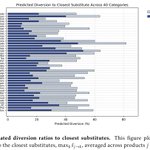
... and consistently predicts substitution patterns in real-world data across 40 product categories.
Our approach enables demand estimation even when researchers lack data on product attributes or when consumers value hard-to-quantify attributes such as visual design. [3/4]

The approach is easily scalable across categories because it does not require category-specific inputs (contrary to characteristics-based approaches). We make our code publicly available here: github.com/deep-logit-demand… [4/4]

Stephan Seiler retweeted
Now available online at #QME: "Affirmative action as a cost cutting tool in procurement markets" by Simha Mummalaneni.
link.springer.com/article/10…
The paper highlight an important positive side-effect of affirmative action on market outcomes. [...]

Stephan Seiler retweeted

The 2026 Workshop on Platform Analytics (WoPA) program and registration are now live! lnkd.in/gipaU4uk
This will be the 4th edition of the workshop, and we are looking forward to welcoming you to San Diego on April 24-25, 2026, at the University of California, San Diego - Rady School of Management. We’re excited about the lineup of papers, and grateful to all the program committee members who reviewed submissions.
Please share this post with anyone who works on platforms!
Stephan Seiler retweeted

I have a new paper. We look at ~all stats articles in political science post-2010 & show that 94% have abstracts that claim to reject a null. Only 2% present only null results. This is hard to explain unless the research process has a filter that only lets rejections through.
