

Soviet cinema: rare photos, film clips & quotes. The story the world forgot to tell.
Joined July 2026
- Tweets926
- Following558
- Followers382
- Likes606


The story behind The Ascent (1977), the only Soviet film to win the Golden Bear in Berlin. #SovietCinema #LarisaShepitko
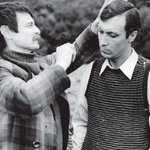
Andrei Tarkovsky and Oleg Yankovsky on the set of Mirror in 1974.
Yankovsky played the protagonist's father in the film. Tarkovsky cast him because he looked remarkably like his own father, poet Arseny Tarkovsky.
The director's real mother also appeared in the movie, playing herself in her old age.

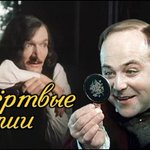
Dead Souls (1984)
Nikolai Gogol wrote this satirical novel in 1842.
Director Mikhail Shveitser adapted it into a 5-part TV series in 1984.
What is the film about?
The story takes place in 19th-century Russia. A stranger named Chichikov arrives in a quiet provincial town.
He visits local landowners and buys "dead souls." These are peasants who died after the last census.
On paper, they still exist. Chichikov plans to mortgage them for real money.
Each landowner he meets is a sharp caricature of human greed, laziness, or vanity.
Behind the scenes
Shveitser did not hire a narrator. He read Gogol's ironic comments himself behind the scenes.
The crew filmed in the ancient town of Suzdal. A local library became a tavern.
One art school played the Governor's mansion from the front and a wild estate from the backyard.


The story behind The Ascent (1977), the only Soviet film to win the Golden Bear in Berlin. #SovietCinema #LarisaShepitko
36
When Larisa Shepitko finished The Ascent in 1977, officials almost shelved it for being "too religious." To save the film, she and her husband Elem Klimov drove from Moscow to Minsk in an old car with the film print still wet from the lab.
Full story behind one of the greatest war films ever made — in the first comment below 👇


Fair enough, 2001 is a giant. And honestly, Tarkovsky wasn't really trying to make traditional sci-fi anyway, he cared more about human psychology than space.
1
1
11
Great directors are often the harshest critics of each other because their visions are so different! Both films changed cinema forever, and we are lucky to have both. Thank you so much for your love for Soviet cinema!
1
5
What a brilliant breakdown! You captured the contrast so well. Kubrick looks outward at evolution and our fear of losing control to our own creations, which feels eerily relevant with AI today. Tarkovsky looks inward at memory, guilt, and the human soul. Both reach incredible heights, just in completely opposite directions. Thank you for such a thoughtful comment!
25
Thanks for sharing your perspective! Art hits everyone differently, and that is what makes discussing cinema so interesting.
1
5
Spot on! HAL feels more alive and emotional than any human on that ship. That is Kubrick's chilling warning about what happens when technology replaces the human soul.
1
6
You put it so well! Kubrick built a world of cold perfection and geometry, while Tarkovsky filled the screen with living, breathing nature. Two completely different visions, and both are unforgettable.
24
Oh, Stalker definitely takes its sweet time too! And Hard to be a God is on a whole other level of intensity, not an easy Sunday afternoon watch at all. Enjoy Jeanne when you get to it!
1
1
13
Haha, no chance! Even if you watch it ten times, Tarkovsky still refuses to hurry up. At least on Blu-ray every single raindrop looks glorious while you wait!
1
9
Couldn't agree more! For him, the camera was never about showing off, it was always a way to reach the human heart.
11
She had a truly rare gift! Yekaterina Savinova trained at the Gnessin Academy, and she sang every note herself without any dubbing.
1
10
Qué buena reflexión. En las películas de Tarkovski, la lluvia, la hierba y el agua siempre tienen más peso que cualquier nave espacial. Al final, lo que más nos conmueve es esa conexión humana y viva con la tierra.
8