

Cutting-edge research, news, commentary, and visuals from the Science family of journals. Follow @NewsfromScience for stories from our News team.
Washington, DC & Cambridge, UK
Joined April 2009
- Tweets48.9K
- Following452
- Followers4.8M
- Likes4.6K






Science Magazine retweeted

Are you a scientist using AI but worried about being scooped?
There are plenty of ways your data could leak to AI companies or colleagues down the line. Thankfully, there are also some things you can do to minimise your risk...
Latest for @ScienceMagazine
science.org/content/article/…

Science Magazine retweeted
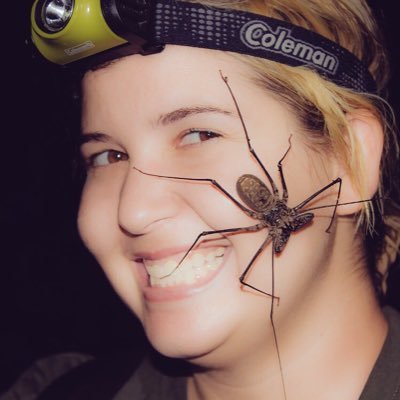
First it was robots cartwheeling better than me. Now you're telling me snakes can do it, too?! Read about that and more in this edition of @ScienceMagazine's #ScienceAdviser: science.org/content/article/… Video: Yosuke Kojima and Ibuki Fukuyama/Current Biology (2026)
Science Magazine retweeted

New in @ScienceMagazine: 3,000 years before empires ran on armies, Andean elites may have run on vilca. Bone tubes at Chavín de Huántar just tested positive for DMT and bufotenine.

Science Magazine retweeted

Scientists uncover a surprising connection between the brain’s maze of blood vessels and fine motor control in the cerebellum, new tools provide scientists with an optogenetic means to control G protein signaling, and more this week in #ScienceSignaling. scim.ag/4dQ8vth

Science Magazine retweeted

We're also excited that our paper is accompanied by a Perspective in Science!
Many thanks to @s__ellis for highlighting our work and putting our findings into a broader context!
🔗 science.org/doi/10.1126/scie…

Science Magazine retweeted
🎉 Our paper is out today in @ScienceMagazine!
How does the intestine maintain the right balance of cell types? We find that signalling rhythms matter!
So proud of our three shared first authors, Sonja Weterings, @HiromuneEto & @jddeleede!
🔗 science.org/doi/10.1126/scie…
Science Magazine retweeted

And so much glycan perception in @ScienceMagazine this week! Super nice to see our chitin paper in a perspective article written by @LishaZhang2 and @ThorstenNrnber1 alongside two other studies on how plant receptors read chitosan and cellulose fragments.
doi.org/10.1126/science.ael7…

Science Magazine retweeted
How do plants read chitin length? The receptor CHIP13 works like a molecular measuring tape. What began 13 years ago with a recalcitrant protein is now in @ScienceMagazine Thanks to all co-authors and colleagues! @MolBiolAU
doi.org/10.1126/science.adz4…

Science Magazine retweeted

The October 2026 issue of Science #Robotics is out!
This month’s cover depicts a drone deployed with MonoRace, an onboard framework that enables aerial robots to race autonomously at speeds of up to 100 km/h.
Learn about this research and more: scim.ag/4i2T4iM

Science Magazine retweeted

The new issue of #ScienceTranslationalMedicine is out!
A large clinical study in China uncovers "clocks" of human aging that may predict chronic disease, a new mRNA antibody therapy could better tackle ever-evolving SARS-CoV-2 variants, and more. scim.ag/4yjVa3G

ALT The cover illustration shows a man on a bicycle going about his daily activities as the shadow of time looms in the distance. Credit: Davide Bonazzi/Salzman Art
Science Magazine retweeted

Researchers present a "Progenitor Cell Ark," a triple-layered hydrogel microsphere system designed for cell delivery and multi-level repair.
Learn more this week in Science Advances: scim.ag/4hXrseR

ALT Optical microscopy of a hydrogel microsphere loaded with nucleus pulposus progenitor cells. Credit: Yinlin Yang
Science Magazine retweeted
A broad, sweeping look at what just happened to mathematics and where we go from here now the dust is beginning to settle.
My latest piece for @ScienceMagazine begins in a room filled with mathematicians on the eve of the OpenAI drop and ends with some pretty optimistic thoughts from @ConstantinKogl, a mathematician who, despite having his work ‘scooped’ by a matter of hours, is excited by all the “amazing mathematics everywhere.”
science.org/content/article/…

Science Magazine retweeted
This week’s new issue of #ScienceSignaling has arrived!
Researchers discover how the inflammatory death of neutrophils drives a rare group of autoinflammatory disorders, a new study uncovers an “inside out” regulatory mechanism for a GPCR, and more. scim.ag/4yISIVt

ALT Cover of "Science Signaling," dated 13 October 2026, featuring three digital representations of cells. The cells have a bright blue center, surrounded by clusters of purple and yellow structures, set against a black background. The AAAS logo is visible in the bottom left corner.
Science Magazine retweeted

Out at @ScienceMagazine now! What's the impact of school phone ban policies?
We ran a field experiment with 17,000 students. Phone bans improve academic performance, especially for low-performing students. Experiencing the ban makes students more supportive of it.

Science Magazine retweeted

New in @ScienceMagazine: a rare form of nitrogen gas, ¹⁵N¹⁵N, reveals what fraction of dissolved N₂ was produced by microbial denitrification and anammox. Our contribution to the study was applying this novel tool beneath the perennial ice of Lake Untersee, Queen Maud Land, Antarctica, to better understand nitrogen cycling in the lake, where it resolved the microbial signal. @SETIInstitute @astrobiology #ScienceResearch doi.org/10.1126/science.aei0…

Science Magazine retweeted

Now published @ScienceMagazine! A phone-free classroom experiment involving about 17,000 students in Odisha, India.
With @Alpsungu & @andbjn

Science Magazine retweeted

Back in May, we released the AlphaProof Nexus paper as a preprint. Following peer review, it has now appeared in @ScienceMagazine. science.org/doi/10.1126/scie…
I loved working on this project for many reasons. We clearly demonstrated the value of AI-aided formal methods and open datasets like Formal Conjectures in research math. I learned a lot from my excellent teammates. The greatest joy, though, was to see AlphaProof Nexus help mathematicians such as @GergelyBerczi and @MarioKrenn6240 in their work.
AI-for-math has come a long way since May. These developments only strengthen my conviction that formal proof assistants are an essential trust substrate for AI-for-math, and that meaningful progress in this field requires genuine collaboration with mathematical communities. Onward!

Science Magazine retweeted

How do scientists measure nitrogen disappearing from an ecosystem?
A new @ScienceMagazine study co-authored by SETI Institute Senior Research Scientist @daleandersen shows that the natural abundance of a rare form of nitrogen gas, ¹⁵N¹⁵N, can directly trace biological nitrogen loss.
By distinguishing biologically produced N₂ from atmospheric nitrogen, the method revealed nitrogen loss that can be missed by traditional approaches across environments ranging from aquifers and lakes to coastal basins, oxygen minimum zones, and marine sediments.
The work offers scientists a new way to better understand the nitrogen cycle — one of the fundamental processes that supports life on Earth.
🔗 Read the study: science.org/doi/10.1126/scie…

Science Magazine retweeted

Last week @ScienceMagazine A DNA Typewriter records the cell lineage history of a mouse, from zygote to late organogenesis | Science science.org/doi/10.1126/scie…

Science Magazine retweeted

We reported in @ScienceMagazine last week on a "self-capping" living supramolecular polymerization that yields chemically segmented, oppositely charged assemblies with precise lengths and collective molar mass reaching into the billion-dalton range.
science.org/doi/10.1126/scie…
