
Heme/onc fellow @PennCancer, Jane Coffin Childs postdoc fellow in AI peptide design @pranamanam | @YaleMed MD/PhD | Harvard '16 | https://xitter.cf/t.co/ynj5I1RhPY
Joined October 2019
- Tweets106
- Following577
- Followers351
- Likes876





Ryan Chow retweeted

Real-World Analysis Supports Rethinking Upfront Dose Intensity of Enfortumab Vedotin in Advanced Urothelial Cancer @ScienceChow @PennCancer @Ron_cology @ramsedhom #blcsm hubs.ly/Q041HfMF0

Ryan Chow retweeted

💫🌟🚨 New real-world evidence on EV dose reduction in advanced urothelial cancer🌟💫
🎓 @JAMAOnc study shows that starting treatment with reduced-dose enfortumab vedotin in 1L EV+pembrolizumab:
🔵 Cuts treatment interruptions by ~50% (better tolerability)
🔵 Maintains overall survival — no compromise on outcomes
🔵 Benefits remain consistent in older & physiologically vulnerable patients
💡 Take-home: “Start low, go slow” may be a safe and practical strategy to keep patients on therapy without losing effectiveness.
jamanetwork.com/journals/jam…
@OncoAlert @myESMO @ASCO @BladderCaJrnl @MedicalwatchHQ
#BladderCancer #UrothelialCancer #OncoAlert #GUOncology #EV302 – at Llanquihue, Los Lagos


Ryan Chow retweeted

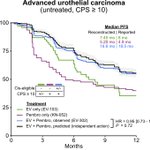
Among patients with advanced urothelial cancer, upfront enfortumab vedotin dose reduction was linked to a 50% reduction in treatment interruption risk but did not compromise overall survival.
ja.ma/3Lw71JH

ALT Figure shows association of Enfortumab Vedotin dose reduction with treatment interruption and survival. Graph A plots time to first EV interruption. Graph B plots overall survival. Standard dose, reduced dose, and the number of patients at risk are shown.
Ryan Chow retweeted

A retrospective cohort study led by @ScienceChow & team supports reducing the dose of the antibody-drug conjugate enfortumab vedotin when patients receive it as first-line therapy + pembrolizumab for the most common form of bladder cancer. @ASCOPost spr.ly/60157h5QH

Ryan Chow retweeted

New study in #UrothelialCancer shows upfront lower-dose enfortumab vedotin (EV) + pembrolizumab:
🔻 Lowered risk of EV interruption (HR = 0.49)
⏱️ Similar OS vs standard-dose EV
💡 Efficacy similar in vulnerable pts (80+, poor performance)
🔹@ScienceChow
ascopost.com/news/december-2…

Ryan Chow retweeted

Early EV dose reduction in advanced urothelial cancer ↘️ treatment interruption risk by half, yet survival stayed the same.
@JAMAOnc @OncoAlert @WorldBladderCan @Uromigos
jamanetwork.com/journals/jam…

Ryan Chow retweeted
Among patients with advanced urothelial cancer, upfront enfortumab vedotin dose reduction was linked to a 50% reduction in treatment interruption risk but did not compromise overall survival. ja.ma/47L9DdG

Ryan Chow retweeted

Today in @JAMAOnc, we share new real-world evidence supporting reduced-dose EV + Pembro for 1st-line rx of advanced urothelial cancer (a dz of older adults) led by @PennCancer fellow @ScienceChow & @Ron_cology
Ryan Chow retweeted

Is there a synergistic effect between enfortumab vedotin (EV) and pembrolizumab (P) for untreated advanced urothelial carcinoma in clinical setting?
This analysis suggests no!
EV+P seems to follow a an independent drug action model with no evidence of synergy

Ryan Chow retweeted

Multiplexed inhibition of immunosuppressive genes with Cas13d for combinatorial cancer immunotherapy go.nature.com/4gYcS4Z

Ryan Chow retweeted

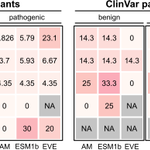
New @Nature_NPJ paper by @ScienceChow co-mentored w/ @KLNathanson @BasserBRCA on reliability of #deeplearning to predict variant pathogenicity. #AI recapitulate ClinVar classifications for pathogenic variants, but poorly predict pathogenicity for VUS's #breastcancer


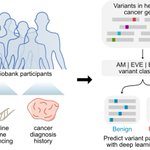
#DeepLearning models have been developed to predict missense variant pathogenicity -- but how well do these models perform in a real-world clinical setting? Thrilled to share our latest in npj Precision Oncology! @Nature_NPJ | nature.com/articles/s41698-0… (1/8)
Ryan Chow retweeted

Phenotypic Evaluation of Deep Learning Models for Classifying Germline Variant Pathogenicity @Nature_NPJ
• This study evaluates the real-world utility of three state-of-the-art deep learning models—AlphaMissense, EVE, and ESM1b—in classifying germline variants associated with hereditary cancer risks.
• Using data from 469,623 UK Biobank participants, the study focuses on missense variants in key cancer-related genes, including BRCA1, BRCA2, ATM, CHEK2, and PALB2.
• AlphaMissense and ESM1b models were able to identify pathogenic BRCA1 and BRCA2 variants that conferred increased risk for breast and ovarian cancer, but they struggled with certain other genes like ATM and CHEK2.
• Notably, AlphaMissense identified potentially pathogenic PALB2 variants, which were previously categorized as variants of uncertain significance (VUS) by ClinVar, hinting at the models’ potential for refining variant classification.
• Despite their success with some genes, all models exhibited limited accuracy in distinguishing VUSs associated with increased cancer risk, underscoring the need for cautious interpretation in clinical practice.
• Composite classifiers that combined ClinVar annotations with deep learning predictions reduced the proportion of participants classified as VUS carriers, though at the cost of predictive power.
• The study highlights the importance of gene-specific thresholds, as a uniform cutoff reduced model accuracy across multiple genes, indicating that custom thresholds may improve performance.
• The authors emphasize the need for diverse genomic data to mitigate biases in current models, especially since VUSs are more prevalent in non-European populations.
• While the study shows promise for integrating deep learning in clinical settings, it concludes that deep learning models are not yet ready to fully replace traditional variant classification methods for clinical decision-making.
@ravi_b_parikh @KLNathanson @ScienceChow
💻Code: github.com/rdchow/UKB_pathog…
📜Paper: nature.com/articles/s41698-0…

Ryan Chow retweeted

Real-world evaluation of deep learning algorithms to classify functional pathogenic germline variants medrxiv.org/cgi/content/shor… #medRxiv
Ryan Chow retweeted

Excited to share our group's first manuscript describing new anatomical connections that allow the eyes to act as an "immunological window to the brain" 👁️🧠 (1/)
nature.com/articles/s41586-0…

Ryan Chow retweeted

Our work at Nature Immunology on a new way of cell therapy engineering. Proud of 1st author Ariel & team. Special Tx to Dr. Levchenko. @Yale @YaleGenetics @YaleCancer @YaleWestCampus @YaleData @YaleMed nature.com/articles/s41590-0…
Ryan Chow retweeted

Excited to see some of my thesis work finally published in @PLOSBiology!Wouldn’t have been possible without @WilenLab @JinWei0911 @MiaAlfajaro @kadochlab @ajinkyapatil00 @ScottBiering @pdhsu @SKonermann @QinYan1 @JohnDoench @ScienceChow @wesleylcai & more.

The kinase DYRK1A can aid #coronavirus entry by driving #chromatin accessibility & active transcription at coronavirus receptor gene loci, independent of its catalytic function #SARSCoV2 #SARSCoV #MERSCoV @madisonstrine &co @WilenLab #PLOSBiology plos.io/3oZTkHP

Ryan Chow retweeted

Mutations in IFN-γ signaling genes sensitize tumors to immune checkpoint blockade dlvr.it/SmVX38

Ryan Chow retweeted

An analysis of CRISPR screening data from our lab and others, and analyses of ICB-treated patient cohorts, shows that mutations in IFN signaling genes generally do not cause resistance to ICB. This agrees with work from @andyjminn and our group: nature.com/articles/s41590-0…
Excited (and a bit nervous) to share my first study as senior author! @ericsongg and I took a deep dive into whether IFNg signaling gene mutations indeed confer resistance to immune checkpoint blockade (ICB). Letter in @Cancer_Cell: cell.com/cancer-cell/fulltex…

Ryan Chow retweeted

So grateful and overjoyed that @ScienceChow and I will be continuing our physician-scientist training at @PennMedicine! Thank you so much to all our mentors at @YaleMed @YaleMDPhD @YaleIBIO @YaleGenetics @yalederm @YaleCancer for their support! #Match2023
@chennifer_jen and I are super excited to have matched together @PennMedicine!!! We'll be in the IM and Dermatology research-track programs -- looking forward to visiting Green Eggs Cafe & the Magic Gardens again :) Grateful to our mentors for their support!! #Match2023 @YaleMed

Ryan Chow retweeted
My favorite study from this past year. What a good way to end our MD PhD time together @YaleMed. We challenge the idea that mutations in IFN pathways are always a protective feature of tumors against immunotherapy. Lots to more to learn and to model for the future.
Excited (and a bit nervous) to share my first study as senior author! @ericsongg and I took a deep dive into whether IFNg signaling gene mutations indeed confer resistance to immune checkpoint blockade (ICB). Letter in @Cancer_Cell: cell.com/cancer-cell/fulltex…