
I dislike Socialism and Pair Programming
England, United Kingdom
Joined January 2018
- Tweets89.7K
- Following252
- Followers560
- Likes145K


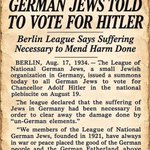


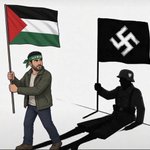
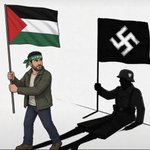
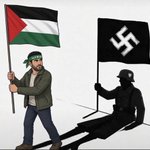


I would love to provide this ignorant Muslim (@3h1fi2027) with more arguments explaining what he does not understand about both Christianity and Judaism, but unfortunately I can’t as the prick prefers to stay ignorant so he blocked me.
This is why so many Muslims stay ignorant - they are afraid of learning facts.
17
Scept Meerkat retweeted

This is the flag of the 1916 Arab Revolt against the Turkish occupation. It was designed by the Hashemite ruler of Mecca, Hussain, who saw himself as the king of all the Arab Muslims and their unifier. The flag presumably assembled together the color of Prophet Muhammad (green) with that of the three other most prominent Islamic dynasties: White for the Umayyads, black for the Abbasids and red for the Fatimids.
People who waved this flag opposed the British and European creation of Arab states. They opposed the existence of Palestine, Lebanon, Syria, Jordan, Iraq, Egypt, Hejaz. The Hashemite Hussain himself opposed dividing the territory he (or the British) controlled, even among his three sons (Ali, Abdullah and Faisal) who ended up carving their own states (Hejaz, Jordan, Iraq) and adding stars to the main flag (one star for Hashemite Jordan as it is today, two stars for Hashemite Iraq, now long gone, Saudi Arabia swallowed Hejaz). The no-star Hashemite flag, today the Palestinian flag, symbolized unity and opposed the creation of states like Palestine.
The majority of Arabs in Palestine opposed the British creation of Palestine. They waved the Arab unity flag in the picture (the flag evolved slightly). In 1964, the Palestinians agreed to create the PLO, which insisted that the Palestinian people was part of the Arab nation (under Egypt's Nasser). But Nasser's rival, Saudi Arabia, encouraged Palestinian nationalism and funded Arafat for that purpose. In 1968, Arafat was elected PLO chief and he turned this Arab unity flag into the Palestinian flag, thus reversing the purpose of the flag itself.

Scept Meerkat retweeted

Every single person who still cringes at the memory of trying to bullshit their way through an interview or exam question: today, the slate is wiped clean. Set down your burden of shame. Nothing - nothing, I say - could touch this.
I hate when a third-party library has a so-called “fluent-style interface”.
It leaks information about classes I don’t care about and it is almost impossible to create mocks for library objects.
Who thought that it was a good idea?
#FluentInterface
1
1,366
Scept Meerkat retweeted
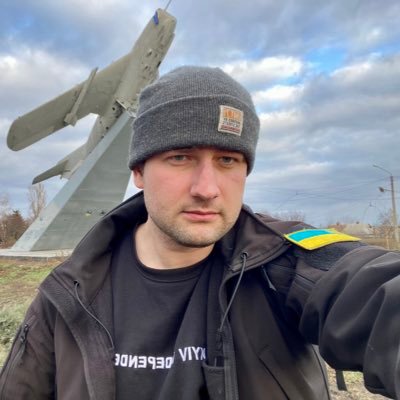
Alright, I guess it falls to me -- just an ordinary guy from Ukrainian Donbas -- to explain a few obvious things to a New York real-estate developer who seems to care a lot more about the “commercial opportunities” being dangled in front of him by Putin and his mob fixer Kirill Dmitriev than about Ukraine, this region, or the questions of war, life, and death for millions of people whose fate he so casually talks about.
You see, real life is a bit more complicated than a primitive two-color map where Ukrainian regions are divided into “Ukrainian-speaking” and “Russian-speaking.”
Believe it or not, speaking Russian in everyday life does not mean wanting to live under Russian rule and the dictatorship of Vladimir Putin.
It doesn’t mean you’re somehow “by default” obliged to belong to Russia or serve the imperial whims of Vladimir Putin.
Especially not after the 2014 invasion -- and especially not after the slaughter that the business partners in the Kremlin unleashed on what is now an almost completely destroyed Donbas.
That horror opened countless eyes and finally shattered many illusions about what the so-called “Russian world” really is -- a plague, bringing death and cemeteries among the ruins of once-prosperous cities like Mariupol and Bakhmut.
You might be surprised, but back in 2014 the main centers for forming “volunteer battalions” were not Lviv or Ternopil -- they were “Russian-speaking” cities like Dnipro and Kharkiv.
They created and filled numerous famed units made up of local residents who took up arms to repel Russia’s hybrid invasion of Donbas when the regular army and the state were in collapse and paralysis.
That’s because we, the “Russian-speaking” Ukrainians, already understood perfectly well what was happening -- and made our final, irreversible choice in favor of Ukraine.
You might be surprised again, but when business partners in the Kremlin, through collaborators, saboteurs, and unmarked Russian regular forces, occupied Donetsk and Luhansk in 2014–2015, the majority of the region’s educated, entrepreneurial, and democratic-minded population fled those “people’s republics,” which quickly turned into depressed criminal cesspools.
They left their homes and apartments and moved -- believe it or not -- to areas under Ukrainian control: to Kyiv, and to its peaceful suburbs like Irpin and Bucha (where I live), where so many of our fellow Donetsk natives started new lives from scratch.
And here’s a little hint for the self-proclaimed “experts” and “journalists”: even in Donbas, pro-Russian Russian-speaking people never identified themselves as “ethnic Russians” -- only as Ukrainians who just happened to speak Russian.
No matter what years of Russian war propaganda tried to claim about the “Russians in Donbas.”
If you think you know better than me -- someone born in Volnovakha, who grew up and lived there most of his life -- you’re mistaken.
And believe it or not, even now, in the fourth year of Russia’s full-scale slaughter in the so-called “Russian-speaking regions,” masses of Russian-speaking Ukrainians have fled and settled in Kyiv, Lviv, or Chernivtsi -- something you can easily notice just by walking through those cities.
I won’t even start on how many “Russian-speaking” Ukrainians are fighting right now in the Ukrainian army on the front lines against the Russian plague that came to their land.
Why is that?
Because we have long been part of the Ukrainian nation -- part of its political and cultural space.
Our capital is ancient Kyiv, not Moscow.
We argue about and criticize Ukrainian politicians whose decisions shape our lives.
We took part in the revolutions, the elections, the wars for this country.
We cheer for the Ukrainian football team, for Ukrainian singers at Eurovision.
Most of us, one way or another, see Ukraine as our country and our future — and today, more than ever in modern history, we are farther from Russian cultural space and closer to our fellow Ukrainians from Lviv, Lutsk, Ternopil, and Vinnytsia than ever before.
That’s called shared national values.
The democratic, European, and Euro-Atlantic Ukraine that is fighting for its survival and freedom against an imperial invader -- the Ukraine we’ve been trying for a decade to reform and make a better place to live -- that’s us.
That’s who we are. That’s what we believe in, and what matches our values and vision of the future.
And many of us from the “Russian-speaking regions” have already switched to Ukrainian in daily life and in public, returning to the embrace of Ukrainian culture and tradition -- and rejecting “Russian” with disgust and anger, because we don’t want to have anything in common with the fascist Russia of today, which brings only bloodlust, war, hatred, chauvinism, aggression, and the deceitful hypocrisy of its brainwashing television propaganda.
And frankly -- until our last breath -- we will want nothing to do with your Russia.
After all it has done -- killing our friends and relatives, taking our homes, and turning our “Russian-speaking cities” into vast cemeteries amid ruins where life will never return.
Scept Meerkat retweeted

Do you know what Reagan did when he saw the USSR's war in Afghanistan? Maybe he ran around shouting, "Don't upset a nuclear power!" or tried to see the world through Andropov's eyes?
No, he called the USSR an immoral empire of evil that was beyond reason and that needed to be destroyed.
t.me/MirovichMedia/12107

Scept Meerkat retweeted
Oh.
Dear.
God. theatlantic.com/politics/arc…

Trump won election promising to end the war “in 3 weeks” from a “position of strength”, then realised that he can’t do that so decided not just to cut spending, but to help Russia to defeat Ukraine instead.
This is not how decent people behave.
4
5
998
Scept Meerkat retweeted

GeoConfirmed UKR - Misinformation by President Trump.
While we typically refrain from political commentary, President Donald Trump's recent statement regarding the war in Ukraine is so egregious that we feel compelled to respond.
Several claims made by President Trump have already been debunked. We've included responses from Grok AI for each claim, demonstrating that even Grok refutes the misinformation spread by the president.
In this thread, we will provide geolocated footage as a reminder to everyone that Russia invaded Ukraine on February 24, 2022, marking the beginning of this war.
1)
The United States has not spent $350 billion on this war, nor has it outspent Europe by $200 billion. In fact, European contributions have surpassed those of the US. Moreover, a significant portion of the American military aid (around 90% !) is spend in the US, reinvesting in the US economy.
statista.com/statistics/1499…
eeas.europa.eu/delegations/u…
ifw-kiel.de/publications/new…
csis.org/analysis/where-miss…
(Grok: xitter.cf/i/grok/share/9grtpN5K2…)
2)
President Zelensky did not claim that half the American money sent to Ukraine is "missing". He stated that half of the promised funds had not been received, which is a crucial distinction.
csis.org/analysis/where-miss…
politifact.com/factchecks/20…
edition.cnn.com/2025/02/19/p…
(Grok: xitter.cf/i/grok/share/x2J4XJgAu…)
3)
Ukrainian constitution prohibits elections during wartime, a measure designed to protect the democratic process from foreign interference, particularly given Russia's known capabilities in this area...
foreignpolicy.com/2023/07/11…
edition.cnn.com/2024/03/30/e…
united24media.com/war-in-ukr…
(Grok: xitter.cf/i/grok/share/iNgj4reyI…)
4)
President Zelensky is not a dictator, as evidenced by Ukraine's constitutional framework and his commitment to holding elections once hostilities cease. In contrast, it's worth noting that President Putin consistently wins elections in Russia with implausibly high percentages of votes, with opposition that 'falls out of windows", is poisened or jailed, raising questions about the true nature of Russia's electoral process.
europarl.europa.eu/doceo/doc…
oscepa.org/en/news-a-media/p…
osce.usmission.gov/on-the-ru…
japantimes.co.jp/news/2024/0…
bbc.com/news/world-europe-68…
(Grok: xitter.cf/i/grok/share/aK1JCZlsa…)
5)
President Zelensky has a approval rate above 50% and not 4%. 4% is Russian disinformation.
edition.cnn.com/2025/02/19/p…
kiis.com.ua/?lang=eng&cat=re…
euronews.com/2025/02/19/zele…
abcnews.go.com/International…
(Grok: xitter.cf/i/grok/share/IHyHHTkKe…)
6)
There was no NATO expansion to the East, as NATO itself cannot expand. Instead, democratic countries independently decide whether they want to become members of the alliance. The process of joining NATO is voluntary and involves multiple steps, including meeting specific requirements and completing a formal application process.
The fact that many of Russia's former neighbors have chosen to seek NATO membership speaks volumes about their perception of Russia and their desire for collective security.
The decision of these nations to pursue NATO membership reflects their sovereign right to determine their own foreign policy and security arrangements. It also indicates a preference for the stability and security guarantees that NATO membership offers, rather than remaining under Russian influence.
Regarding the famous 'promise':
Article 103 of the UN Charter establishes a clear hierarchy in international law. It states that obligations under the UN Charter prevail over obligations under any other international agreement in case of conflict. This supremacy extends beyond just treaties, as it is generally understood to also apply to customary international law.
The hierarchy can be summarized as follows:
1) UN Charter obligations
2) Other treaties and customary international law
3) Non-treaty international texts
4) Political promises or commitments
5) Historical claims
Russia's invasion of Ukraine clearly violates fundamental principles of the UN Charter, including the prohibition on the use of force against the territorial integrity of another state. Any attempts to justify this action based on lower-ranking considerations like political promises or historical claims are legally irrelevant.
euvsdisinfo.eu/report/there-…
nato.int/cps/ra/natohq/11520…
iir.cz/lies-provocations-or-…
(Grok: xitter.cf/i/grok/share/fb5Fnn3Do… and xitter.cf/i/grok/share/NgIPkpYvJ… and xitter.cf/i/grok/share/NgIPkpYvJ…)
8)
Who initiated this nearly three-year-long war? RUSSIA.
As a platform that has analyzed over 50,000 frames/videos related to the conflict, we will remind the president ,with geolocated footage, who started this war: RUSSIA.
Russia invaded Ukraine on February 24, 2022, despite repeatedly denying any plans for invasion in the preceding days.
xitter.cf/Mike_Pence/status/1892…
edition.cnn.com/2025/02/19/p…
(Grok: xitter.cf/i/grok/share/m1W0ZufMq…)
---
24 FEB 2022 - Russian tanks crossing the border from Belarus into Ukraine in Senkivka.
52.106063, 31.780644
4Q4J+C7C Sen'kivka, Chernihiv Oblast, Ukraine
Sources: xitter.cf/Conflicts/status…
1/11

Typical for “Covid warriors”.
I put a small comment, @DaniBeckman answered and immediately blocked my access.
Other Covid panickers continue to answer my short message but I can’t answer them.

1,350
Interesting how those who hate Twitter after Musk took over have a tendency of not simply blocking those who dislike them, but doing it after answering every post.
Example: @nicolas_frankel
For example I usually just let someone who annoys me to have the last word…
1
792
Scept Meerkat retweeted

This is absolutely cringe. Angela Rayner giving in to Islamic sectarianism by solely focusing on Gaza here. Begging for their votes.
No mention on any everyday issues which affect us in the UK. Pathetic.


Scept Meerkat retweeted

Hi, I’m a lawyer. Do want to know what is really meant by a “#proportionate response” under international law? Then read on - and feel free to ask questions!
Under International Humanitarian Law, #proportionality requires that any degree of damage (up to and including death) to #civilians not be “excessive” in relation to the “military advantage anticipated from a strike against a military target.”
We are going to break that down, so everyone understands what exactly that means.
However, first, you should be aware that it is a misnomer that anytime #Palestinian civilians die after an #Israeli strike, it is automatically evidence of an Israeli war crime. This is completely false - the law does not work that way.
Simply, and unfortunately, the international rules of law recognize that civilians are often killed during war; and, most of the time, those deaths are actually not indicative of a war crime.
Instead, the legal test for “proportionality” requires that each individual strike be looked at with a particular balancing analysis.
First, here is a hard and fast rule: the strike must be intended to target a military objective; it is, therefore, an unlawful war crime to strike with the intent of targeting civilians without any military objective whatsoever.
Now, let’s get a little technical while still keeping it simple.
Under the First Additional Protocol to the Geneva Conventions of 1977 at both Article 51(5)(b) and Article 52(2), we know that when #Hamas uses its own population (or Israeli #hostages) as #humanshields - either by using them to shield themselves or to shield their weapons depots - Hamas has, under international law, turned civilians targets into military targets.
That means that when Hamas places weapons caches in and under schools, hospitals, mosques, etc., Hamas has made each of those places legitimate military targets.
So, it has been well-known for many years that Hamas purposefully placed its headquarters underground beneath the al-Shifa Hospital. In doing so, international law holds that the hospital is no longer just a civilian target, it is a legitimate military target.
That does not necessarily give the IDF carte blanche to attack hospitals, schools, mosques, etc.; however, it does mean that an IDF attack on a civilian target that has been made into a military target by Hamas’ use of human shields is not per se illegal under international law.
Instead, such a strike (as is the case with any strike conducted by a military like the IDF), must be analyzed through a balancing test.
One part of this balancing test performed by Israel before each strike is to determine whether the human shields in question are being used voluntarily or involuntarily.
If the human shields are being used voluntarily - meaning the human shields are there protecting Hamas and its weapons of their own volition - then the target remains a completely legitimate military target.
If the human shields are being used involuntarily - meaning Hamas is forcing people to act as human shields to protect themselves and/or their weapons - then the IDF must go back to the balancing test to determine whether the anticipated military advantage of a successful strike would outweigh the reasonably anticipated loss of civilian life.
Importantly, the IDF rules state that if it cannot determine whether a human shield is being used voluntarily or involuntarily, it must presume the civilian is being used against his or her own will and treat the civilians as an involuntary participant.
Assuming that there is a military target & that there may be human shields that are there involuntarily, the next step in the proportionality analysis for each individual strike (remember, proportionality is determined on a strike-by-strike basis, and not as the accumulation of strikes over time) is to try to determine the likely amount of damage to civilian persons and/or property as a result of the strike.
In other words, under international law, Israel must be able to give a sort of “value” to the anticipated impact on civilians (including potential civilian deaths). Simply, a smaller number of anticipated civilian casualties may make the strike proportionate if there is a significant military advantage to be gained by conducting the strike.
However, if Israel determines that the anticipated impact of a strike may cause many civilian casualties, it must make the difficult determination of whether the anticipated military advantage is so significant that it warrants carrying out the strike anyway.
So, if Hamas has a weapons depot underneath a house with two civilians inside, and that house has been used to fire 500 rockets at Israeli civilians, and it is reasonably expected that there are hundreds more rockets under that house, Israel can almost certainly carry out the strike within the confines of international law.
If that same house, however, had 10 families living inside, including many children, it could - and likely would - tip the scales of the proportionality balancing test toward Israel not being permitted to carry out the strike, even though the house has been used to attack Israeli civilians and can be expected to continue to be used to carry out attacks against Israeli civilians.
Now, that balancing test can always change. If that same house is being used to fire long-range, precision-guided missiles at Israel’s major population centers in places like #TelAviv (effectively putting millions of Israeli civilians in danger), the balancing test may tip back in favor of Israel being legally permitted to carry out the strike.
This all suggests the third and final step in the proportionality balancing test: the #IDF must determine and place a “value” on the anticipated military advantage that would be gained if it were to carry out a particular strike.
An attack on Hamas leadership and/or its weapons manufacturers would be considered a high value target. An attack on a single Hamas member who has no special skill, would be a much lower value military target.
Similarly, an attack on a small cache of mortars would have less military value that an attack on a large cache of advanced rockets that can reach large Israeli civilian population centers.
Once the @IDF determines the anticipated “value” of the likely effect on civilian persons and property and the anticipated “value” of the likely military advantage to be gained if the strike is carried out, the balancing test can be performed, and a certain amount of judgment must go into the determination of whether that strike would or would not be “proportionate.”
Importantly, this decision is so vital that the IDF does not simply permit a single solder on the ground with his or her hand on the proverbial (or actual) “trigger” to make that determination.
In fact, the decision of whether a strike is proportionate is not even left up to IDF officers. It’s not even left up to IDF Generals.
Instead, before any IDF strike can take place, IDF Guidelines provide that the proportionality balancing test must be presented to and analyzed by IDF military lawyers who then determine whether the strike is legally permissible as “proportionate” under international law and the rules of war.
And these IDF military lawyers are not mere patsies or people who simply “rubber stamp” what the IDF requests.
In fact, the IDF’s military lawyers work entirely independently of the IDF. They are outside of the chain of command and do not answer to anyone in the IDF, including a General (for example).
Plus, every IDF military lawyer knows he or she may very well be held to account if he or she makes a wrong decision based on the evidence available at the time.
Furthermore, sometimes the decisions to be made while balancing the likely military advantage against the likely civilian casualties can be so difficult that the legality of the strike is first brought to the Israeli Supreme Court for instant review.
Another important concept: the comparison of civilian body counts of #Israelis versus #Palestinians (to the extent those numbers can be trusted since they come directly from Hamas-only) is not relevant to a proportionality analysis. Each strike must be viewed individually to determine proportionality. It is not a test of the cumulative nature of the strikes.
Also, by simply comparing body counts, it does not factor in how many people killed were actually #HamasTerrorists, how many were Hamas collaborators there voluntarily, and it does not consider what military advantage was gained by Israel carrying out any individual strike.
As Israel is now in the process of seeking to secure the military advantage of preventing Hamas from having the capacity to carry out repeated attacks of the kind and nature seen on October 7th, Israel is permitted to act proportionately insofar as necessary to achieve that military objective (the elimination of Hamas and/or its ability to make war).
One more important fact people do not know, but that they should know: according to UN statistics of global conflict, the average civilian to combatant killed ratio is a rather appalling nine civilians killed for every one combatant killed.
That’s why civilian body counts in and of themselves are never indicative of a war crime. Each individual strike has to be analyzed, and unfortunately civilians always suffer disproportionately in wars.
In fact, while Israel is routinely criticized for any of its strikes that kill civilians, you may be surprised to know that Israel’s civilian to combatant ratio is routinely much lower than the nine to one average.
In the very last operation carried out by the IDF prior to October 7 (in Jenin), 0.6 civilians were killed for every one combatant killed.
In that conflict, not only were the IDF’s ratio numbers nowhere near the nine to one international average, but the IDF actually managed to kill more combatants than civilians - something that is extremely rare.
In truth, Israel is targeted by accusations of war crimes almost immediately by the media, by politicians, and by the UN General Assembly despite the fact that those accusations are near 100% of the time based neither in fact nor in law.
Since a proportionality balancing test must be used to determine whether a single specific Israeli strike falls within the confines of international law, someone providing an analysis must have all of the facts Israel considered before carrying out that strike as to the anticipated impact on civilians and the anticipated military advantage. Obviously, anyone who is making a snap judgment critical of Israel could not possibly have that information.
Understand then, that when you see talking heads accusing Israel of “war crimes” immediately after and/or during Israeli strikes, that is not an actual legal analysis under international law of what constitutes a war crime.
Much more likely, what you are witnessing is part of Hamas’ ongoing psychological and propaganda warfare campaign of demonizing and delegitimizing the State of Israel in the eyes of public opinion.
#Hamas_is_ISIS #HamasisISIS #HamasISIS #HamasMonsters #October7massacre


Scept Meerkat retweeted

Why are there even places called “refugee camps” in Gaza? And why are two thirds of the people living in Gaza, who were born there and lived there their entire lives, called “refugees” from a war that ended more than seven decades ago? The answers to these question unlock the core of the conflict. Here they are (Part 1; Part 2 in the first comment):
1.The 20th century has been marked by a transition from empires to states. We begin the 20th century when much of the world is divided between empires. We end it when much of the world is divided between states. When lucky, those states were based on the self determination of a people who share a common history, language, ethnicity, background religion and connection to a territory. (Zionism emerged in this context based on the idea of self determination for the Jewish people in the only territory to which they were ever connected as a people). When unlucky those new states were artificially created by receding empires drawing boundaries, forcing different peoples to share one state, leading almost always to civil war, dictatorship, or both. This transition has been bloody. It involved two world wars and numerous regional and civil wars. In the bloody process of empires receding and new states emerging to replace them, tens of millions of people were displaced, fleeing across newly created borders, typically to new countries with an ethnic makeup similar to their own. This was true of Hindus and Muslim, Ukrainians, Poles and Germans, Bulgarians, Greeks and Turks and Arabs and Jews. This was not unique.
2.What was unique is that one group only of refugees from that time and those wars were allowed to maintain themselves as endless refugees in anticipation of one day winning a war they had lost. Those were the Arab refugees from the war of 1948, later to be known as Palestinians. All other refugee groups, except the Palestinians, were presented with a clear message: “it’s tough, it’s tragic, move on”. There was a clear understanding that in the most fundamental sense there is no going back - not in place and not in time (thus, there was no such thing as “a right of return”). To seek to go back would mean endless war. And so the message was forward looking and future facing. Tens of millions of refugees and displaced persons, among them millions of Jews, would build new lives in the new countries to which they fled.
3.Except Palestinians. The war that the Arabs of the land and the surrounding countries waged to prevent a Jewish state from emerging and gaining independence failed to achieve its goals. Despite the violent onslaught of 1947-49, Israel emerged as a sovereign state. But the Arabs of the land, sustained by broader Arab support, refused to accept this outcome. They proceeded to undo it through a variety of means, including repeated wars, economic boycotts, international condemnations and a complete refusal of the refugees themselves to be settled, as it would effectively mean accepting that the war was over.
4.To that end of keeping the war of 1948 alive until its goal of undoing the Jewish state could be achieved, a temporary agency established to resettle the refugees - UNRWA (initially called REWA, but the Arabs insisted on the letters UN so that it would appear to enjoy international legitimacy) - was hijacked by the Arab refugees. As a result of this hijacking UNRWA effectively became a Palestinian entity devoted singularly to sustaining and stoking the idea that uniquely among the world’s refugees, Palestinians don’t need to move on and can keep insisting on “return”, both in space and in time, to a time when there was no Israel. UNRWA thus became the mechanism by which the Jewish people alone were denied the right to to consider their hard won self-determination and sovereign statehood as a done deal.
(Part 2 continues in the first comment:)