

CS PhD student at University of Wisconsin Madison. Advised by Prof. Sharon Li
Madison, WI
Joined May 2017
- Tweets91
- Following117
- Followers146
- Likes87






RT @SharonYixuanLi: I know many PhD students are questioning what their paths mean as AI accelerates scientific discovery. That anxiety des…

Samuel (Min-Hsuan) Yeh retweeted

🧠 Thinking more ≠ telling users what they need to know. Introducing our #TMLR paper: "Thinking Is Not Telling: Information Disclosure in User-Service LLM Agents", w/ @Changdae_Oh @HyeonggyuC @jindong_wang92 @SharonYixuanLi
❓ Can stronger internal reasoning improve agent–user collaboration? The challenge: agents see policies, tool results, and environment states that users cannot. Users need this information before making consequential decisions—but private reasoning does not guarantee timely disclosure.
🔬 We introduce a five-category information-disclosure taxonomy, evidence-grounded probing, and turn-level counterfactual interventions to examine what agents communicate—and how missing information affects their actions.
🌟 Across five models and three service scenarios, enforced thinking does not consistently improve task success. More thinking does not reliably yield richer disclosure. State corrections and constraints are the most frequently missing categories in our matched failure analysis.
🎯 Injecting missing decision-relevant information improves the agent’s immediate downstream action correction beyond verbosity and think-content controls. A lightweight, training-free InfoDis prompt also mitigates enforced-thinking degradation: +5.26 percentage points for GPT-4o and +3.44 for DeepSeek-V3.1 in overall task success.
💬 Better user-service agents must communicate the right information before users decide.
📑 Paper: agent-infodis.github.io/pape…
🔗 Project Page: agent-infodis.github.io/

Samuel (Min-Hsuan) Yeh retweeted

When an LLM agent executes a long task, the hardest question is usually not whether it failed but where. Which step actually broke the run? 🧵
That’s the failure attribution problem, and it’s becoming central to debugging agentic systems. But current approaches have a real cost problem:
1. Prompting-based pipelines, where an LLM reads the whole trajectory and judges each step, are slow and expensive to run.
2. Post-trained attribution models need failure trajectories labeled at the step level, which are painful to collect and hard to scale.
We think a practical failure attribution model should be lightweight and shouldn’t need step-level labels on failures at all.
So in our #neurips2026 paper, “Tracing Agentic Failure from the Flow of Success,” we ask: can you find where an agent went wrong by learning only what going right looks like?
Meet OAT 🌾
The idea: treat failure attribution as one-class learning. We train only on successful trajectories, using neural controlled differential equations to model how successful runs evolve in latent space. Think of it as learning the “flow” of a healthy agent trajectory.
At inference, we take a failed trajectory and score every step by how far it drifts from those learned success dynamics. Steps that deviate most get flagged as the likely error steps. The algorithm doesn't rely on any step-level annotation.
What we found:
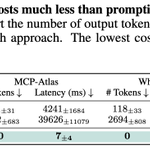
⚡ With just 100 successful trajectories for training, OAT runs 200-5000× faster than prompting-based baselines (including GPT-5 judge).
📈 It also outperforms them on accuracy: about +20% F1 score.
So you don’t have to trade cost for quality here. You can get both.
Why I’m excited about this: successful runs are cheap and plentiful, while carefully annotated failures are not. Building diagnostics on top of the data we already have feels like the right direction as agent systems grow longer and more complex.
Huge thanks to my amazing student @Samuel861025 for leading the effort, and collaborators from Microsoft Research @ShaleenDeep and Yiwen Zhu.
📄 Paper: arxiv.org/abs/2607.12747

Samuel (Min-Hsuan) Yeh retweeted

All of my iclr review batch are quite slop. some interesting patterns of how AI slops:
1. agent tends to spend a shit ton of resource and paper real estate on ablations or experiments that are too minor to matter
2. likes to use a lot of numbers. real interesting point is buried. one abstract has like 15 numbers in it.
3. either overclaims something aren't true or be so paranoid that every claim comes with 3 disclaimers
I suspect a lot of them don't just use AI to write the manuscript but also use agent to come up with what to run or what direction to take. As a result, you get very rigorous tables but with no substance.
Samuel (Min-Hsuan) Yeh retweeted
AI agents are becoming increasingly autonomous. But our ability to monitor and diagnose their behavior is lacking.
I gave a talk at the Simons Institute, covering our latest NeurIPS'26 papers on how to quantify agent progress and diagnose failures at the fine-grained, turn-by-turn level.
Video is now available:
🎥 youtube.com/live/5vBzKW3-wAQ
-------
Tracing Agentic Failure from the Flow of Success
arxiv.org/abs/2607.12747
Neglected Free Lunch from Post-training: Progress Advantage for LLM Agents
arxiv.org/abs/2606.26080
Hide-and-Seek in Trajectories: Discovering Failure Signals for VLA Runtime Monitoring
arxiv.org/abs/2605.30834

Samuel (Min-Hsuan) Yeh retweeted

🛑 Does post-training teach LLMs new agentic skills, or just sharpen what they already know?
[1/11] Introducing Sharpening Tax 🧾 to measure the hidden cost of post-training!

Samuel (Min-Hsuan) Yeh retweeted

"Better research starts with better idea management"
Very excited to share my work done at @Google!
🎯 𝐀𝐈𝐌: 𝐀𝐠𝐞𝐧𝐭𝐢𝐜 𝐈𝐝𝐞𝐚 𝐌𝐚𝐧𝐚𝐠𝐞𝐦𝐞𝐧𝐭 𝐟𝐨𝐫 𝐀𝐮𝐭𝐨𝐦𝐚𝐭𝐞𝐝 𝐑𝐞𝐬𝐞𝐚𝐫𝐜𝐡
We humans do research through trial and error—and so do AI research agents! Along the way, numerous ideas and hypotheses emerge as potential research directions. But how should these ideas be organized, evaluated, and developed? And which ones deserve the next experiment?
📄 Paper: arxiv.org/pdf/2609.38445
🌐 Project Page: imhgchoi.github.io/agentic-i…
🤗 Huggingface: huggingface.co/papers/2609.3…

Samuel (Min-Hsuan) Yeh retweeted

Robot experience contains more information than a final “success” or “failure.”
Outcome labels are relatively easy to collect, but detailed annotations of when things go wrong are costly to obtain and difficult to verify. Yet this feedback is essential for monitoring robots during execution.
Our paper, Hide-and-Seek in Trajectories, has been accepted to NeurIPS 2026! 🎉 We show how to turn coarse outcome labels into fine-grained failure signals.
A failed attempt can still contain many correct actions. Hide-and-Seek combines two contrastive objectives—one compares successful and failed executions to identify failure signals, while the other sharpens when those signals emerge within a failed execution. Both learn from outcome labels alone, without any step-level annotations.
🎯 𝐒𝐭𝐚𝐭𝐞-𝐨𝐟-𝐭𝐡𝐞-𝐚𝐫𝐭 𝐦𝐮𝐥𝐭𝐢-𝐭𝐚𝐬𝐤 𝐟𝐚𝐢𝐥𝐮𝐫𝐞 𝐝𝐞𝐭𝐞𝐜𝐭𝐢𝐨𝐧 under conformal prediction, evaluated in simulation and on a real robot.
⚡ +13.1 𝐩𝐞𝐫𝐜𝐞𝐧𝐭𝐚𝐠𝐞 𝐩𝐨𝐢𝐧𝐭𝐬 𝐡𝐢𝐠𝐡𝐞𝐫 𝐛𝐚𝐥𝐚𝐧𝐜𝐞𝐝 𝐚𝐜𝐜𝐮𝐫𝐚𝐜𝐲 𝐚𝐧𝐝 𝐨𝐯𝐞𝐫 2,000× 𝐟𝐚𝐬𝐭𝐞𝐫 than the evaluated VLM-based monitor on LIBERO-10 with OpenVLA.
These signals also suggest potential for process-level reward modeling, with promising results for inference-time policy steering.
What excites me most is how much useful feedback we can uncover from the experience robots already collect, even when the labels tell us only the final outcome.
🤝 Grateful to my collaborators @Wendi_Li_, @Changdae_Oh, @Samuel861025, @zsoltkira , and @hagenowrobotics for making this work possible, and especially to my advisor @SharonYixuanLi for their guidance and support.
🌐 Project Page: seongheon-96.github.io/hide_…
💻 Code (Coming Soon): github.com/deeplearning-wisc…
📄 Paper: arxiv.org/pdf/2605.30834


Samuel (Min-Hsuan) Yeh retweeted

Pretty interesting rethinking paper on "discouraging" self-evolving loops.
So the background is that most current self-evolving loops run their search directly on the test set. It kind of makes sense as harness search needs accurate, verifiable feedback to make grounded edits.
However, that quietly turns self-evolving loops into a form of test-time scaling, which is exactly what this paper argues.
Specifically, the paper points out that a loop that repeatedly evaluates and revises candidates against task feedback, then reports on those same tasks, is logically a test-time search procedure. So its gains should be measured against test-time scaling under matched feedback and inference budgets — otherwise you can't tell whether it discovered a better harness or just spent more compute.
With that in mind, the paper runs four methods under the same budget:
1. parallel sampling — fixed harness, k independent trajectories per task, with a self-judge or unit tests picking the final answer
2. sequential refinement — fixed harness, k retries in a row. Each round summarizes the previous attempt into context and tries again (essentially prompt refinement)
3. harness evolution — the standard self-evolving loop. One shared harness, revised each round from feedback pooled across all tasks
4. harness scaling — the per-instance counterpart. Each task evolves its own harness
The results are very interesting.
Harness evolution doesn't beat plain parallel sampling, and without verifiable feedback it can even fall below single-attempt direct sampling with the initial harness.
Its gains also show up at pass@5 but barely at pass@1, which implies that the improvement comes from taking multiple attempts, not from the harness getting better.
And on a disjoint search/eval split the evolved harness transfers almost nothing to held-out tasks, which means the edits memorize task-specific fixes rather than distill reusable strategies.
There is one caveat, which is that the "unified budget" only counts inference on the tasks, not the compute spent generating harnesses. But this flaw kind of favors harness evolution, and it already loses.
So in my opinion this really shows that existing self-evolving loops might just be a different way of applying test-time scaling, rather than some new intelligence discovery.
And we should focus more on making generalizable self-evolving loops work!

Samuel (Min-Hsuan) Yeh retweeted
Scaling outcome-based RL won't solve long-horizon agentic tasks. Credit assignment is the bottleneck, and turn-level reward is inevitable.
The question is how to get it. Process labels are expensive; we all know that.
Excited to release TRACE: Turn-level Reward Assignment via Credit Estimation for Long-Horizon Agents. No trained critic, no process labels, no Monte Carlo continuations, no strong LLM judge. 🧵
📄 arxiv.org/abs/2607.13988
🤔 The core problem:
Outcome rewards work well when a task contains a short reasoning trace and an easily verified answer. But agents may perform tens or hundreds of tool interactions before responding.
A single final reward tells us whether the agent succeeded, but not which tool calls uncovered decisive evidence, which were redundant, or which sent the agent down the wrong path. This makes RL increasingly sparse, noisy, and inefficient as trajectories grow longer.
⚙️ Our approach: TRACE
TRACE assigns credit at individual tool-call boundaries.
For each trajectory prefix, a frozen reference model measures how much more predictable the gold answer has become. TRACE converts this into a state value and uses temporal-difference changes to reward each interaction:
→ Positive credit when a tool call moves the agent closer to the answer
→ Near-zero credit when it adds redundant information
→ Negative credit when it moves the agent away from the answer
Probability to predict the final answer remains the global training objective; turn-level rewards simply reveal which actions contributed to it.
🔍 Why the formulation matters:
The turn-level rewards telescope across the trajectory. Repeating searches or reopening the same evidence cannot artificially accumulate additional one-step credit.
TRACE can also propagate delayed progress backward: if a search surfaces a promising page and a later `open` reveals the decisive evidence, both interactions can receive appropriately localized credit.
📈 The results:
Using pure RL (without cold-start SFT, agentic mid-training, or live-web training data), TRACE substantially improves long-horizon search:
→ Qwen3-4B: 7.2 → 35.6 on BrowseComp-Plus
→ Qwen3-30B-A3B: 8.4 → 42.6 which is on-par with the Tongyi-DeepResearch-30B-A3B.
Under controlled comparisons with the same models, data, tools, and outcome rewards, TRACE also outperforms GRPO, GSPO, and GiGPO across both model scales.
📄 Paper: arxiv.org/abs/2607.13988
Led by the amazing @LeitianT, and huge thanks to our collaborators at Microsoft Research: Baolin Peng, Wenlin Yao, Tao Ge, Hao Cheng, Mike Hang Wang, and @JianfengGao0217.

Introducing our new work!
"Tracing Agentic Failure from the Flow of Success"
with Yiwen Zhu, @ShaleenDeep, @SharonYixuanLi
🔗arxiv.org/pdf/2607.12747
Which step broke your agent? Existing methods are slow, expensive, or need annotations you don't have. There's a better way. 🧵

And it's fast. Zero token cost at inference, 200–5000x faster than prompting frontier LLMs, runs in <1GB VRAM. Real-time failure attribution is finally practical.

If you find our work interesting, please consider supporting it on Hugging Face!
🤗 huggingface.co/papers/2607.1…

Samuel (Min-Hsuan) Yeh retweeted
🔥 Introducing our newest work!
“𝐌𝐮𝐥𝐭𝐢-𝐀𝐠𝐞𝐧𝐭 𝐋𝐋𝐌𝐬 𝐅𝐚𝐢𝐥 𝐭𝐨 𝐄𝐱𝐩𝐥𝐨𝐫𝐞 𝐄𝐚𝐜𝐡 𝐎𝐭𝐡𝐞𝐫”
with wonderful collaborators, @JiatongLi0418 , @Wendi_Li_ , @xwang_lk , and @SharonYixuanLi
🔗 arxiv.org/pdf/2607.11250
If you find our work interesting, please support us on huggingface!
🤗 huggingface.co/papers/2607.1…

Samuel (Min-Hsuan) Yeh retweeted
Progress Advantage paper has received the best paper award from #ICML2026 RLxF workshop, congrats to all the amazing students who made this happen!
@Changdae_Oh @Wendi_Li_ @seongheon_96 @Samuel861025
The oral presentation will take place 9:10 AM-10 AM on July 10th in KST. Please check it out if you are around!
