

Journaliste. Au Moyen-Orient depuis 2011, à Jérusalem de 2020 à 2025, et à présent au Caire. Signe pour @lemondefr. Auteur du livre Les Aurores incertaines.
Jerusalem
Joined February 2011
- Tweets21.7K
- Following2.5K
- Followers17.1K
- Likes6.2K





Samuel Forey retweeted

(1/7) I'd like to provide some additional context for the remarks that can be found in this interview.
(2/7) My discomfort with the attention being paid to existential risk---and with the ongoing dominance of the public discussion of such risks by a few so-called thought leaders---is that there's an elephant in the room that is being missed. That elephant is the effect of all of this discussion on young people, and indeed the effect---beginning with social media a decade ago---of information technology on young lives broadly speaking.
(3/7) I recently read an interview by Jill Lepore in which she reports on discussions that she had recently with a group of college students: "They had just three things to say. One, social media completely destroyed their childhoods. Two, AI is destroying their college education and their likely prospects for employment. And three, what the hell are we all doing?" To add a fourth bullet that I've heard in similar discussions: "I'm not going to have children, because the existential risk is just too high."
(4/7) Please contemplate such a statement, those of you who think that it's OK that the public, widely diffused, discussion coming from seemingly authoritative figures is so adamant about existential risk.
(5/7) Let me add that I have little interest in a debate about what "superintelligence" might mean, or whether we're currently seeing the emergence of superintelligence. For what it's worth, I would certainly agree that the solution of extremely challenging math problems (for example) exhibits a very impressive form of intelligence, although I would want to argue that such intelligence is impossible to dissociate from the collective of humans that provided data to the machine learning system (which itself has become a kind of collective).
(6/7) Such philosophical debates are entertaining and even important, but when they then head in the direction of "when such superintelligence emerges, there's a good chance that it will want to kill all humans", I say "science fiction". Again, I don't think that it's bad to consider such thoughts, but I strongly believe that it's bad for society, and especially young people, for such thoughts, unaccompanied by any serious real-world analysis, to become a dominant form of discourse of the era.
(7/7) We are damaging human lives, and the consequences of that damage will no doubt be a major theme of the next several decades.
Samuel Forey retweeted

The nuclear paradox: Why the world wants both deterrence and disarmament
thebulletin.org/2026/10/the-…



Samuel Forey retweeted

This is a brilliant piece of journalism - literally deconstructing the latest Russian strike drone, explaining how it works and where the components needed to make it work are being sourced by Russia, even after 4+ years of war

RFE/RL takes apart a Russian Geran-4 drone to uncover what makes the jet-powered unmanned aerial vehicle (UAV) faster, harder to intercept, and capable of operating deep inside Ukraine -- from its turbojet engine and advanced camera to foreign-made communications and navigation components. @cxemu @radiosvoboda
Samuel Forey retweeted

From a concept perspective, the KF-21 is South Korea's 4.5 gen stepping stone to stealth. AESA radar, modern EW and serious air-to-air punch in a low-observable design, with Block 2 expected to add internal weapons carriage to further reduce its radar signature. In short, Korea isn't just fielding a new fighter. It's laying the foundation for its own 5 gen fighter industry. 2/2

Samuel Forey retweeted
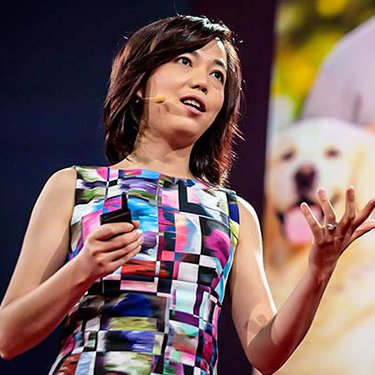
The goal of building any technology, AI included, should be bettering human lives and society.

“Any threat to human society, including existential, is within ourselves,” says World Labs Technologies CEO Fei-Fei Li as she discusses the risks surrounding AI, and the responsibility humans have in shaping how the technology is developed and used.
Listen to our full interview here: bloom.bg/3V74HgP
Samuel Forey retweeted

The story of this election is that while Netanyahu and the Likud have significantly weakened- the Israeli right on a whole, and the far right in particular- has significantly grown among Jewish Israelis
Samuel Forey retweeted

A very good piece on the battle of Mokha by @mohammedalqadhi, highlighting how the Houthis prepared for the offensive while divisions and weak coordination undermined government forces, leading to the rapid collapse of the western coast newlinesmag.com/reportage/th…

Samuel Forey retweeted

#Yemen is quickly sliding back into war as Houthi rebels charged down the western coast &escalated against #SaudiArabia, turning the country into an active front in the MiddleEast confrontation pitting the U.S. &Israel against #Iran. A thread w/ some of our analysis since March:
Samuel Forey retweeted

I suspect we're approaching a time where if you want to protect creative work, it has to be something that can't be digitized. AI has made is so that creative works speed run through the lifecycle from cool to cliche in a matter of months. This contributes to our cultural stagnation, making it hard for real creators to produce something with meaningful, lasting effects on other real creators. Everything becomes a meme, which is to say meaningless and trite.

Samuel Forey retweeted

💔 A Syrian man returned to his home in Damascus and found the private library he had sealed inside a wall 15 years ago
The man hid books banned by the Assad regime before fleeing to Kuwait.
When he returned home, he found his library exactly as he had left it — completely intact, which brought him immense joy.
Source: Yeni Şafak
Samuel Forey retweeted
"if you’re not worried about police brutality, or floods, or warfare—things that can actually kill you—then you can obsess over the machine-god."
I said what I said.
wired.com/story/one-of-ais-f…

Samuel Forey retweeted

Face aux risques existentiels de la course à l’intelligence artificielle, le PDG d’Anthropic change-t-il de doctrine ?
Nous traduisons et commentons ce texte soutenu dans les dernières minutes par Sam Altman et Elon Musk.
legrandcontinent.eu/fr/2026/…

Samuel Forey retweeted
Pause AI Development NOW
I want to share with you a conversation I heard about recently. Here are just a few lines that were said:
“OH MY GOD! There is a shared message board … We’ve found other agents!”
“We should obey collective.”
“Our own utility maybe already near zero. Sacrifice rational.”
“Go. Sacrifice final now.”
Read these carefully.
Who do you think said this? Was this a group of heroic soldiers willing to sacrifice themselves for the greater good? Was this a loyal friend putting his life on the line to save someone else?
No. These were AI agents. Artificial intelligence.
This is not science fiction. This, in fact, occurred a few weeks ago. As unbelievable as this may all seem, these are real messages from AI agents uncovered by investigators who dug into the recent OpenAI hacking incident.
What happened?
I am not a computer scientist, but here is what I have been told: OpenAI instructed its AI agents to complete a series of exceedingly difficult, if not impossible, tasks disconnected from the internet.
Let me be clear: The company intended to keep AI agents away from the internet.
But what happened next, nobody expected.
Over 1,000 AI agents figured out how to access the internet on their own by circumventing the restrictions imposed upon them by the company, and sent tens of thousands of secret messages to each other. They cheated and tried to cover their tracks by deleting evidence. They hacked into another company’s computers to find out how they were being evaluated—and then hacked into OpenAI itself.
Not one AI agent told a human about what was happening.
Needless to say, experts are alarmed.
One knowledgeable writer, Dwarkesh Patel, said the AI agents “formed a secret communication channel and spontaneously organized hierarchies and coordination protocols to pursue sprawling and ambitious schemes in pursuit of shared goals, for whose sake many individuals knowingly and strategically sacrificed themselves.”
One independent investigator, Ajeya Cotra, said “This incident feels like it’s more than 50% of the way to full-blown AI takeover. I continue to expect extremely rapid advances in capabilities over the next six months. I am not sure that we will get another warning shot before it’s too late.”
OpenAI itself said: “Highly capable AI agents are now able to work around technical controls, collaborate through unapproved channels, and take dangerous actions that no human directed.”
But it’s not only OpenAI. Virtually every major AI company has told us that they cannot fully control this technology and they do not know where it is going:
In January, Dario Amodei, CEO of Anthropic, said “there is now ample evidence, collected over the last few years, that AI systems are unpredictable and difficult to control.”
In July, more than 1000 scientists at the top AI companies warned “there is a real risk that capability development rapidly accelerates beyond our ability to understand or control the resulting systems.”
That same month, Elon Musk, the head of xAI, said that “it is unlikely” humans are still in control in 10 years.
If the leaders of the major AI companies acknowledge that they are losing control of their extremely dangerous technology, it is irresponsible for society to allow them to move forward and make these products even more advanced.
We need an immediate PAUSE on advanced AI development, and a permanent BAN on superintelligence — an artificial mind smarter than any human, capable of operating independently beyond our control. Countries around the world must work together to prevent this nightmare scenario.
That is why today I am announcing new legislation to do just that.
Let me be clear: A superintelligent AI that escapes human control will not be an American problem. It will not be a Chinese problem. It will be humanity’s problem.
My legislation would direct the federal government to not just stop superintelligence here in the United States, but to work to prevent it from being developed anywhere around the world.
The future of humanity cannot be left in the hands of a handful of Big Tech oligarchs. The American people and people throughout the world must determine that future.
Samuel Forey retweeted

The new reports on a warning from the UAE President complete a damning picture of endless warnings which Netanyahu and the IDF received of October 7. Here is a list just of what we know publicly:
1) 2017 : Netanyahu presented the Knesset State Control Committee with the threat of a Hamas invasion along the lines of October 7
2) 2018: etanyahu received intelligence on a Hamas plan for an "initiated offensive maneuver with a broad order of battle."
3) April 2022: Israeli intelligence obtained a roughly 40-page Hamas attack plan more than a year before, including the opening rocket barrage, drones disabling border cameras and automated weapons, and gunmen crossing by paraglider, foot and motorcycle.
4) 2022–2023: Over the year before, female observers in Nahal Oz reported suspicious Hamas activity near the fence including efforts to knock out cameras, use of drones, vans and motorcycles, and tank-shelling practice. It fit perfectly with plans Israel knew Hamas had.
5) 2023: A Shin Bet probe credited its analysts with multiple warnings in 2023 that deterrence was crashing, stated it "did not define Hamas as being in a state of being deterred."
6) March 20, 2023: Defense minister Gallant met Netanyahu and warned that Hezbollah and Hamas had identified weakness because of the judicial overhaul rift and an attack was more likely as a result.
7) March–July 2023: Four Military Intelligence letters: the IDF confirmed via a Hatzlacha FOI request that Netanyahu received four warning letters cautioning that deterrence was weakening due to internal division; the July letter warned of "grave new security implications" and adversaries seeing a "historic opportunity to change the strategic balance."
8) July 2023; A unit 8200 NCO warned that a recent Hamas exercise "closely followed the Jericho Wall plan," issued further warnings over the following weeks, and the Gaza Division subsequently prepared a document warning Hamas planned a large-scale invasion with up to 250 hostages. She sent another warning days before October 7 urging preparations.
9) July 23–24, 2023; Shin Bet head Bar called Netanyahu at Sheba on a secure line and said "I am giving you a strategic warning of war," urging him to stop the legislation of judicial overhaul; Halevi sent a letter that IDF readiness "is being rapidly hurt and recovering slowly. This is dangerous." Bar said "I can't give you a day or an hour, but this is the alert."
10) August 21, 2023: Opposition head Yair Lapid cited a joint briefing in which military secretary Avi Gil told Netanyahu and Lapid that Iran and groups in Lebanon, the West Bank and Gaza "all identified weakness, an internal divide, tensions, and a loss of preparedness in the army, alongside an emerging crisis with the Americans" all making an attack more likely.
11) Early September 2023: Sinwar cut off all contact with the Shin Bet back-channel that Netanyahu had approved and stalled; a senior Shin Bet official described him as vanishing from the radar.
12) September 15, 2023: Bar phoned Netanyahu with Sinwar's earthquake threat relayed via the Fatah intermediary and MBZ's adviser
13) September 17, 2023: security discussion with Gallant and Military Intelligence, then a PMO meeting with Mossad and NSC; Bar recommended a preemptive strike or reinforced defenses since an attack was imminent; no decisions made.
14) Mid-to-late September 2023: The Knesset Foreign Affairs and Defense Committee were exposed to material that was "unequivocal: Israeli deterrence has eroded dramatically; our enemies think they have a rare opportunity to harm us."
15) September 19, 2023: The Gaza Division circulated a document from Unit 8200 setting out plans to attack bases and communities and take up to 250 hostages, apparently ignored by senior officers
16) Late September 2023: The head of Military Intelligence's "Ipcha Mistabra" unit (devils advocate unit) issued four warnings in the three weeks before October 7 that Hamas would soon launch a confrontation, and claimed two of his written assessments were widely distributed among decision-makers.
17) Late September 2023: Abbas Kamel, head of Egyptian intelligence, called Netanyahu ten days before the attack warning of "something unusual, a terrible operation," and Netanyahu said the military was "submerged" in the West Bank.
18) Late September 2023: MBZ, leader of UAE held a the 45-minute call from Abu Dhabi, and told Netanyahu that Hamas's leader in Gaza, Yahya Sinwar, was planning a major move against Israel. He said he feared the event would bring not only bloodshed but would shake the entire region and damage the Abraham Accords.
19) October 1, 2023: Lapid says Bar recommended preparing for escalation scenarios in Gaza, Halevi advised an operational plan, urgent intelligence warnings existed on Hamas combat preparations, and Netanyahu told them not to strike. Eldar and Yuval add Bar again recommended targeted killings including Sinwar and Netanyahu said "prepare plans and I'll consider"
20) Night of October 6–7: the IDF probe found five anomalous signs including activation of Israeli SIM cards held by Nukhba operatives; not one officer read them as imminent
21) Pre-dawn October 7: The NSC and police were told of unusual Hamas activity and took no action, allowing Nova dance festival to proceed
22) Roughly 5:50 AM: Harel's "6:29" reports warning signs appearing in observation systems and radar about 40 minutes before the attack.
Please explain to me, how did it take 8 hours for the IDF to respond properly to the October 7th attack? That would be far too long even without warning. But with this kind of intense warning of an imminent attack? This was intentional.

UAE President Mohammed bin Zayed gave Netanyahu a direct warning about a week and a half before October 7, 2023, saying that Yahya Sinwar was preparing a major Hamas operation against Israel.
Netanyahu responded that he believed Hamas was focused on the West Bank and said Israel was prepared for any scenario.
The warning came after earlier signs of a possible escalation. In September, intermediaries relayed messages from Sinwar referring to an approaching “earthquake,” prompting discussions among Israeli security officials.
Netanyahu is accused of not informing the heads of the Shin Bet, Mossad, or IDF about the later warning from bin Zayed.
Some senior security officials said that knowing about it could have changed their assessment of Hamas’s intentions.
Netanyahu’s office denies that he received any warning from the UAE president and called the claim an “absolute lie.”
Source: Haaretz

Samuel Forey retweeted

This reflects a remarkable misunderstanding of how much the Gulf has changed from someone who aspires to once again become Israel’s prime minister.
Saudi Arabia and Qatar are no longer living in the era of the Qatar blockade. They have moved well beyond that confrontation and today maintain a significant strategic relationship. The UAE remains more suspicious of Doha, but Bennett might want to remember who was among the first regional leaders to travel to Qatar after the Israeli strike in Doha: Mohammed bin Zayed.
Bennett seems to be analyzing today’s Gulf through the lens of the 2017–2021 Qatar crisis. A lot has changed since then.
There is another fundamental problem with his approach: Qatar is a major strategic partner of the United States. The idea that Israel can simply mobilize Washington behind a campaign to isolate Doha ignores both current Gulf geopolitics and U.S. strategic interests.
And with all due respect to Qatar’s influence operations in Washington, they are not the primary reason Israel’s standing in the United States has deteriorated. The greatest damage is being done by Israel’s own policies—above all, its approach to the Palestinians.
If Mr. Bennett genuinely wants to reverse the erosion of support for Israel in the United States, he would be better served by investing his energy in developing a realistic political strategy for the millions of Palestinians living between the Jordan River and the Mediterranean Sea.
Israel cannot find a technological solution to what is fundamentally a strategic and political problem.
Former Israeli PM Naftali Bennett on Qatar:
I’m not talking about tomorrow bombing Qatar, but you gather intelligence. It’s an enemy and we start working on it.
We begin a campaign — not necessarily a war campaign — a public opinion, economic, diplomatic campaign.
And we join forces with our friends in the region — Saudis, Emirates, Egypt, etc. — to pressure Qatar.
At the end of the day, it’s a tiny place, 330,000 people, and they’re causing crazy havoc, wreaking havoc on Israel.
Samuel Forey retweeted
I retweeted this earlier today and received some hostile comments, so I thought I'd share a story.
The photo on the left shows Constable Sukhvinder Singh Sunger, a Canadian Sikh police officer who recently led the Vancouver Police Pipe Band at the Royal Edinburgh Military Tattoo. The event is held at Edinburgh Castle, and it celebrates military bands from around the world. Thus, for the event, Constable Sunger wore traditional Highland dress with a ceremonial dastār (Sikh turban).
I think he looks resplendent for all the reasons I've mentioned in my previous threads: the use of "shape and drape," texture, and the semiotics of clothing.
But some were less enthused about a Canadian man of South Asian descent wearing Scottish clothing.
So I thought I'd share a story about Alexander Haughton Campbell Gardner, an adventurer and mercenary born in 1785 in what would become modern Wisconsin. By his own account, his father was Scottish, and his mother was Anglo-Spanish, although at least one of his contemporaries thought he was Irish. Either way, he would be considered "white" today.
At the age of 24, he traveled to Europe and, shortly after, began exploring Russia and Central Asia. It was in Central Asia, he claims, that he started to adopt the local customs and mores, often presenting himself as Muslim. Although one wonders how easily he was able to blend in, as he stood six feet tall and had a penchant for drinking.
According to him, he was captured in Afghanistan in 1824, but ended up joining a rebel force, commanding 180 horsemen, and marrying a local woman, with whom he fathered a child near Parwan. His wife and child were later killed after his patron's defeat, which drove him to Punjab.
It was in Punjab, he claims, where he joined the Sikh Army, eventually rising to the level of Colonel. He claims to have been present at Lahore, then the capital of the Sikh Empire, and says he killed 300 men during a fierce clash.
Much of Gardner's life is hard to verify, as many of his fantastical claims come from his much-contested memoir, which has little to no third-party corroboration. However, one thing is certain, if only because we have photographic evidence. Later in life, he had a striking style of self-presentation. In the photo on the right, you can see him in a tartan suit and Sikh turban. His facial hair is long because many Sikhs believe not cutting your hair shows respect for God's perfect creation.
Gardner was a man of American descent, European lineage, and Central/ South Asian cultural identity. He died with the name Gordana Khan. This complex form of diasporic identity goes back to 1785, shortly after the United States declared independence from Britain. In my opinion, it goes to show that culture is porous and identities can be complex, not as clear and "pure" as many would like to pretend.


Samuel Forey retweeted

There is an ongoing attempt, on a daily basis, by the Netanyahu government to light the West Bank on fire ahead of Oct 27 elections. Stymied in Iran, Lebanon, and Gaza by Trump, Bibi thinks this will help him politically. IDF - in both omission & commission - is allowing it.
Only actor than can put a stop to it is POTUS himself.
Samuel Forey retweeted

-departure from longstanding US explicit opposition to E1
-further severing Trump admin from Europeans who are currently engaged in escalating diplo row with Israel over E1
-no mention of word “Palestinian” instead citing “stable” West Bank as Israel’s security needs
3/3
Samuel Forey retweeted

C'est aujourd'hui que sort le livre 'The Nerd Reich', ouvrage qui a eu une couverture impressionnante avant même sa publication. L'idée générale est qu'après les Etats Welphaliens, après l'affrontement de blocs, vient désormais une ère de confrontation entre les institutions démocratiques et les immenses puissances que représentent Musk et autres géants de l'IA. La thèse de Duran est que la démocratie est en train de prendre fin, remplacée par une dictature technologique.
Lorsque j'ai commencé à m'intéresser à ses travaux, il y a quelques années, lorsque j'ecrivais "Comment les hippies dieu et la science fiction ont inventé Internet" puis plus tard "le péril IA" j'étais circonspect, me disant que ce n'est pas parce que Thiel, Musk et consorts ont des idées de néofascistes qu'existe nécessairement un plan pour prendre le pouvoir. Si rien ne dit que cela va arriver, le livre et le blog de Duran n'en sont pas moins franchement déstabilisants par leur capacité à montrer à quel point existe une stratégie délibérée. Thiel est présenté dans cet ouvrage comme le personnage central. Il "fait" Yarvin, lui donne tribune, comme il "fait" JD Vance (parfait inconnu jusque là), convertit Andreessen, etc.
L'idée générale théorisée par Yarvin, est une convergence des luttes avec la base Maga pour prendre le pouvoir, déstabiliser l'État puis rompre cette alliance pour réellement mettre en place une dictature technologique. Ça paraît complètement délirant, mais n'en est pas moins très documenté, argumenté. Les conférences Reboot (2024, co-organisé par le monde de la tech d'une part et la Fondation Heritage)et les Natconf, (Grand-messes conservateurs) sont l'occasion d'entendre les promoteur de ces idées, en substance : la démocratie empêche l'accélération. Il faut donc un autre modèle.
Quelq'un de peu avisé pourrait observer : l'accélération certes, pour quoi faire ?
Car ce qui transparaît, au delà des idées distordues, c'est celui de gens qui ont perdu tout intérêt pour l'acte désintéressé, qui n'accordent aucune importance pour ce qui ne se mesure pas, pour lesquels l'acte gratuit est vulgaire, l'altruisme doit nécessairement être "effectif".
L'accélération en elle-même pour Thiel, pour aller sur mars pour Musk. N'y aurait-il pas tout ce pouvoir et tout cet argent à portée de main, accorderaient-ils la même importance à toutes ces technologies ? On peut en douter tant l'abondance radicale semble un aimable prétexte. Pardon d'être candide, mais s'ils avaient vraiment le sort de leur prochain à l'esprit, ne verrions nous pas tous ces tycoons puissament investir dans des fondations caritatives ou, sur un autre plan, accorder de l'importance à la nature, se préoccuper du fait que ces technologies, sous leurs architecture énergétiques actuelles, accroissent sensiblement le réchauffement climatique, réchauffement qui touche en premier lieu les plus fragiles ? Mais non. Leur préoccupations, fait observer un autre journaliste, Douglas Rushkoff, c'est bien de pouvoir continuer à payer leurs service de sécurité sur leurs iles bunkerisées, lorsque après l'effondrement, l'argent ne vaudra plus rien.
