

SRAP supports communities as they protect themselves from the negative impacts caused by factory farms.
United States
Joined April 2009
- Tweets4.6K
- Following701
- Followers1.3K
- Likes1.6K
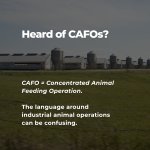






The language around industrial animal operations can be confusing.
@GreenLatinos and @SRAProject created a bilingual English–Spanish glossary to help Latino/a/e communities understand the terms and conversations surrounding CAFOs.
Explore + share: greenlatinos.org/introducing…


BIG NEWS! 🎉 We’re incredibly proud to celebrate our own @CraigWcafarms92, recipient of the 2026 @ASPCA Farm Animal Welfare Award!
For more than a decade, Craig has stood up for farmers & farm animals. We can’t think of anyone more deserving.
#FarmAnimalWelfare #ProtectFarmers

Socially Responsible Agriculture Project (SRAP) retweeted

A pact between North Carolina and Smithfield Foods “failed miserably” on managing waste from hog operations. Here’s why:
insideclimatenews.org/news/3…

Socially Responsible Agriculture Project (SRAP) retweeted

A new @ewg report finds that North Carolina raised more than 421 million chickens and turkeys in 2024, according to federal data.
The birds generated more than 3.6 million tons of manure, much of which remains largely unregulated by the state.
thenewlede.org/2026/08/north…

Socially Responsible Agriculture Project (SRAP) retweeted

The Farm Bill is a huge, complex piece of legislation. Recently, the Senate Agriculture Committee’s farm bill draft failed to move forward, decreasing the chances that we’ll see a new farm bill in 2026. Stay up to date here ⬇️
farmaid.org/issues/farm-poli…

Socially Responsible Agriculture Project (SRAP) retweeted

Taylor Farms has quietly become one of the most powerful companies in America’s food supply.
The company now produces more than 265 million servings of fresh food every week, much of it sold without the Taylor Farms name attached.
Its products reach grocery stores, restaurants, schools, hospitals, hotels, and cafeterias across the country.
It produces 40% of the salad kits sold in America and has grown into a $7 billion company with operations spanning multiple countries.
That enormous reach means when something goes wrong, the consequences can spread nationwide.
The 2026 Cyclospora outbreak put that risk on full display, sickening thousands of Americans and resulting in at least two deaths.
But Taylor Farms’ power extends beyond the produce aisle.
Farmers face fewer buyers, smaller suppliers struggle to compete, and the company has the resources to spend millions on political contributions and lobbying.
Farm Action’s new report investigates how Taylor Farms became this powerful and what its rise reveals about consolidation across our food system.
The answer goes far beyond one company or one outbreak.
America needs a food system with more competition, stronger oversight, greater transparency, and more opportunities for family farmers to reach consumers: 🧵

Contract poultry growers fought for decades to win basic protections. Now, those protections are under threat.
Join Growers Unite on August 26 to learn what’s at stake—and what comes next. ⬇️
Register: sraproject.info/4wG1py5
#FairShake #ProtectFarmers
Socially Responsible Agriculture Project (SRAP) retweeted

I was quoted in this article. Harsh words but the truth hurts!

A Nebraska feedlot is on track to become the nation’s largest—200,000 cattle on more than a square mile of concrete, generating billions of pounds of manure every year.
“They’re destroying Dundy County,” says local rancher Brad Dixon.
#StopFactoryFarms insideclimatenews.org/news/0…

Socially Responsible Agriculture Project (SRAP) retweeted
Taylor Farms isn’t just supplying the lettuce at your local grocery store.
Its reach extends to fast-food restaurants, schools, hospitals, universities, hotels, corporate cafeterias, and independent restaurants across America.
Most consumers would never know that these completely different places can share the same supplier.
That’s what makes consolidation in our food system so difficult to see until something goes wrong.
The Cyclospora outbreak has pulled back the curtain on just how interconnected our food supply has become.
A truly resilient food system should have many farmers and suppliers feeding our communities, not countless menus depending on the same few companies.

A Nebraska feedlot is on track to become the nation’s largest—200,000 cattle on more than a square mile of concrete, generating billions of pounds of manure every year.
“They’re destroying Dundy County,” says local rancher Brad Dixon.
#StopFactoryFarms insideclimatenews.org/news/0…
Socially Responsible Agriculture Project (SRAP) retweeted

The world's largest feedlot is now open in Nebraska. One square mile of concrete and 200,000 cows in a giant animal factory. This will be the future of American agriculture if the industry gets its way. Let's choose something else. by @georgina_gustin
insideclimatenews.org/news/0…
Socially Responsible Agriculture Project (SRAP) retweeted

Brad Dixon, who grew up in the area and raises cattle himself, put it bluntly: “They’re destroying Dundy County.”
nobull.mikecallicrate.com/20…

An Oregon CAFO sprayed liquid manure onto a neighbor’s home and a public highway.
Yet it was the only facility fined by Oregon regulators in the past two years—despite 41 CAFO citations and warnings in 2025 alone.
Accountability requires enforcement.
statesmanjournal.com/story/t…

Socially Responsible Agriculture Project (SRAP) retweeted
BREAKING:
The Senate Ag Committee just took three landmark votes on pivotal issues for independent farmers.
Pesticide immunity.
Mandatory Country-of-Origin Labeling for beef.
Corporate monopolization.
Here’s what happened:
First, they took one step toward delivering a huge win for farmers.
A bill to restore Mandatory Country-of-Origin Labeling is now officially included in the Farm Bill.
MCOOL empowers consumers with information on where their beef comes from, so you can support U.S. ranchers at the grocery store, and it strengthens U.S. cattle producers’ ability to compete with foreign corporations.
Second, the Ag Committee delivered a devastating blow to the MAHA agenda.
Senator Cory Booker’s amendment to reverse the Supreme Court’s pesticide liability shield unfortunately failed on a party-line vote.
Third, Senator Chuck Grassley’s amendment to codify Biden-era Packers and Stockyards Act rules also fell short.
And finally, the Ag Committee did not vote on the Save Our Bacon Act, a proposal we have strongly opposed.
Why?
It would overturn state rules like California’s Prop 12, which banned the sale of pork raised in cruel gestation crates.
Prop 12 gives independent farmers a rare market advantage over corporate producers who have not met these requirements.
The Farm Bill failed to advance, however, it leaves the ultimate question up in the air:
Will the final bill meaningfully address corporate concentration, strengthen competition, and expand market power for independent farmers?
@SenBooker

“At some point, the state needs the authority to say ‘enough is enough’ — no more CAFOs or CAFO expansions in CAFO hotspots.”

Pollution approved: Michigan just gave the green light to a massive new dairy farm that will add millions of gallons of animal waste to a region where waterways are already saturated with manure.
thenewlede.org/2026/08/michi…

Protect farmers, not corporate power!
@USDA must keep hard-won Packers and Stockyards Act protections in place. Contract growers deserve protection from corporate abuse—not more rollbacks. #FairShake
Read more from @FarmAid: farmaid.org/issues/corporate…

Socially Responsible Agriculture Project (SRAP) retweeted
“The [nitrate] assessment was intended to do the hard science to support appropriate human health protections. It’s alarming that the Trump administration has decided to undermine that process,” said Tyler Lobdell, an attorney with @foodandwater.
thenewlede.org/2026/08/epa-n…

Socially Responsible Agriculture Project (SRAP) retweeted
Most Americans assume the beef they buy is labeled with where it came from.
It often isn’t.
Congress now has the opportunity to restore Mandatory Country-of-Origin Labeling by including the American Beef Labeling Act in the Farm Bill.
You would think an organization called the National Cattlemen’s Beef Association would be leading that fight.
Instead, NCBA is lobbying against it.
That position makes a lot more sense when you realize NCBA’s corporate members include some of the world’s largest meatpackers—companies that benefit when imported beef can be sold without country-of-origin labels.
The Farm Bill should give consumers the right to know where their beef comes from and give American ranchers the opportunity to distinguish their beef from imported products.

"The family farmers, we need a seat at the table, along with the corporate farmers."
Newton County, Missouri, residents are organizing and calling for the common-sense protections every community deserves.
💚 We stand with Newton County.
Read more: koamnewsnow.com/news/local-n…

Communities don't have to face industrial livestock operations alone.
Read how residents of Freedom Township, Michigan, organized, did the research, and challenged plans for a billion-dollar biodigester project.
🔗 sraproject.info/4yHSOgu
#CommunityVoices #StopFactoryFarms
