
Cardiology (AHF, MCS & heart transplantation) fanatic. AHA FIT Laennec Award recipient. Associate Editor, HFR. Lawn tennis enthusiast & timepiece collector.
Joined March 2021
- Tweets67
- Following364
- Followers59
- Likes202


Steven A. Hamilton retweeted

🫀 JUST PUBLISHED: HF STATS 2026 is officially here!
We are thrilled to launch the 4th iteration of HF STATS 2026: Heart Failure Epidemiology and Outcomes Statistics, an updated report from the Heart Failure Society of America published in the Journal of Cardiac Failure.

Steven A. Hamilton retweeted

I built an interactive echocardiography tutorial with Claude Code.
Chapter 07: a 3D heart, the standard imaging views, the probe position, and simulated ultrasound video.
Steven A. Hamilton retweeted

🔥 Our thoughts on all things CARDIO-TTRansform
A lot of nuance to unpack here, and hopefully more analyses of this study will shed light on the monotherapy vs combination therapy subgroups.
Attached is our reproduction of the all cause mortality curves for the monotherapy populations across all 4 ATTR-CM trials (Panel A) and the overall study populations (Panel B).
Good news for patients is that we keep creeping closer and closer to the age expected survival in the modern era!


🆕CARDIO-TTRansform, the largest treatment trial yet in ATTR-CM (1,432 patients), missed its primary endpoint: rate ratio 0.89 (95% CI 0.73 to 1.09).
But baseline stabilizer use modified the effect of eplontersen (P for interaction = .017):
• Not on a stabilizer at baseline: RR 0.71 (95% CI 0.54 to 0.93), a nominally 29% lower rate of CV death and recurrent CV events
• Already on a stabilizer: RR 1.14 (95% CI 0.85 to 1.53)
In a Critical Appraisal, @HamzahAliMD, Andrew A. Girard, and @BrettSperryMD argue this reflects the limited incremental benefit of adding a silencer to a stabilizer, not an ineffective drug.
They also unpack why percent TTR knockdown is hard to compare across silencers and reflect on where combination stabilizer and silencer therapy goes from here.
opensourcecardiology.org/doi…

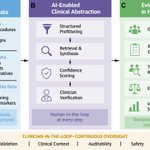
Our Leading Edge commentary, "The Impact of Artificial Intelligence-Enabled Tools on Electronic Health Record-Based Evidence Generation in Heart Failure," is out today in JACC: Heart Failure. The premise is simple: the EHR is an extraordinary repository of longitudinal data that we barely use as evidence, largely because roughly 80% of it is unstructured text and the variables that actually matter in HF (NYHA class, symptom trajectory, diuretic responsiveness, GDMT intolerance, frailty, reasons for referral) are rarely in a structured field.
We lay out where AI-enabled chart review is ready now and where it isn't, across observational research, registry abstraction, trial recruitment, endpoint adjudication, postmarket surveillance, and digital twins.
The near-term opportunity is deliberately unglamorous: clinician-supervised abstraction of shovel-ready tasks with defined criteria that can be audited against the source. We also take seriously the failure modes that don't show up in a validation paper: documentation bias, automation bias, and model drift. Deployment should be treated as the start of validation, not the end.
I am grateful to my co-authors (including mentors @ankeetbhatt , who introduced me to AI and NLP in medicine 4.5 years ago and @tremartyn ) and to the JACC:HF editorial team. @JonWCunningham @rcstarling @coconnormd @mpsotka @ProfMartinCowie @hfcollaboratory
#HeartFailure #AIinMedicine #HealthInformatics #LLM #RealWorldEvidence #JACCHF #HFCollaboratory #ClevelandClinic

1
2
72
Steven A. Hamilton retweeted

Congrats @ankeetbhatt on ADHERE-ASCVD. Multiple communication channels increased statin use in at risk or with ASCVD. Changing modalities was no more effective as a second nudge. Time from concept to completion <2 months highlights opportunity to improve operational efficiency!


Steven A. Hamilton retweeted
🫀Out-of-sequence heart transplantation remains uncommon. But it's growing.
This study found OOS allocation increased from 1.4% to 3.1%, was concentrated in a small number of OPOs & centers, & achieved similar 1-year survival to standard allocation.
🔗 bit.ly/4qhMFDS


Steven A. Hamilton retweeted

Results of the CECCY trial: #Carvediloldid not reduce #LVEF decline over 96 weeks in anthracycline-treated patients, but was associated with possible attenuation of diastolic dysfunction & cardiac remodeling 🫀 jacc.org/doi/10.1016/j.jacca…
#JACCCardioOnc #CardioOnc #cvPrev

Steven A. Hamilton retweeted
Important study in JACC: Heart Failure examining disparities in how patients reach heart transplantation after the 2018 allocation change.
The key finding: patients from more disadvantaged communities are substantially more likely to be listed for transplant after receiving a durable LVAD rather than proceeding more directly toward transplantation.
This matters because the 2018 allocation system dramatically changed the consequences of that decision. A stable durable-LVAD patient is generally Status 4, while patients requiring temporary MCS can qualify for much higher priority. Not surprisingly, bridge-to-transplant LVAD use has plummeted since 2018.
Why are disadvantaged patients still disproportionately taking the LVAD pathway?
They may present later and sicker. But that explanation only goes so far. If a patient is truly sicker, temporary MCS followed by urgent transplantation may actually be an available pathway.
I suspect a bigger issue is uncertainty during transplant selection: concerns about adherence, social support, transportation, follow-up, insurance, housing stability, or other psychosocial factors. Faced with uncertainty, committees may be more comfortable saying “LVAD first, then reassess for transplant.”
Thus, socioeconomic disadvantage may be influencing not simply whether patients receive advanced HF therapy, but which advanced therapy pathway they enter. The allocation system then magnifies that initial difference.
Importantly, this does not mean durable LVAD is poor therapy. HeartMate 3 outcomes are excellent. Nor does this registry study prove that transplant committees are consciously treating disadvantaged patients differently.
But it raises an uncomfortable question: Are disadvantaged patients being disproportionately funneled toward LVAD because of greater perceived uncertainty about their transplant candidacy?
If so, the solution isn’t simply changing LVAD priority. We need earlier advanced-HF referral and more resources to assess and address social support, adherence, and psychosocial risk so socioeconomic disadvantage itself does not become a de facto reason to choose LVAD over transplantation.

Steven A. Hamilton retweeted
Residual congestion—not simply symptom relief—drives outcomes after hospitalization for acute HF. This review introduces the ICON (Integrated Congestion-Oriented Navigation) framework, integrating lung ultrasound, VExUS, and focused echocardiography to phenotype congestion and guide bedside assessment across hospitalization (link.springer.com/article/10…). #HREV

Steven A. Hamilton retweeted
The p.Val142Ile (Val122Ile) variant is the most common hereditary ATTR amyloidosis mutation in the U.S., disproportionately affecting individuals of African ancestry. This review highlights ongoing challenges in timely diagnosis, genetic screening, access to specialty care, and equitable treatment, while outlining priorities to improve outcomes through earlier identification, multidisciplinary care, and more inclusive clinical trials. A timely and important read (link.springer.com/article/10…) #HREV @senthil_selv @KMAlexanderMD @NotNoninvasive

Steven A. Hamilton retweeted

Invasive Assessment of Right Ventricular Dysfunction Predicts Periprocedural Outcomes in Patients Undergoing Unplanned Ventricular Tachycardia Ablation @CleClinicHVTI @SroubekJ onlinelibrary.wiley.com/doi/…

Steven A. Hamilton retweeted

Today we had the pleasure of welcoming @KiranKhush1 for a fantastic grand rounds discussing the latest advances in non-invasive heart transplant surveillance. Thank you Dr. Khush for a fabulous lecture and for sharing your professional insights and experiences at noon conference!

Steven A. Hamilton retweeted
🚨 Now Recruiting: Inaugural Interventional Cardiology Fellowship Class (July 2027) 🚨
Train where complex heart disease comes to be treated!
🏥 >800 PCIs annually
📈 Left main PCI volume >4× the national average
🫀 Northern California's highest-volume TAVR center 🔬 KPNC's Structural Heart Hub
Join an outstanding group of interventional cardiologists committed to clinical excellence, innovation, and education.
Learn more and apply: residency-ncal.kaiserpermane…
@ankeetbhatt @SA_Hamilton1 @MariaAnsariMD @SalHernandezMD @JamalRanaMD @cardskrish @KPncalCVfellows
Please repost!
Steven A. Hamilton retweeted
U-CARS 2026 highlights: refined β-adrenergic signaling enabling more targeted β-blocker strategies, intercellular crosstalk driving remodeling, and HF as a multisystem (cardio-renal-metabolic) syndrome—pointing toward integrated, precision therapy (link.springer.com/article/10…). #HREV

Steven A. Hamilton retweeted
Highlights from #UCARs2025: LVAD-driven myocardial recovery, CS care, multidisciplinary shock teams, donor selection, and emerging HF therapy.
A global forum translating cutting-edge science into clinical insights for advanced HF (link.springer.com/article/10…). #HREV @StavrosDrakos

Steven A. Hamilton retweeted
VO₂max remains the benchmark for CPET in HF, but it often misses subtle functional impairment. Submaximal metrics—VAT, VE/VCO₂ slope, OUES, EOV, O₂ pulse, COP, and VO₂ kinetics—provide powerful prognostic insight and individualized care plans (link.springer.com/article/10…). #HREV

Steven A. Hamilton retweeted
Since the 2021 ESC and 2022 AHA/ACC/HFSA HF guidelines, expanding therapies including nsMRAs, incretin-based therapies, rapid GDMT optimization in acute HF, renewed evidence for digoxin, and advances in transcatheter valve repair (link.springer.com/article/10…). #HREV @SotiriaLiori

Steven A. Hamilton retweeted
Congestion is the hallmark of HF—and the leading cause of hospitalization. Yet up to 1 in 3 patients are discharged still fluid overloaded. This #3CT2025 review highlights emerging tools to improve congestion assessment and management (link.springer.com/article/10…). @Jolie_Bruno_
Steven A. Hamilton retweeted
Arrhythmias remain a major challenge in patients supported with LVADs. This state-of-the-art review highlights the high burden of AAs/VAs, the impact on RV failure, limitations of current therapies, and the need for close HF–EP collaboration (link.springer.com/article/10…). #HREV
Steven A. Hamilton retweeted
At #AHA25, @CCFcards represented 3 of 5 national finalists for the @American_Heart Laennec FIT Clinician Award, a distinction recognizing the highest level of clinical reasoning and bedside mastery among trainees nationwide.
@JLabin_MD @YashManiar0 @EliseFraserMD


