
@cardskrish
Account based inUnited States
About this account
- Account based in
- United States
- Connected via
- United States App Store
Account-level information from X, not a live location or the device used for a specific post.
Boarded Geriatrics and Cardiology, #GeriatricCardiologist, Health outcomes, RCT. Clinician/Researcher, Aging advocacy, Views are my own. R/T != endorsement
San Jose, CA
Joined March 2010
- Tweets2.1K
- Following919
- Followers841
- Likes2.7K






Ashok Krishnaswami retweeted

Health Status Outcomes 7 Years After Transcatheter or Surgical Aortic Valve Replacement in Low-Surgical Risk Patients With Aortic Stenosis: @JACCJournals

Ashok Krishnaswami retweeted
🥸 1️⃣ Patients with severe aortic stenosis and low surgical risk often live for many years after valve replacement. More than 80% survive at least 7 years, so health status long after transcatheter or surgical aortic valve replacement remains important when the two are compared.
Ashok Krishnaswami retweeted
🥸 2️⃣ The PARTNER 3 trial enrolled 1,000 patients at 71 centers in the United States, Canada, Japan, and New Zealand. Patients were assigned 1:1 to transfemoral transcatheter replacement with the SAPIEN 3 balloon expandable valve or to surgery. This analysis covers 7 years.
Ashok Krishnaswami retweeted
🥸 3️⃣ Patients completed the Kansas City Cardiomyopathy Questionnaire and the Short Form 36 at baseline, 1 month, 6 months, and yearly through 7 years. The primary outcome was the overall summary score (0 to 100). Gains of 5, 10, and 20 points are small, moderate, and large.
Ashok Krishnaswami retweeted
🥸 4️⃣ The analysis included 943 patients (494 transcatheter, 449 surgical). In Table 1, mean age was 73.5 years, 69.2% were men, and the mean baseline overall summary score was 70.9 points. At 7 years, 81.7% and 80.2% of survivors had questionnaire data (Supplemental Table 1).

Ashok Krishnaswami retweeted
🥸 5️⃣ From baseline to 7 years, the overall summary score rose by 12.9 points after transcatheter replacement (95% confidence interval 10.6 to 15.3) and 14.0 points after surgery (11.4 to 16.5). The transcatheter gain had peaked at 20.4 points at 6 months (Supplemental Table 3).


Ashok Krishnaswami retweeted
🥸 6️⃣ Figure 1 and Table 2 compare the groups over time. At 1 month, the mean overall summary score was 89.8 points after transcatheter replacement and 73.6 points after surgery, a difference of 16.2 points (95% confidence interval 14.3 to 18.1; P less than 0.001).


Ashok Krishnaswami retweeted
🥸 7️⃣ At 1 month, 92.5% of transcatheter patients and 62.4% of surgical patients had a meaningful improvement, defined as a score of 75 or higher or a gain of 10 points (Central Illustration). In Table 3, 62.6% and 33.9% were alive with a gain of at least 10 points at 30 days.


Ashok Krishnaswami retweeted
🥸 8️⃣ In Table 2, every questionnaire domain favored transcatheter replacement at 1 month: 24.0 points for social limitations, 17.7 for quality of life, 13.9 for physical limitations, and 10.5 for symptoms. Short Form 36 physical and mental scores differed by 7.6 and 4.0 points.


Ashok Krishnaswami retweeted
🥸 9️⃣ The mean score after surgery rose from 73.6 at 1 month to 88.9 at 6 months (Table 2). The overall summary score favored transcatheter replacement by 2.7 points at 6 months (95% confidence interval 1.1 to 4.4), 1.9 at 1 year (0.3 to 3.5), and 1.9 at 2 years (0.2 to 3.7).


Ashok Krishnaswami retweeted
🥸 🔟 At 2 years, 63.7% of transcatheter patients and 54.9% of surgical patients were alive with a gain of at least 10 points (Table 3; P=0.011). Cumulative response curves show a 9% absolute difference at 2 years that was no longer apparent at 7 years (Supplemental Figure 1).


Ashok Krishnaswami retweeted
🥸 1️⃣1️⃣ In years 3 through 7, the overall summary score did not differ significantly between groups (Figure 1). At 7 years, it was 82.8 points after transcatheter replacement and 84.3 points after surgery (difference minus 1.6; 95% confidence interval minus 4.1 to 1.0; P=0.22).

Ashok Krishnaswami retweeted
🥸 1️⃣2️⃣ At 2 years, social limitations (2.7 points) and quality of life (2.4 points) still favored transcatheter replacement. No domain differed significantly in years 3 through 7 (Table 2). Short Form 36 mental scores favored surgery by 1.2 and 1.3 points in years 4 and 5.


Ashok Krishnaswami retweeted
🥸 1️⃣3️⃣ At 7 years, 65.7% of transcatheter patients and 67.2% of surgical patients were alive with a score of at least 60 and no decline of 10 points or more from baseline (Table 3; P=0.695). With a threshold of 75 points, the rates were 58.4% and 61.7% (P=0.404).

Ashok Krishnaswami retweeted
🥸 1️⃣4️⃣ After recovery, scores declined by about 1 point per year. After transcatheter replacement, the gain in physical limitations score fell from 14.0 points at 6 months to 2.6 points at 7 years, and the gain in Short Form 36 physical score fell from 5.9 to 0.8 points.
Ashok Krishnaswami retweeted
🥸 1️⃣5️⃣ The time weighted average overall summary score while alive, which integrates each patient’s assessments through 7 years, was 88.2 points after transcatheter replacement and 85.5 points after surgery (mean difference 2.7 points; 95% confidence interval 1.0 to 4.4).
Ashok Krishnaswami retweeted
🥸 1️⃣6️⃣ With multiple imputation, the difference at 7 years was minus 2.5 points, toward surgery (95% confidence interval minus 5.2 to 0.2; P=0.067; Supplemental Table 4). Missing scores would need to differ by 23 points between groups to favor surgery (Supplemental Figure 2).
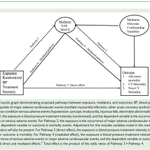
😱 Very cool figure!


Ashok Krishnaswami retweeted
🥸 1️⃣7️⃣ In exploratory analyses (Table 4), only ejection fraction showed a significant interaction (P=0.027). Among 89 patients with values of 55% or lower, the score at 7 years was 8.1 points higher with transcatheter replacement (95% confidence interval minus 1.1 to 17.2).

Ashok Krishnaswami retweeted
🥸 1️⃣9️⃣ Subgroup findings need caution. Only 31 transcatheter and 15 surgical patients with ejection fraction of 55% or lower were analyzed at 7 years. The trial did not include patients younger than 65 years or with bicuspid valves, and results apply only to the SAPIEN 3 valve.
Ashok Krishnaswami retweeted
🥸 2️⃣0️⃣ In low risk patients with severe aortic stenosis, both treatments improved health status through 7 years. Transcatheter replacement gave faster recovery and a small advantage through 2 years. Scores were similar in years 3 through 7, and assessments continue to 10 years.