

Viral ecologist with @EvelienAdri at @TheQuadram | All things phage (but mostly viromes) | Formerly at @UniofNottingham with @milja001 | All opinions my own.
Norwich, England
Joined May 2019
- Tweets694
- Following793
- Followers971
- Likes2.1K




Ryan Cook retweeted

New #MicrobiomeDigest is OUT microbiomedigest.com/2026/09…
• cattle virome / @RyanCookAMR
• mothers-adult daughters vaginal microbiome / @SarahLebeer
• microbiome biomarker recovery in CRC / André Salgado
See you next week at the Seerave & #MVIF!

Ryan Cook retweeted

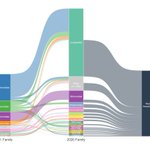
with @RyanCookAMR and many others we have been working on INPHARED to incorporate more QC data and predictions, make it scale with increased data, and some basic visualisation of the data. Files will be linked from here phagebank.uk/inphared2/ in the future

Ryan Cook retweeted

Delighted to see our work featured as a Research Highlight in @NatureEcoEvo 🧬
Ancient strep throat 🦠
nature.com/articles/s41559-0…
😷 Strep throat is nothing new – a 700-year-old mummy proves it
🙌@msabrysarhan @RyanCookAMR
#Archaeology #aDNA #Genomics #StrepThroat #ScienceNews

Ryan Cook retweeted

Salmonella Genomic Markers for Risk to Food Safety biorxiv.org/content/10.64898… #biorxiv_genomic
Ryan Cook retweeted

🚨 We’re hiring! 🚨
The Integrative Viromics Lab @UCalgary is looking for a Lab Technician to join us starting November 2025.
🔬 Phage isolation & culture
🧫 Anaerobic chamber work
📦 Lab management & student mentoring
Apply now & help us explore the virosphere!

Ryan Cook retweeted

Stoked to finally have a preprint out for Phold, our tool that uses protein structural information to enhance phage genome annotation
Ryan Cook retweeted
After hiatus, as @RyanCookAMR were a bit busy .... we have updated links to latest INPHARED dataset. With 37.5K genomes now
millardlab.org/bacteriophage…
Ryan Cook retweeted

Thrilled to see our Kiwa story out today! A membrane-associated supercomplex that senses infection and blocks replication and transcription.
Huge congratulations to @ugobananas_uuu @Zhangzhiyi58692 and @TCTodeschini, and to all our collaborators.
shorturl.at/l0ayB

Ryan Cook retweeted
This is probably my last piece of work from my
@MedResFdn funded PhD at @UniofNottingham (thanks for all the support over the years!).
Contributions from @milja001 @APonsero (and many others not on here) 13/13
Ryan Cook retweeted
The dairy cow gut virome is a dynamic ecosystem that could be an under-studied player in sustainable agriculture 🔑
Preprint: biorxiv.org/content/10.1101/…
#Microbiome #Virome #ClimateScience #Agriculture #Dairy #Cows #Methanogens 12/13

Ryan Cook retweeted
From a practical standpoint: The viral community shake-ups during weaning and drying-off suggest these could be critical windows for microbiome interventions
Could targeted viral therapies help optimise cow health and productivity during these transitions? 🎯 11/13


Ryan Cook retweeted
Drying-off period emerged as a viral hotspot 🔥
-Highest viral diversity
-Lowest bacterial diversity
-High virus-to-host ratios
-Most viral genes under evolutionary pressure
-Peak viral loads
This transition = a huge ecological reorganisation in the dairy cow microbiome 7/13

Ryan Cook retweeted
Bacterial and viral communities were strongly associated across all groups but in adults, viral and bacterial diversity were NEGATIVELY correlated, especially during the "drying off" period (when cows stop producing milk)
As bacterial diversity ⬇️, viral diversity ⬆️ 6/13
Ryan Cook retweeted
We observed ecological shifts across life stages:
🐄 Calves: Low diversity, dominated by temperate phages, similar to human gut viruses
🐂 Adults: High diversity, mostly lytic phages, uniquely "ruminant"
All 3 adult groups we profiled had distinct viral communities 5/13

Ryan Cook retweeted
1,338 vOTUs predicted complete. @milja001 and I agreed to manually inspect annotations of every single one. I started at the top, he started at the bottom (I think he only did 50 though despite agreeing to do half 💁♂️). All of them looked viral in origin, and most were novel 4/13

Ryan Cook retweeted
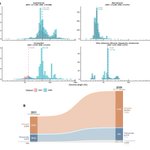
We profiled the faecal virome of dairy cows across key life stages with ultra-deep ONT and Illumina sequencing 🐮
We recovered over 30,000 vOTUs (approximate species), and included shallow bulk metagenomes to place the viruses within the context of their microbial hosts 3/13
