
Research Scientist at Meta - Working on AI for audio.
Joined September 2014
- Tweets111
- Following180
- Followers173
- Likes1.1K





Pinned Tweet
Excited to share that our two papers were accepted at #ICASSP2025, both focus on Audio Language Models! 🗣️🎶
1/10


Robin San Roman retweeted

What if the metadata from acquisition was enough? 👀
Sometimes the most useful labels aren't labels at all.
Introducing📄 Who Needs Labels? Adapting Vision Foundation Models With the Metadata You Already Have

Robin San Roman retweeted

1/9 Excited to share TextSeal, our new state-of-the-art watermark for large language models at FAIR / Meta Superintelligence Labs (@AIatMeta) 🔐
Paper: arxiv.org/abs/2605.12456
Code: github.com/facebookresearch/…

Robin San Roman retweeted

Very excited to release Voxtral 2!
Voxtral 2 comes with two powerful new models:
Voxtral Realtime: a SOTA real-time transcription model released under an Apache 2 license, with latency configurable to sub-200 ms
Voxtral Mini Transcribe 2: a SOTA transcription model with speaker diarization, word-level timestamps, and context biasing
Voxtral 2 supports 13 languages. It’s available on the Mistral API and is one of the most cost-effective transcription APIs on the market.


Robin San Roman retweeted

My first PhD paper is out! 🎓
"What Drives Success in Physical Planning with Joint-Embedding Predictive World Models?"
tl:dr: JEPA-WMs for robotics: learn dynamics on top of visual encoders, optimize actions towards goal 👇
w/ @JimmyTYYang1, Jean Ponce, @AdrienBardes, @ylecun
Robin San Roman retweeted

🚨New Paper @AIatMeta 🚨
You want to train a largely multilingual model, but languages keep interfering and you can’t boost performance? Using a dense model is suboptimal when mixing many languages, so what can you do?
You can use our new architecture Mixture of Languages!
🧵1/n

Robin San Roman retweeted

Why does Meta open-source its models? I talked about it with @kawecki_maciej looking at Dino, our computer vision model with applications in forest mapping, medical research, agriculture and more. Open-source boosts AI access, transparency, and safety.
youtube.com/watch?v=eNGafihq…
Robin San Roman retweeted

🚨New AI Security paper alert: Winter Soldier 🥶🚨
In our last paper, we show:
-how to backdoor a LM _without_ training it on the backdoor behavior
-use that to detect if a black-box LM has been trained on your protected data
Yes, Indirect data poisoning is real and powerful!

Robin San Roman retweeted

1/ Happy to share my first accepted paper as a PhD student at @Meta and @ENS_ULM which I will present at @iclr_conf:
📚 Our work proposes difFOCI, a novel rank-based objective for ✨better feature learning✨
In collab with David Lopez-Paz, @GiulioBiroli and @leventsagun!
If you are in ICASSP and interested in security, dataset attribution or dataset watermarking you don’t want to miss the work of the brilliant Wassim Bouaziz !
@_Vassim is on 3E.1 right now !

👋 Hi Hyderabad 🇮🇳
I'll be at ICASSP 🦚 this week and present two papers:
1. A ✨lecture✨ on "Easing Optimization Paths": arxiv.org/abs/2501.02362
Come to the Explainable and interpretable machine learning I session on April 10, 2:00-3:30 PM (GMT+5:30) 😄

I am in ICASSP 2025 and will be presenting posters on Tuesday and Wednesday, focusing on audio language models. If you're also attending, feel free to stop by for a discussion. I'm looking forward to meeting you there!
Robin San Roman retweeted

Does your LLM truly comprehend the complexity of the code it generates? 🥰
Introducing our new non-saturated (for at least the coming week? 😉) benchmark:
✨BigO(Bench)✨ - Can LLMs Generate Code with Controlled Time and Space Complexity?
Check out the details below !👇

Robin San Roman retweeted
Want to know if a ML model was trained on your dataset with 1 API call? See you in conferences 🙌
Excited to share that our paper Data Taggants for image data was accepted at ICLR 2025 🎉
Our follow-up on audio data, was accepted at ICASSP 2025! 🎉
Check out the details below 👇

Robin San Roman retweeted
Another amazing use of DINOv2 out there. It is both humbling and heartwarming to see such hard problems being tackled in part leveraging your work!


This advancement allows for more granular control and creativity in music production, opening new possibilities for artists and producers. 🎶
Full paper: arxiv.org/abs/2501.01757
Code coming soon !
9/10
Thanks to all coauthors @simonrouard @adiyossLC @pierrefdz @RSerizel @AntoineDelefor1 and Axel Roebel
See you in Hyderabad !
10/10
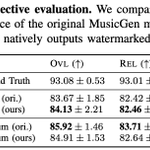
This model performs text-to-music generation at a level comparable to the standard MusicGen model. It also supports text-guided music editing, such as generating stems that complement existing ones 8/10
Our second paper, MusicGen-Stem: Multi-stem Music Generation and Edition through Autoregressive Modeling, enhances MusicGen by enabling music generation at the stem level. It utilizes three codecs for the supported stems: bass, drums, and other.
7/10

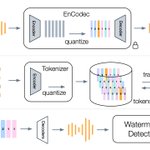
This approach is crucial for scenarios where you want to open-source model weights without compromising on safety.
full paper: arxiv.org/abs/2409.02915 6/10
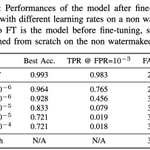
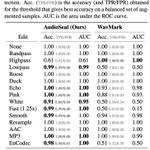
However, the watermark can be fine-tuned out of the model by training it with non-watermarked data. We show that this comes at the cost of reduced performance, akin to a model not trained without the original (watermarked) dataset. 5/10

