Open Access journal published by @AAAS in association with CAST, publishing innovative and wide-ranging multidisciplinary research.
Washington, DC
Joined September 2021
- Tweets5.9K
- Following3.9K
- Followers3.8K
- Likes1.1K
Pinned Tweet
As robots move from the macroscale toward micro- and nanoscale dimensions, researchers are confronting fundamentally different challenges in actuation, control, sensing, fabrication, and collective behavior.
These advances are opening research directions spanning environmental remediation, targeted therapeutics, confined-environment sensing, and bioinspired systems.
Explore the latest research in Research:
spj.science.org/journal/rese…
👉
When Tessa Montague learned about CRISPR, the gene-editing system that was supposed to make it easy to modify any organism, she set her sights on the cuttlefish. The Columbia University neuroscientist dreamed of injecting its embryos with genes that would prompt its neurons to fluoresce as they fired.
The flashes would let her track how this tentacled creature's brain controls one of its most striking behaviors: camouflaging itself by copying patterns it perceives in its surroundings onto its skin. Unlike most animals, she says, “cuttlefish can actually tell us what they see.”
Six years and thousands of embryos later, she has reached a milestone: seven cuttlefish that glow red under fluorescent light. Every cell in their boneless bodies contains a gene encoding a synthetic fluorescent protein—even their eggs and sperm, which means their cuttlebabies glow, too.
The work, posted as a preprint, marks the first time anyone has successfully added a new gene to a cephalopod. Learn more: scim.ag/4y27x4l
👉
Naegleria fowleri is a harmless pond-dweller—unless it ends up in the nose of a human swimmer.
Once inside, the amoeba can crawl along nerve fibers in the nasal cavity and through little openings in the skull until it reaches the brain. There, it can cause an infection that is almost universally fatal, earning it the frightening moniker the “brain-eating amoeba.”
Exactly why N. fowleri, which normally feeds on bacteria, exhibits this behavior has long been unclear. But a recent study suggests a possible reason: The parasite loves to seek out tight spaces.
This “claustrophilic” behavior may help it find its prey—and explain why it occasionally ends up deep in the human brain.
Learn more: scim.ag/4AUikjM
👉
Some #fish can walk sideways and backward. In the northern South China Sea, researchers observed #Scalicus #engyceros using free fin rays like legs. Its feelers brushed along the seafloor and may help it find buried food.🐟
@OLARjournal
@SPJournals
spj.science.org/doi/10.34133…
👉
Join the Westlake - @ScienceMagazine Joint Online Symposium:
Symposium #8: Drugging the Undruggable: RAS Inhibitor Discovery
📅 Wednesday, October 21, 2026 | 8-10 AM EDT
💻 Free virtual registration: bit.ly/4exPOe7
#KRAS #CancerResearch
Altered Hierarchical Visual Rhythm Tracking in Early Deafness. Click the link below to read this free, open access article. doi.org/10.34133/research.14…
A Diffusion-Based Digital Twin for Predicting Road Deterioration under Climate and Traffic Stress. Click the link below to read this free, open access article. doi.org/10.34133/research.14…
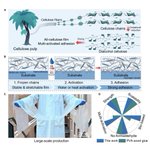
Water–Heat Dual-Activated Scalable Cellulose Film Adhesive. Click the link below to read this free, open access article. doi.org/10.34133/research.13…
👉
Join the Westlake - @ScienceMagazine Joint Online Symposium:
Symposium #8: Drugging the Undruggable: RAS Inhibitor Discovery
📅 Wednesday, October 21, 2026 | 8-10 AM EDT
💻 Free virtual registration: bit.ly/4exPOe7
#KRAS #CancerResearch
👉
RECENTLY PUBLISHED: Identifying Genomic Biomarkers of Rare Disease Subtypes Using Minority-Weighted Feature Selection
Read more from CSBR: spj.science.org/doi/10.34133…
👉
A new Science #Immunology study identifies a #DendriticCell population that expresses the RORC gene in malignant ascites from #gastroesophageal cancer patients, which may play a role in antitumor immunity. scim.ag/3VFalXI
Universal Supercritical Thermodynamics for Black Holes. Click the link below to read this free, open access article. doi.org/10.34133/research.14…
TREM2 Deficiency Regulates Macrophage Apoptosis and Repair in Radiation-Induced Skin Injury. Click the link below to read this free, open access article. doi.org/10.34133/research.10…
The Scalp Microbiome–Hair Axis: Mechanisms and Therapeutic Translation. Click the link below to read this free, open access article. doi.org/10.34133/research.14…
👉
A new Science #Robotics study introduces ALBATROSS, a hybrid aerial-marine robot that could someday be useful in ocean sensing and disaster response. @sutdsg
scim.ag/4d2c3Iu
👉
Join #ScienceWebinars for their next #Technology broadcast on Wednesday, 21 October at 12 p.m. ET ➡️ Battle for the gut: From microbial competition to therapeutic communities
Register Now! view6.workcast.net/register?…
👉
Scientists have developed an open-source microlens-array miniature microscope that can image the brains of freely moving mice with both a large field of view and cellular-level resolution. @NBIC_PKU @Orangeroad2017 scim.ag/4hAWwAI
Targeting the ANXA8–SP1–PPA1 Axis to Modulate TCA Cycle and Matrix Deposition in Diffuse-Type Gastric Cancer. Click the link below to read this free, open access article. doi.org/10.34133/research.08…
Targeting SRPK3 Attenuates Cardiac Hypertrophy and Heart Failure by Improving Mitochondrial Bioenergetics through mRNA Splicing and Decay. Click the link below to read this free, open access article. doi.org/10.34133/research.14…
System-Level Design and Integration of Dexterous Robotic Hands for Complex Manipulation. Click the link below to read this free, open access article. doi.org/10.34133/research.13…
👉
A 185-milligram robot flies freely without a transmission, powering its cone-shaped wings with an electrostrictive actuator. It also stands up to crushing impacts. @UCLAengineering
Read more in Science #Robotics: scim.ag/4Avt7R7