

An open access journal published in association with SML, covering innovative marine, terrestrial and atmospheric research (2025 IF = 5.4)
Zhuhai, China
Joined December 2023
- Tweets295
- Following323
- Followers316
- Likes2.2K


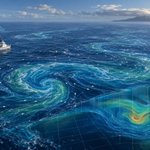




#AI can make #ocean predictions more reliable by embedding #physical knowledge, though uncertainty and robustness still need further work.🧐
@OLARjournal
spj.science.org/doi/epdf/10.…
Some #fish can walk sideways and backward. In the northern South China Sea, researchers observed #Scalicus #engyceros using free fin rays like legs. Its feelers brushed along the seafloor and may help it find buried food.🐟
@OLARjournal
@SPJournals
spj.science.org/doi/10.34133…
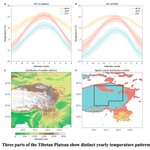
Why do #temperatures vary across the #Tibetan #Plateau? Data from 454 stations shows elevation cools the central region, while clouds flatten the southeastern cycle.
@OLARjournal
@SPJournals
spj.science.org/doi/10.34133…
Better #ocean predictions need more than data. This perspective highlights #AI that incorporates physical constraints or learns physically meaningful ocean relationships—from subsurface density reconstruction to long-range #ENSO and wave prediction. Such approaches can complement traditional #models, especially when observations are scarce.🧐
@OLARjournal
@SPJournals
spj.science.org/doi/10.34133…

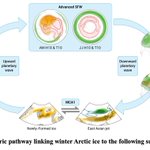
#Arctic winter sea-ice now increasingly suppresses China's summer heatwaves, a Zhejiang University team found. More Atlantic-sector ice weakens the polar vortex, shifts the East Asian jet southward, and cools China.🧐
@OLARjournal
@SPJournals
spj.science.org/doi/10.34133…
Why does the #Tibetan #Plateau warm and cool differently across regions? Researchers found three yearly temperature patterns. Elevation explained the central–northeastern difference, while summer clouds cooled the southeast and clearer winters helped keep it milder.🧐
@OLARjournal
@SPJournals
spj.science.org/doi/10.34133…

#Mangroves shifted nutrient transport from south to north in Shenzhen Bay, increasing nitrogen-phosphorus imbalance risk in over 5% of the bay during wet season, highlighting the need for zone-specific management.🧐
@OLARjournal
@SPJournals
spj.science.org/doi/10.34133…
Can #Arctic #sea ice shape China’s summer heat? Since the late 1990s, more newly formed ice in the Atlantic sector of the Arctic has been linked to an earlier breakdown of the #stratospheric polar vortex, a southward-shifted East Asian jet, and fewer summer #heatwaves in subtropical China.🧐
@OLARjournal
@SPJournals
spj.science.org/doi/10.34133…

#Ocean #viruses are widespread but mostly known from #DNA fragments. Researchers expanded #Aoguangviridae genomes to 227, revealing 22 subfamilies and 157 genera, with peak activity in the deep chlorophyll maximum layer.
@OLARjournal
@SPJournals
spj.science.org/doi/epdf/10.…
#Mangroves can change where #nutrients build up. A Shenzhen Bay model found that they slowed water and changed #tidal flow, shifting nutrients northward. This reduced potential #eutrophication in the southern #bay head but increased it in the northern bay head.🤓
@OLARjournal
@SPJournals
spj.science.org/doi/10.34133…

Researchers built a parallel framework for the #MaCOM ocean model, achieving a 19.41x speedup from 128 to 4096 processes and running a seven-day #forecast in about 45 minutes.🤓
@OLARjournal
@SPJournals
spj.science.org/doi/10.34133…
How diverse is #Aoguangviridae, a virus family linked to #marine archaea? Researchers expanded its genome collection from 59 to 227, including 168 new genomes, resolved 22 subfamilies and 157 genera, and mapped the family across global #oceans.🌊
@OLARjournal
@SPJournals
spj.science.org/doi/10.34133…

Reviewing 581 studies, this work proposes a six-part shoreline framework but flags poor model transferability and understudied African/South American coasts as key gaps.🧐
@OLARjournal
@SPJournals
spj.science.org/doi/10.34133…
Can a global #ocean model deliver a seven-day #forecast in under an hour? #MaCOM completed one in about 45 minutes. Its parallel framework achieved a 19.41-fold speedup, supporting faster forecasts for navigation, search and rescue, and oil-spill response.👇
@OLARjournal
@SPJournals
spj.science.org/doi/10.34133…

A study of Colombia's Caribbean #coast reveals how seasonal changes drive PAH pollution in #mangroves, identifying critical hotspots for targeted #ecological monitoring and pollution control.🧐
@OLARjournal
spj.science.org/doi/10.34133…
A systematic review of 581 coastal studies reveals optical #satellites handle 61% of #shoreline monitoring while Africa and South America remain largely ignored despite high erosion risk. #AI use surged 162.5% from 2019 to 2025, converging toward physics-informed models and calling for fairer global coverage to protect vulnerable coasts. 🧐
@OLARjournal
@SPJournals
spj.science.org/doi/10.34133…

#Arctic #ozone hit a record high in March 2024, driven by planetary waves and climate oscillations that disrupted the polar vortex.👇
@OLARjournal
@SPJournals
spj.science.org/doi/10.34133…
📢Call for Papers: Special Issue on Climate Extremes in OLAR.
🗓️Deadline: December 31, 2027.
👉Topics include extreme event variations, driving mechanisms, ecosystem and socioeconomic impacts, and prediction advances.
😀Join us in advancing climate science for disaster preparedness and global resilience!
@OLARjournal
@SPJournals
mp.weixin.qq.com/s/vU0OVWVq9…

Colombia's #Caribbean waters carry cancer-linked #PAHs, with the highest sediment concentration reaching 8557.8 nanograms per gram in dry season and floating particles peaking at 4428.7 nanograms per gram in rainy season. Salt levels and organic matter shape the spread. Identifying hotspots could focus cleanup and shield #coastal #biodiversity.👇
@OLARjournal
@SPJournals
spj.science.org/doi/10.34133…

The #TPHL distribution better captures low winds and extreme gusts in #coastal areas. It improves wind resource assessment and coastal wind risk prediction by reducing #wind power estimation errors.👍
@OLARjournal
@SPJournals
spj.science.org/doi/10.34133…