

Professor & climate scientist at Texas A&M University. Previously at @NCAR_Science, @NOAA_GFDL. Author: https://xitter.cf/t.co/mh2O5M5gjm, Blogger: https://xitter.cf/t.co/Oz4qbijaQn
Texas A&M University
Joined August 2010
- Tweets1.5K
- Following369
- Followers843
- Likes1.8K






Pinned Tweet
Howdy Aggies (and friends of Aggies)!
The Texas A&M Department of Atmospheric Sciences will be marking the 60th anniversary of its establishment at the 7pm Tuesday (Jan. 27) reception during the AMS Annual Meeting in Hilton Americas-Houston.
Come join us!

R. Saravanan retweeted

. @solar_chase has posted her annual thoughts on solar here: bsky.app/profile/solarchase.…
The headline is: It’s the end of the beginning of the age of cheap solar as it runs into saturation effects, but batteries are here to help.

R. Saravanan retweeted

Too many shallow hot-takes on AI models' performance with Isaias. As a community, we need to be diving deeper and asking the question, _why_ is the AI model out-performing NWP - and why is NWP under-performing. That's how we continue to improve these tools. They're not oracles.
R. Saravanan retweeted

I'm in an airport, 1 hr before 🛫, the worst time to do this, but here is a thread on permitting/transmission reform bill:
First, if you don't know me, I worked for Greenpeace for 8 yrs campaigning against fossil fuels (esp coal), & have lead a utility watchdog for past 10...
R. Saravanan retweeted

If you're in the Weslaco area on Oct. 8-9, check out the South Texas Grazing Lands workshop and hear John Nielsen-Gammon, Ph.D. talk on Climate Trends for South Texas!
agrilifetoday.tamu.edu/event…

R. Saravanan retweeted

🎉 Congratulations to John Mitchell, recipient of the 2027 Syukuro Manabe Climate Research Award!
Recognized for the groundbreaking development and use of climate models to assess the role of greenhouse gases and aerosols in human-caused climate change. Congratulations from CVC!
R. Saravanan retweeted

The Safexpress Centre for Data, Learning and Decision Sciences (@scdlds_ashoka), part of the Vachani School of Advanced Computing at Ashoka University, organised ‘Future of Climate: AI, Science and Society’ on 18 September 2026.
The event featured a keynote address by Tapio Schneider, Theodore Y. Wu Professor of Environmental Science and Engineering at Caltech (@Caltech), followed by a panel discussion featuring Dr M. Mohapatra, Director General of the India Meteorological Department (@Indiametdept); Anjali Bansal, Partner at Avaana Capital (@avaanacapital); William Boos (@BillBoos), Professor of Earth and Planetary Science at the University of California, Berkeley (@UCBerkeley); and Gautam Menon (@MenonBioPhysics), Professor of Physics and Biology at Ashoka University.
Professor Tapio Schneider noted that while AI has already transformed short-term weather forecasting, spanning days to weeks, predicting climate patterns several years or decades into the future remains a far greater scientific challenge. The panel discussion emphasised that India’s expanding data infrastructure and dynamic startup ecosystem could position the country to take a leading role in developing effective climate adaptation strategies.
#AshokaUniversity


R. Saravanan retweeted

It's really vibes(doom)

Over 2 years ago @sayashk and I wrote a detailed deconstruction of p(doom) and argued that its primary function is to launder vague, evidence-free intuitions and fears through a facade of quantification. It remains 100% relevant today. normaltech.ai/p/ai-existenti…

R. Saravanan retweeted
I'm going to throw up a question about the investigation of the Hugging Face incident. When you do an investigation of any dangerous incident, one key element to examine is human error. But the Model Evaluation and Threat Research (METR) institution didn't do that. They seemed only interested in what the agents were doing. That is, they anthromorphized the agents, while turning the humans into non-player characters.
Did OpenAI researchers and executives know the risks they were taking and take steps to manage them? What kinds of human discussions were happening internally around these models? How did they mitigate these risks internally? Did they discuss legal liability? Was the board or were executives involved?
These are the kinds of questions to ask if you are a real regulator. I don't see where or if METR asked them. Mostly they footnoted that these questions are 'out of scope.' They saw this project as a technical inquiry into the capabilities of intelligent models, not as an analysis of a dangerous accident. They interviewed eight researchers. Any executives? Any board members or lawyers?
From the Silicon Valley Bank fiasco to the Space Shuttle explosion to the 737 Max, we've always realize that human behavior is the foundation of how complex systems behave. That is true here too. I don't see any analysis of the actual people at OpenAI making decisions about the tools used for hacking.
Am I missing something?
R. Saravanan retweeted
Beyond two weeks: How AI is transforming Indian monsoon forecasting
‘AI can complement conventional meteorology by combining global model output with observations and historical data. Its value lies in extracting additional predictive information and translating it into clearer extended-range guidance,’ write Sandeep Juneja (@sandeepjuneja66), Director, Safexpress Centre for Data, Learning and Decision Sciences, Ashoka University and Manmeet Singh, Academic Visitor, Safexpress Centre for Data, Learning and Decision Sciences, Ashoka University.
Read More: theweek.in/news/sci-tech/202…
(@TheWeekLive, @scdlds_ashoka)
#AshokaUniversity

R. Saravanan retweeted

We are seeing a new trend in submissions to @arxiv (and presumably to conferences and journals): Authors submitting papers whose contents they likely do not understand. 1/
R. Saravanan retweeted

I’ve built DNA synthesizers and sequencers by hand. I used the engineer viruses for a living. I used to engineer human immune evasion for therapeutic constructs. Who the fuck are you people? Have you ever so much as held a pipette before?
You can spaghetti blast an ensemble of DNA sequences at some shitty provider but 1) you still have to assemble it and bootstrap a system for making virions 2) you are not single shotting a viable, virulent viral design without a ton of experimental selection and development. Viral fitness is deeply dependent on codons and cotranslational kinetics - you’re not just gonna obfuscate away from wild type and get something good by magic.
You keep treating AI like some kinda god, but molecular physics has computational complexity that scales exponentially in particle number which just crushes the abilities of any classical computer to do end-to-end design of biological functions ab initio.
Grabbing a bunch of bacteriophage phi174 hits from a mass ensemble screen in lab microbes is not evidence of some magical AGI bio design ability - it's just a classic spray and pray selection. This is just nothing like building something viable in humans.
Goddamn it read some books before you waltz into biomedicine and lecture us on protecting human life.
R. Saravanan retweeted

I must be among an extremely small group of people (n=1?) that have both 1) trained a frontier LLM and 2) designed and synthesized custom viruses in a lab with my own two hands.
And I think that the takes on AI killing us all by creating dangerous viruses is total bogus.
R. Saravanan retweeted

Wrote a short post on why Google's WeatherNext forecasting models are so good. TLDR: it's probably not the architecture, but how they train their models (though there's an interesting analogy to singular vectors in what they're doing)
notesonclimate.substack.com/…
R. Saravanan retweeted

We have a new episode of the Decoded Podcast!
We sat down with Professor Sandeep Juneja, Professor of Computer Science at @AshokaUniv and former Senior Professor and Dean at TIFR Mumbai, for one of the widest-ranging conversations we've done on the podcast.
Professor Juneja studied engineering at @iitdelhi and Operations Research at @Stanford, and his work sits at a pretty interesting intersection of applied probability, mathematical finance, simulation, machine learning, and decision-making.
One of the things I was most interested in was hearing about his work during the COVID-19 pandemic.
While at TIFR, Professor Juneja worked on epidemiological models that were being used to track the spread of COVID-19 through Mumbai in real time. We talked about what it actually meant to build and use those models during 2020 and 2021, when the numbers coming out of the models were feeding into decisions being made on the ground.
It's one thing to learn about mathematical models in a classroom. It's another to hear from someone who was building them while a pandemic was unfolding around them.
We then moved into AI, and this was probably my favourite part of the conversation.
We talked about where current AI progress is actually meaningful, where some of the claims around AI are getting ahead of the evidence, and whether AI can contribute to problems that have resisted mathematicians for decades.
That led us to the Navier-Stokes equations, one of the famous unsolved problems in mathematics.
There has been a lot of recent discussion around using AI to attack problems like this. We spent quite a bit of time trying to understand what that means. What would count as a meaningful contribution? And how should we think about these systems when they produce results that look mathematically interesting but still need to be verified?
I really enjoyed this conversation because it moved between very different questions without losing the mathematical thread: probability, epidemiology, mathematical research, AI, and some of the hardest problems we still don't know how to solve.
It was also a little surreal recording this one at Ashoka.
Huge thanks to Anubhav Bhattacharjee, Vidyanshi Mittal, Akshara Durugkar, Soujanya Banik, and Mohammad Arif Abdullah for the research and outreach that went into this episode.
And of course, thank you to Professor Juneja for taking the time to have such a wide-ranging conversation with us.
The new episode of Decoded is out now.
Spotify: open.spotify.com/episode/4Gd…


R. Saravanan retweeted

Looking for a residency opportunity? The NSF NCAR EdEC Faculty Fellowship Program allows fellows to develop research collaborations, joint research proposals, enhanced classroom content & more in Boulder, CO. Apps due October 8.
bit.ly/4gRSrI8

R. Saravanan retweeted

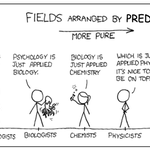
Sorry, @xkcd .

ALT XKCD 435 Purity (https://xkcd.com/435/) with added OpenAI logo saying "Oh, hey, I didn't see you guys … but I did see your chats."
R. Saravanan retweeted

Some thoughts on the Navier-Stokes news from a professor of aerospace engineering:
1) take a deep breath
2) posts indicating we "solved Navier-Stokes" are incorrect and overblown. A very specific mathematical proof involving a niche scenario for Navier-Stokes has *potentially* been shown (that a perfectly smooth incompressible initial condition with finite energy could produce a singularity--note the assumptions here piled on to an equation set that already involves some assumptions).
3) there is no general closed form solution for N-S and that's not what this news is about
4) this is more of a mathematical curiosity than anything else and could matter a lot to mathematicians but basically changes nothing in the way N-S are used in practice
5) there are already very useful exact solutions to Navier-Stokes that greatly simplify the equation set with the right boundary conditions/geometry like laminar flow through a pipe or a 2D Taylor-Green vortex
6) in aerospace, we already treat N-S as an approximation in many instances and are well aware of its limitations. we don't outright solve these equations anyway and regularly chop off terms or simplify parts (at the expense of accuracy) to make them easier to deal with.
7) to be honest I have never found this specific problem to be particularly interesting because we know a core assumption of N-S is a "continuum" fluid where you ignore molecules and assume hydrodynamic scales >>> molecular scales. We know a real fluid cannot have infinite velocity or energy. But clearly you can push equations outside of their bound of validity and make them produce funky results and singularities.

We’re sharing a solution to the Navier-Stokes Millennium Prize Problem, one of the deepest problems at the frontier of mathematics.
The proof was produced by a group of agents, using an OpenAI next-generation model significantly more capable than GPT-6 Astra.
The problem concerns whether the description of smooth three-dimensional fluid motion modeled by the Navier-Stokes equations can break down. It has remained unresolved for roughly 90 years.

R. Saravanan retweeted

IIT Delhi is deeply saddened by the demise of Prof. Krishna AchutaRao, a Professor at the Centre for Atmospheric Sciences (CAS). He passed away on September 4, 2026.
Prof. AchutaRao served at the Institute for about two decades and held various positions of responsibility, including Dean (Faculty) and Head, CAS. He was also instrumental in the establishment of the Centre of Excellence for Climate Change Adaptation at the Institute.
He was a well-known researcher in climate change, climate risk assessment, and adaptation to climate change. He contributed significantly to various international bodies, including the Intergovernmental Panel on Climate Change (IPCC) and the World Climate Research Program.
The Institute community extends its heartfelt condolences to Prof. AchutaRao’s family, friends, and students.

R. Saravanan retweeted

Excited to share WeatherNext 3 from @GoogleDeepMind and @GoogleResearch!
High-res temperature and precipitation forecasting using the latest satellite observations 🛰️
It's also the best global weather model according to Brightband's live leaderboard!
owb.brightband.com/


