

Richard Ebeling,, BB&T Free Enterprise Profesor at The Citadel; former president of Foundation for Economic Education. Interests: Free Markets, Austrian Econ
Mount Pleasant, SC
Joined March 2011
- Tweets643
- Following100
- Followers981
- Likes1.1K








Richard Ebeling retweeted

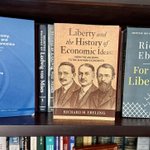
"Over time, words sometimes change their meanings or connotations. Think of the words naughty and nice. Apparently, naughty originally meant to have or be nothing (naught or zero), but then it took on the extra sense of something being worth nothing, until finally a person who was considered worth nothing became a bad individual, or at least someone who is mischievous — as in, what a “naughty boy,” with an accompanying wink.
"On the other hand, a nice person, it seems, early on meant someone who was ignorant, but then took on the added meanings of being a silly or foolish person. By the 1700s, it had its more current meanings of an agreeable or pleasant person. Though it can be used sarcastically — for instance, with the phrase “Oh, yeah, that’s ‘real nice’” meaning something said or done that is rude, disrespectful, or nasty toward another.
"The same thing has happened with the word LIBERALISM. Friends and foes have changed its meaning several times over the last couple of centuries, and in the eyes of some its content and connotation have been transformed beyond recognition." — @RMEbeling

Richard Ebeling retweeted

Richard Ebeling (ex-president @FEEonline):
“I always found Hayek cheerful, open, and delighted to share his time with a pesky young man imposing himself on his time and patience.”
“He often was self-deprecating in his reminiscences about his conflicts and debates with Keynes or others. He would sometimes say, ‘Well, during one of my other famous defeats... ’”
“We spent a delightful morning in long conversation, after which he insisted upon taking me to lunch. While we were eating, I commented that it seemed that since winning the Nobel Prize in 1974 he had suddenly started publishing a good deal more, especially on economic and monetary-policy issues.”
“Hayek replied, ‘Well, I tried old age and I did not like it, so I decided to come back.’”

